
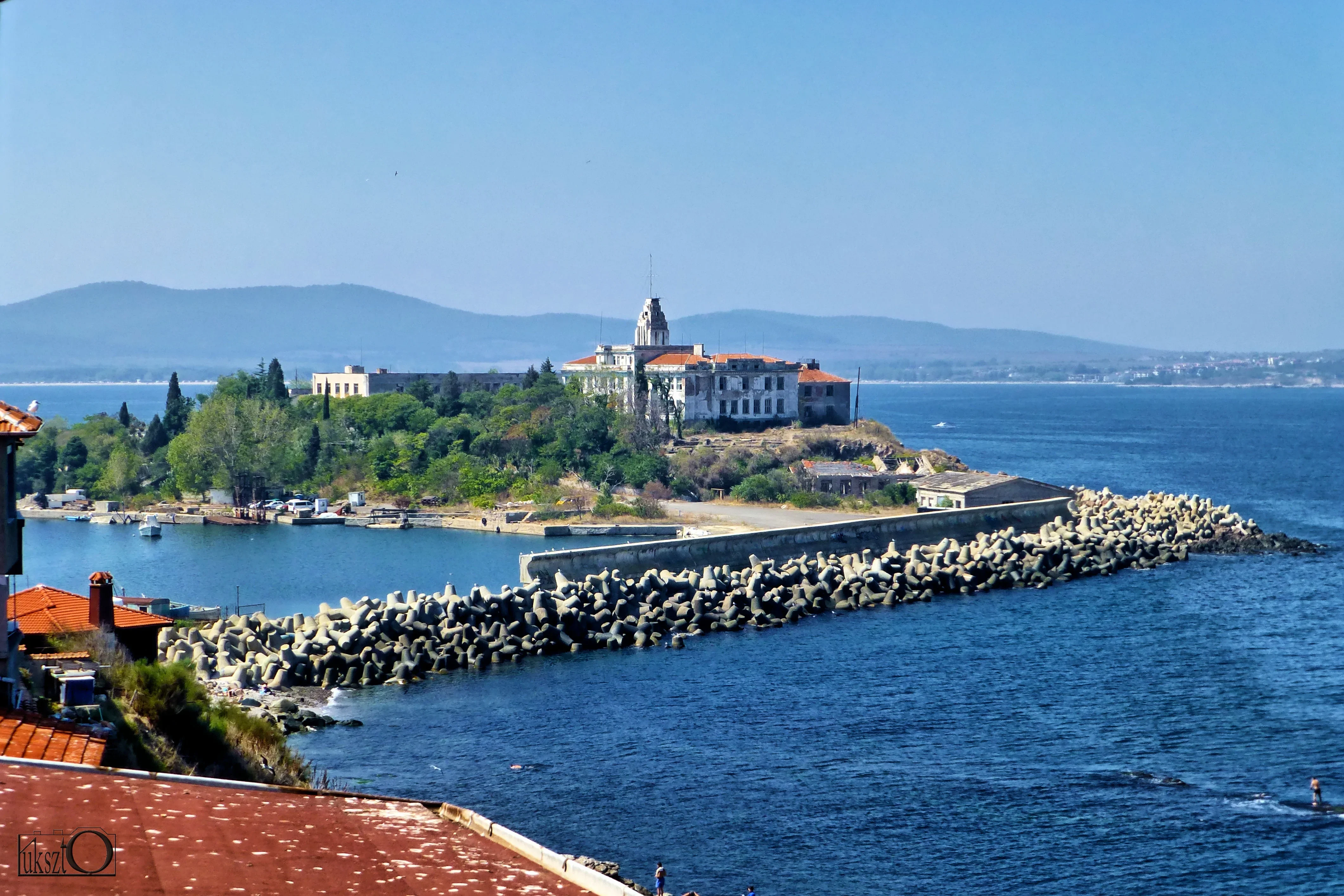
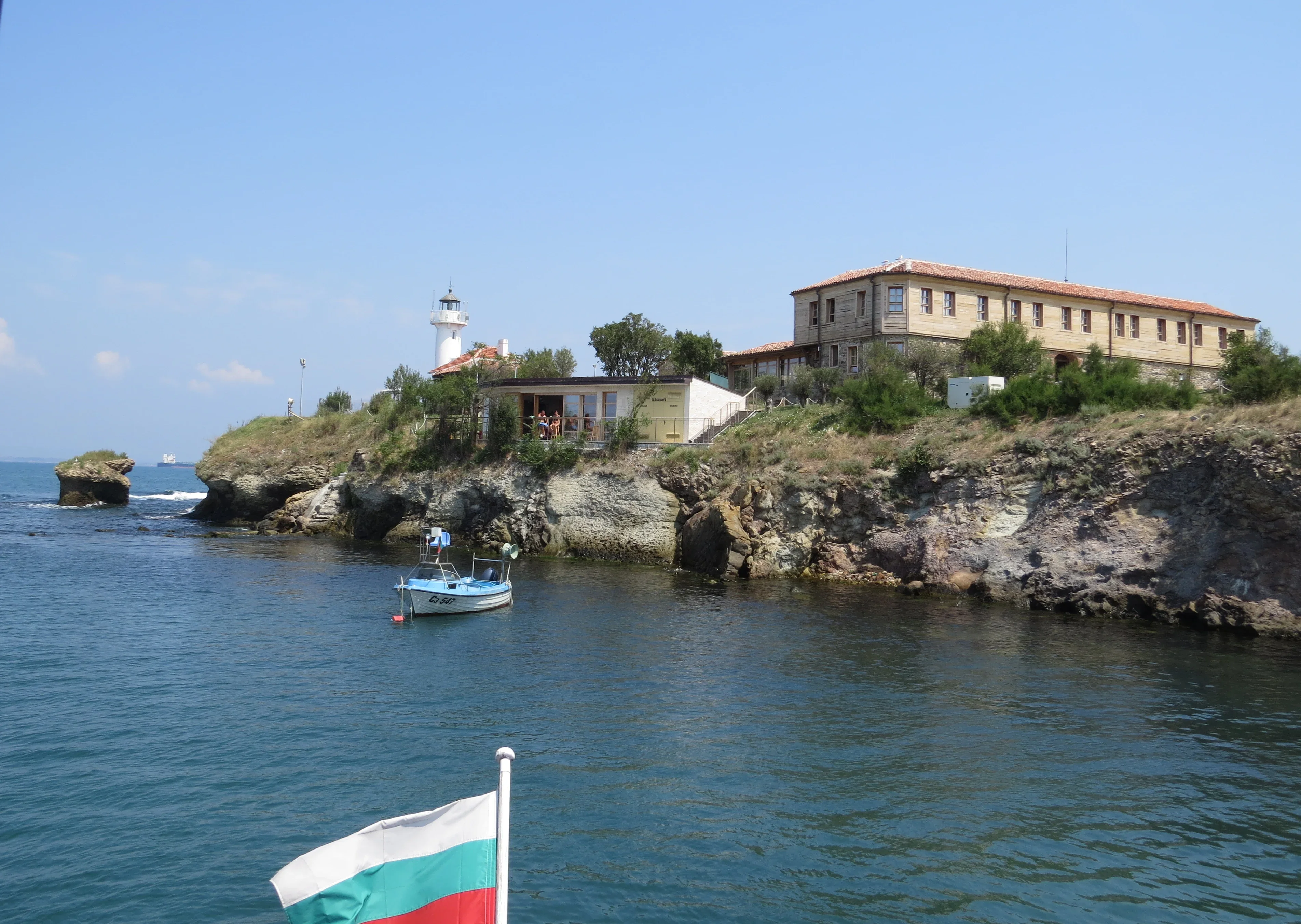
Just 250 meters from the coast of Sozopol lies one of the most interesting and, at the same time, least known sites on the Bulgarian Black Sea coast – St. Cyricus and St. Julitta Island. The island, often referred to simply as "St. Cyricus," combines a unique mix of ancient history, 20th-century military infrastructure, and modern plans to transform it into a contemporary tourist and cultural center.
Geography: 80 decares of land in the heart of the bay
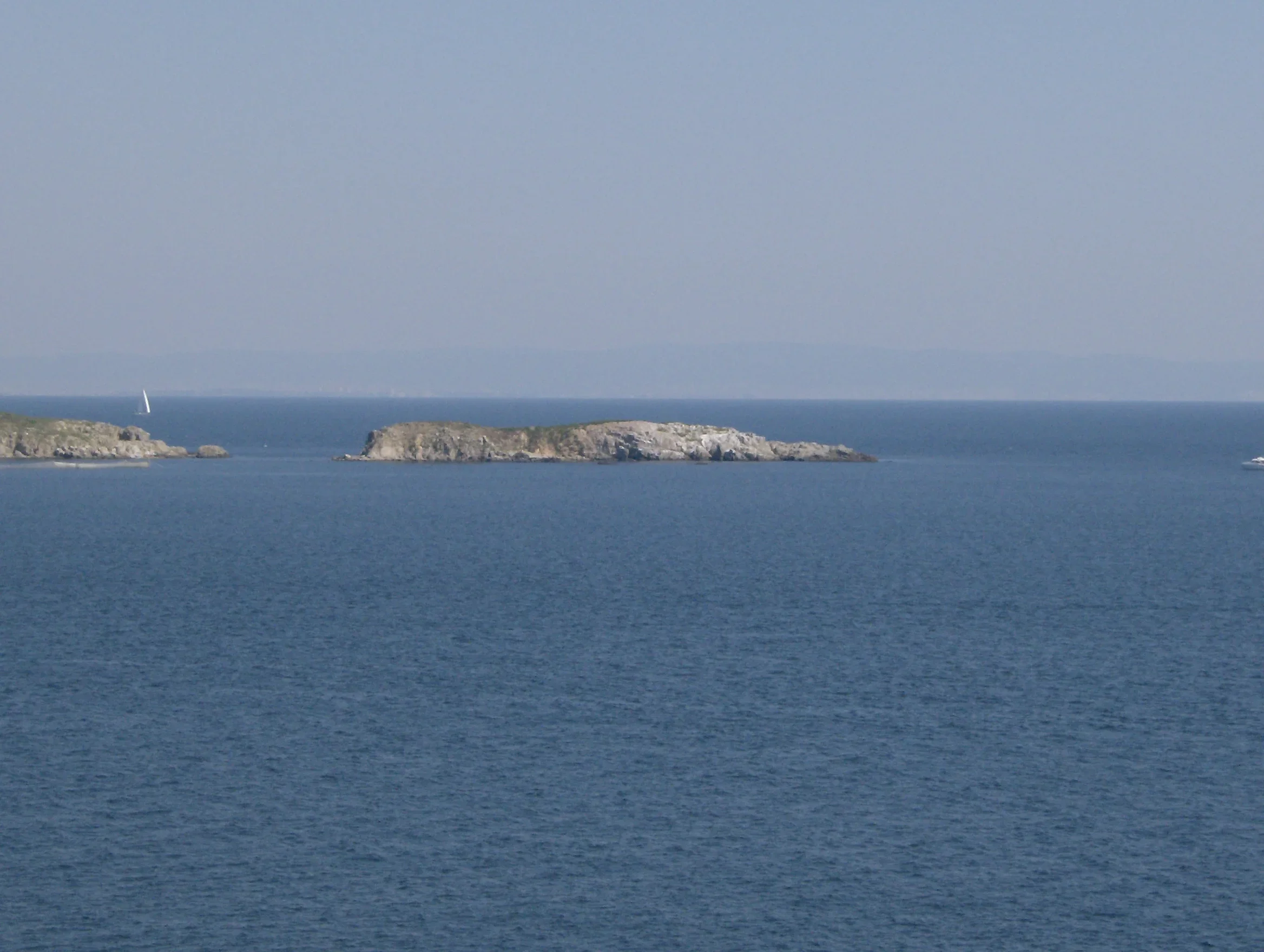
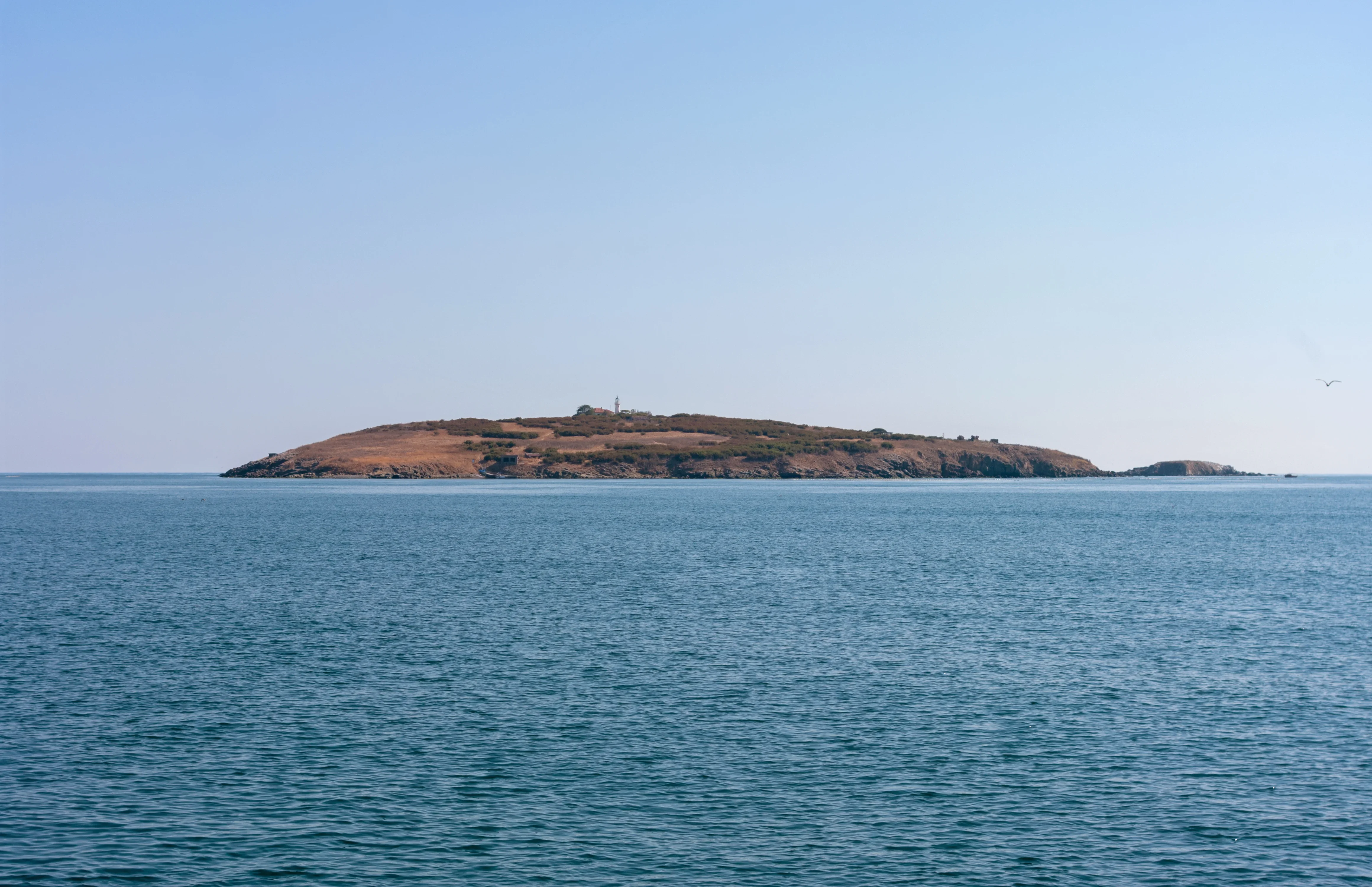
St. Cyricus and St. Julitta Island is located northwest of Sozopol and has an area of about 80–82 decares, which ranks it among the larger Bulgarian Black Sea islands. Its height above sea level reaches approximately 15 meters, and the distance to the shore is about 250 meters, making it visible from almost every point of the old town.
This is the only island on the Bulgarian Black Sea coast that is connected to the mainland by a breakwater and a road. The breakwater was built in the 1920s and shapes the Sozopol Bay like a natural horseshoe, in the "core" of which the water remains relatively calm even during heavy swells.
An island with the status of a cultural monument
As early as the 1960s, the island was declared a cultural monument and included within the boundaries of the architectural and historical reserve of Sozopol. This decision reflects its high historical value – archaeologists link the first settlements here to the most ancient stages of the development of the ancient polis "Apollonia Pontica".
For decades, access to the island was severely restricted due to military functions, which, on one hand, preserved some of the archaeological layers, and on the other, delayed the research and display of the cultural heritage to the general public.
From a sanctuary of Apollo to a monastic complex
It is believed that in deep antiquity, a sanctuary of "Apollo" with an impressive statue existed on the island – part of a sacred complex related to the cult practices of ancient Apollonia. Thus, "St. Cyricus and St. Julitta" proves to be a key point for understanding religious life along the western Black Sea coast in the classical era.
During the Middle Ages, the "St. Cyricus and St. Julitta" monastic complex developed over the older layers. Ruins and fragments of this complex are still found today, and specialists view it as an important element of the region's Christian history and a natural successor to the older pagan cults.
Military infrastructure and the "post-apocalyptic" landscape
During the 20th century, the island took on an entirely different look – it became an important naval base. Barracks, warehouses, training corps, and various military equipment were deployed on its territory, leaving behind a kind of "post-apocalyptic" landscape.
Today, many of these buildings are abandoned, but they testify to the island's role during the Cold War and its strategic importance for the Bulgarian Navy. Local initiatives insist that part of this infrastructure should be adapted for museum and educational purposes instead of being completely demolished.
Access and tourism: close to the city, far from mass groups
Despite its immediate proximity to Sozopol, there have been no regular tourist lines to the island for a long time. Officially organized visits are almost non-existent, but it is accessible by boat from the harbor, as some local captains offer individual trips by arrangement.
Due to restricted access, "St. Cyricus and St. Julitta" remains a "blank spot" for the mass tourist – an island that everyone sees from the shore, but few actually visit. This gives a chance for its future development to be planned more precisely, without the risk of rapid overcrowding with visitors.
State plans: modern port and yacht marina
In recent years, the state has outlined a new stage in the island's development. An intention has been announced to build a modern port for passenger ships and a yacht marina on "St. Cyricus and St. Julitta," with part of the territory being transferred to the management of a specialized enterprise to undertake the modernization of the quay wall and related infrastructure.
The plans include the construction of a terminal to serve passengers and tourist ships, the creation of a public access zone, and the possibility of mooring leisure vessels. The idea is for the island to take on the main part of tourist shipping in the area, freeing up the fishing port in Sozopol and decongesting the central part of the city.
Balance between cultural heritage and economic development
A key element in the development concept for "St. Cyricus and St. Julitta" is the commitment to ensure cultural heritage is protected and accessible. It is expected that the future infrastructure will be designed in close cooperation with archaeologists, architects, and public organizations, so that the ancient layers and the monastic complex can be preserved and displayed.
Experts emphasize that the island can become a model for sustainable cultural tourism – with limited visitor capacity, clear routes, information centers, and controlled access zones. Thus, research and exhibitions will not be sacrificed for the sake of short-term profit.
New tourist route: "in the footsteps of the giant Apollo"
Ideas are being developed for thematic tourist routes connecting old Sozopol with the island and the ancient heritage of the region. One of them – "in the footsteps of the giant Apollo" – offers visitors the chance to follow the path from the ancient polis to the sacred space of "St. Cyricus and St. Julitta," where, according to legend, an imposing statue of Apollo once stood.
Such routes could turn the island into a key element of the cultural profile of the southern Black Sea coast, attracting not only beach tourists but also history, archaeology, and religious heritage enthusiasts. For students of tourism and cultural heritage, the island is already forming as a natural site for training and practice.
Potential and challenges for the "island at 250 meters"
The economic potential of the island is significant – a combination of a yacht marina, a tourist terminal, a cultural-historical complex, and eco-trails could extend the season in Sozopol and attract a higher class of tourists. At the same time, the realization of such a project requires serious investments and clear legal regulation of the territory's status.
The great challenge remains the balance: how to create modern infrastructure without losing the island's authentic silhouette, its archaeological wealth, and the sense of "detachment" that currently makes it so attractive. The answer to this question will determine whether the "island at 250 meters" will become an example of sustainable development or another missed opportunity on the Bulgarian Black Sea coast.
Comments (0)
No comments yet.