
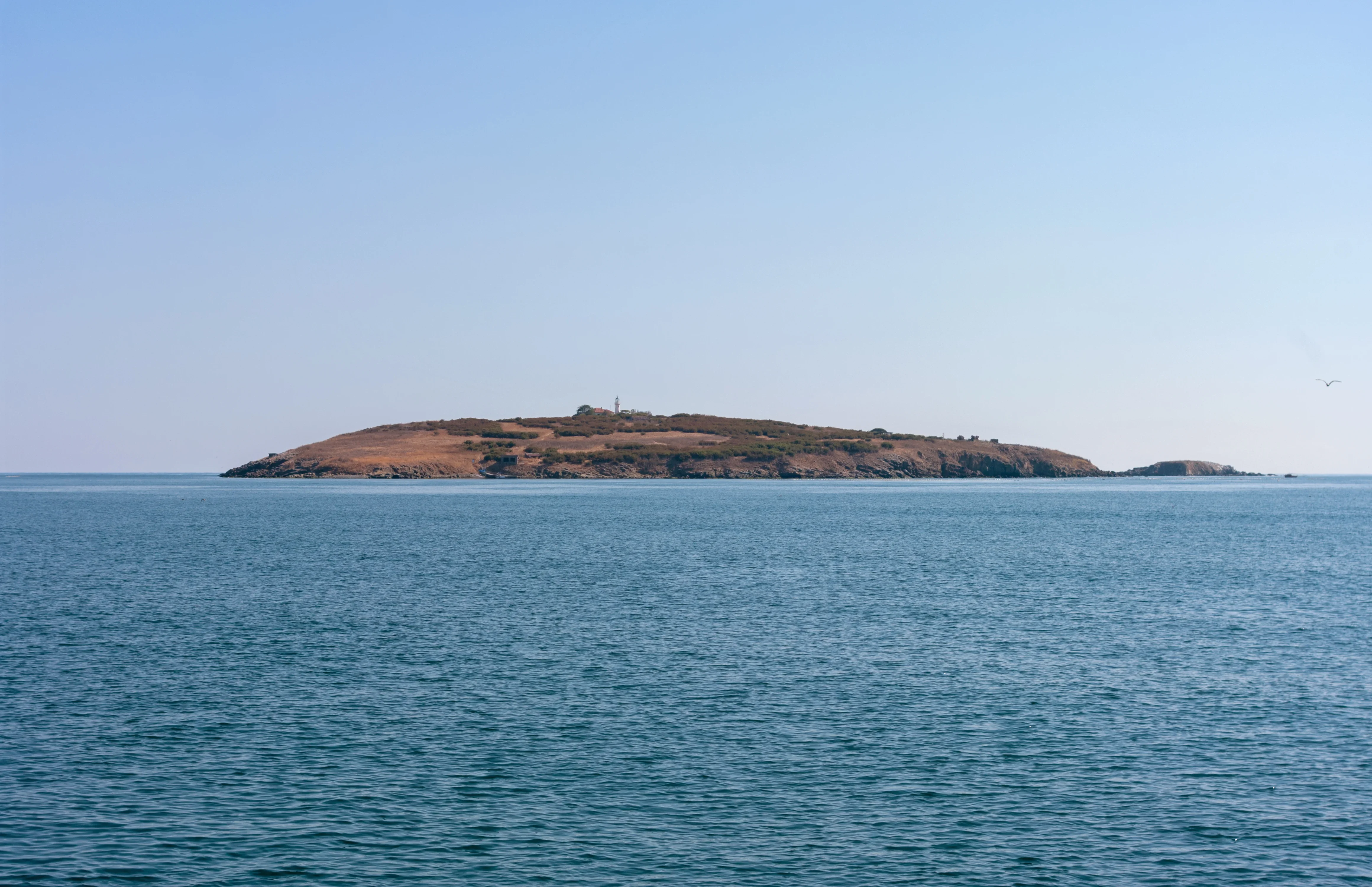
St. Ivan Island is the largest Black Sea island within Bulgaria's maritime territory and one of the key points in Bulgarian territorial waters. Located about a kilometer north of old Sozopol, it combines strategic maritime significance, millennial history – from a Thracian sanctuary and a massive statue of Apollo, through a royal monastery and the discovery of the relics of "Saint John the Baptist" – with the status of a natural and archaeological reserve with extremely rich ornithofauna.
Geography and place in Bulgarian territorial waters
St. Ivan Island is located in the southern part of the Bulgarian Black Sea coast, in the waters of Sozopol, about 910–1000 meters from the northernmost point of the Stolets peninsula (the old town). Its area is approximately 0.66 sq. km, or about 660 decares, making it the largest of the islands in the Bulgarian territorial waters of the Black Sea.
The highest point of the island rises about 33 meters above sea level. Due to its size and location, St. Ivan has significance not only as a natural and historical site but also as a landmark in navigation and an element in the demarcation of Bulgaria's maritime spaces – territorial waters, contiguous zone, and exclusive economic zone.
Maritime lighthouse and navigational role
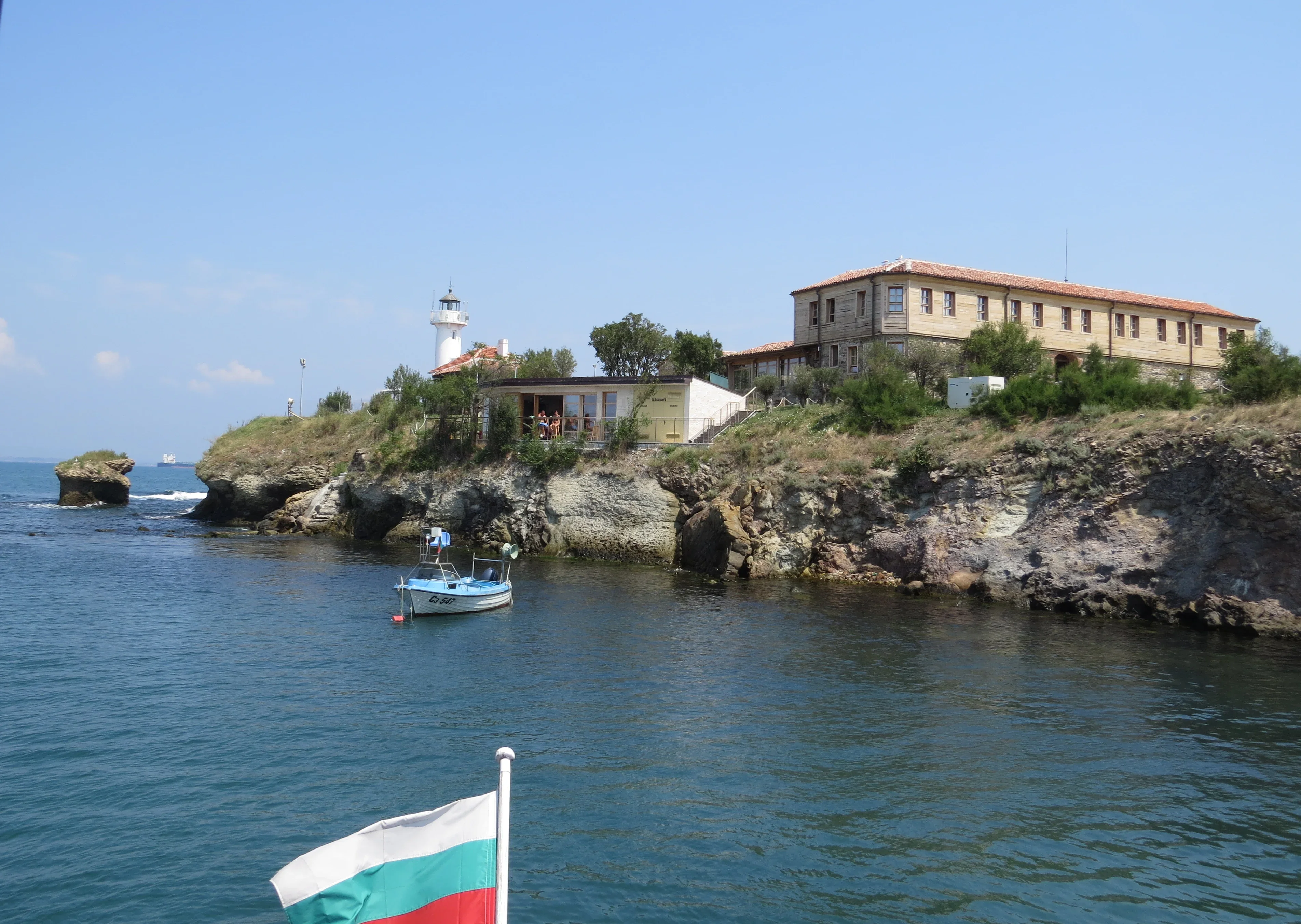
A sonar lighthouse is built on the island, which – together with the lighthouse on Cape Emine – shows the way for vessels to the Burgas Bay. The lighthouse provides light and sound signals and landmarks for safe entry into one of the busiest maritime spaces along the Bulgarian coast.
The navigational role of St. Ivan is important both for commercial and passenger traffic, and for fishing and tourist boats that pass daily between Sozopol and the ports and bays located to the north and south.
Sacred place for Thracians and ancient Greeks
The island was a sacred place for the ancient Thracians as well, who built their sanctuary here around the 7th century BC. Even in antiquity, it was part of the sacred space of "Apollonia Pontica" – the ancient name of Sozopol – and was linked to sea routes and cults to the patron deities of sailors and healers.
According to historical records, a large temple complex was erected on the southern shore of the island, the center of which was a 13.2-meter bronze statue of "Apollo the Healer," the work of the sculptor Calamis. This statue is among the most impressive cult images along the western Black Sea and symbolizes the prestige of ancient Apollonia.
Early Christian basilica and royal monastery
In the middle of the 5th century, an early Christian basilica was built on St. Ivan Island, marking the transition from pagan cults to Christianity. During the early and late Middle Ages, a large monastery complex developed here, which in 1308 received the status of a "royal" monastery – a sign of special patronage and significance.
The monastery was destroyed and rebuilt many times. In the middle of the 15th century, the buildings were destroyed, but after a few years, reconstruction began. In 1629, the Ottoman authorities destroyed the monastery again so that the island would not serve as a refuge for pirates operating in the Black Sea. Thus, the sacred site entered a new, more dramatic stage of its history.
Archaeological research and discovery of relics
After 1985, systematic archaeological excavations began on the island. Gradually, remains of two Christian churches, a library, buildings used as a royal residence, and other elements of the medieval monastery were uncovered. These findings reinforce the perception of St. Ivan as an important spiritual and literary center.
One of the most significant discoveries was made on July 28, 2010, when a reliquary with relics, identified as belonging to "Saint John the Baptist," was found in the ruins of the St. John the Baptist monastery. Today, these relics are kept and are accessible for worship in the St. Cyril and Methodius Church in Sozopol, attracting thousands of believers and tourists annually.
Natural and archaeological reserve
St. Ivan Island was declared a natural and archaeological reserve by a decree published in 1965. This means that both its natural and cultural-historical assets are under special protection by the state. Construction and all activities are strictly regulated, and archaeological research is carried out according to approved scientific programs.
The reserve status puts the island in a special position: it is uninhabited, has no permanent tourist infrastructure such as hotels or restaurants, and visits are organized carefully, with a view not to disturb the balance between tourism, science, and nature conservation.
Wealth of bird species and unique fauna
Besides being historical, St. Ivan is also a valuable natural territory. Over 70 species of birds have been registered on it and on the neighboring St. Peter Island. The island hosts the largest colony of yellow-legged gulls in Bulgaria, as well as numerous other gull species.
The only population in the country of the European rabbit is also found here – a rare species that makes complex underground tunnels in the soft terrain. The island serves as an important stop for numerous migratory birds along the Eastern European flyway, which makes it an interesting site for ornithologists and wildlife enthusiasts.
Access and tourist routes
St. Ivan can only be reached by sea. Boats and small ships depart from the port of Sozopol, especially during the summer season, with the journey taking about 15–20 minutes. Two small piers have been built on the island, from which marked tourist trails lead to the archaeological complex.
Due to its importance as a bird sanctuary, access is partially restricted during the nesting period – usually from April to July, when some areas are closed to visitors to protect the gull colonies. At other times, the island is open for organized and individual visits, in compliance with the rules for a protected area.
The role of St. Ivan on the map of Bulgarian islands
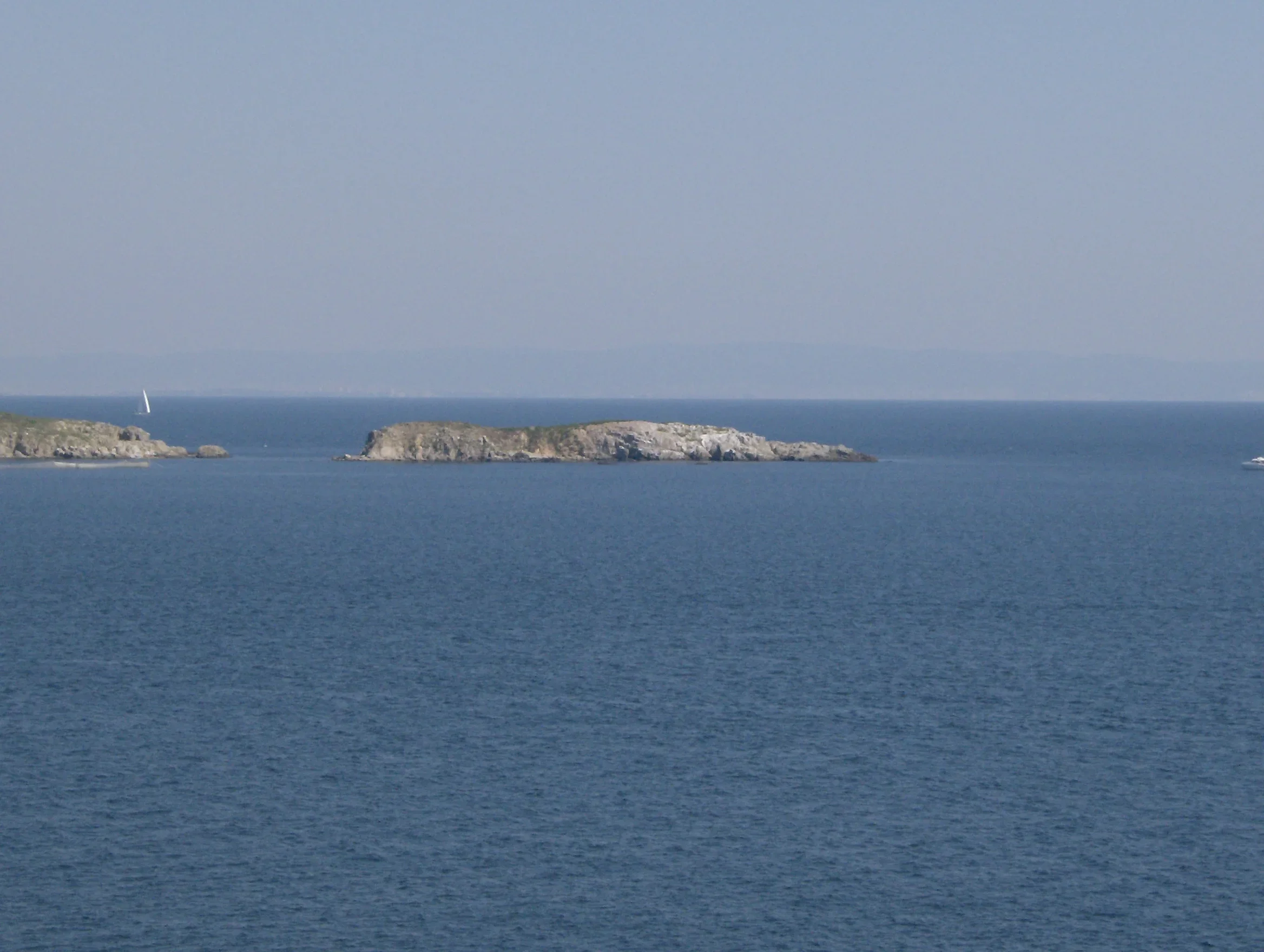
Together with St. Peter, St. Toma, St. Quiricus and Julietta, St. Anastasia, and several smaller rocky islets, St. Ivan forms the "family" of Bulgarian islands in the Black Sea. It is the largest by area and one of the most history-rich sites in this group.
Its location in Bulgarian territorial waters, combined with its archaeological, religious, and natural significance, turns it into a kind of "open textbook" on history, geography, and biology. For Sozopol and the region, the island is not only an emblem visible from every point of the old town, but also a key resource for sustainable cultural and natural tourism.
Challenges and prospects
The main challenge for the management of St. Ivan remains the delicate balance between conservation and promotion. The pressure from tourism, the interest in the relics of Saint John the Baptist, and the desire for easier access must be combined with the requirements of the reserve regime and the need to protect birds and archaeological structures.
If this balance is maintained, St. Ivan Island will continue to be one of the most valuable "guardians" in Bulgarian territorial waters – a place where the lighthouse, the ancient sanctuaries, and the winged inhabitants tell a shared story about the presence of man and nature along the Black Sea coast.
Comments (0)
No comments yet.