
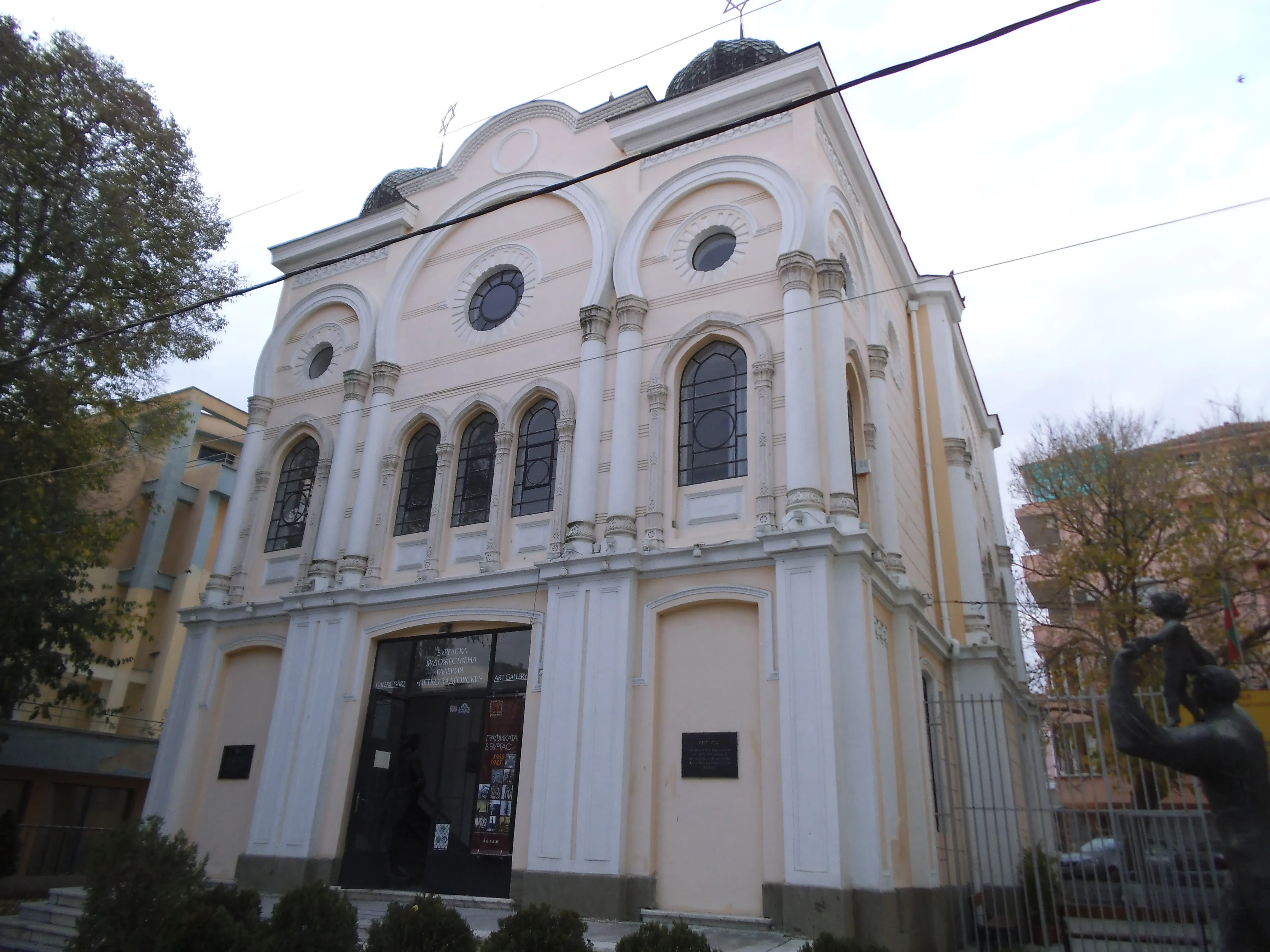
Архитектурният шедьовър на Рикардо Тоскани – синагогата в Бургас, възникнал между 1905 и 1909 година, представлява забележителен пример за стилово многообразие. Проектът майсторски съчетава неокласически и романтични елементи, като мавританските декоративни мотиви препращат към испанските корени на еврейската общност.
Сградата носи дълбок исторически контекст – тя символизира миграционните процеси на евреите, принудени да напуснат Пиренейския полуостров заради религиозните преследвания по време на инквизицията. Тези преселници намерили убежище в българските земи, създавайки трайни общностни връзки.
Политическите трансформации драстично променят съдбата на сградата. Следвоенният комунистически режим предизвиква масово изселване на бургаските евреи към Израел. На 7 април 1947 година сградата е национализирана и превърната в художествена галерия, като при това преустройство са унищожени значителна част от автентичните интериорни елементи – стенописи, витражи и полилеи.
Коментари (0)
Все още няма коментари.