
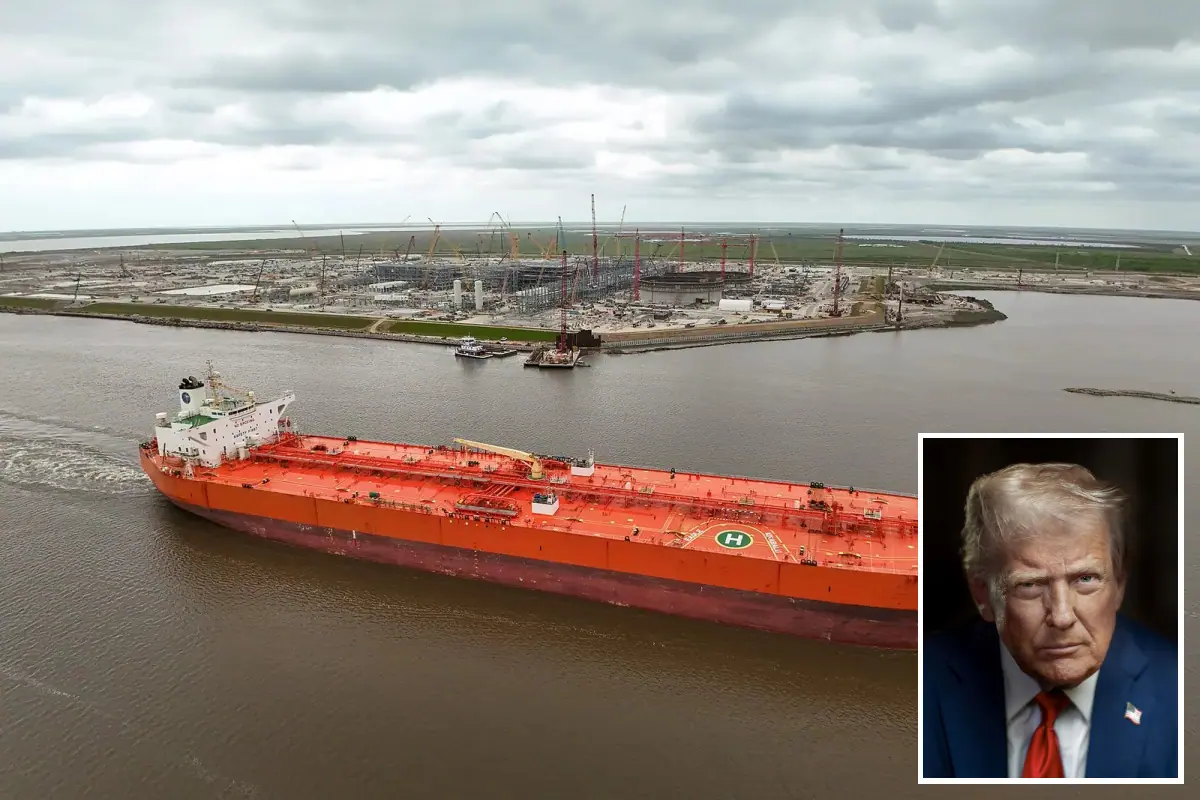
The driver at the local gas station this week isn't concerned with geopolitics. They stare at the dashboard, see the total, and somehow automatically imagine a burning refinery somewhere in Russia — after all, that's exactly what the news is reporting. It seems logical: a Ukrainian drone hits a plant in Yaroslavl, and the next day, gasoline in Bulgaria is more expensive. However, the connection is flawed. Fuel prices here, across the entire European Union, and in the United States are rising primarily because Donald Trump has entered into an open military clash with Iran in the Strait of Hormuz[2][4] — not because Ukrainian drones are hitting Russian oil infrastructure. Ukraine will certainly continue to strike where the Kremlin finances its war against it. Under current conditions, this is the only way to counter the Kremlin's ambitions. Nevertheless, it is important to understand that the bill for the expensive fuel at our gas stations comes predominantly from elsewhere. Trump's conflict with Iran in the Strait of Hormuz is impacting diesel prices in our region.
What exactly is burning in the Strait of Hormuz
Since late February 2026, the US and Iran have been engaged in an open military clash, centered in the narrow maritime passage between the Persian Gulf and the Sea of Oman[4]. Recent weeks have seen a sharp escalation: American strikes on Iranian tankers and retaliatory attacks by the Revolutionary Guard against other vessels[2]. Traffic through the strait has dried up—dropping to barely a dozen commercial ships per day, compared to the usual much heavier flow[2]. Brent, the global benchmark for crude oil prices, jumped to around 97 dollars per barrel in early September—a nine percent increase in five days and nearly 19% for the month[2], and following the temporary shutdown of a major pipeline in Saudi Arabia on September 11, it even surpassed the 104 dollar threshold[9]. The reason is as old as the oil exchanges themselves: approximately one-quarter of all global maritime oil traffic passes through Hormuz, nearly one-fifth of global consumption[5]. A threat to such a large share of supply drives prices up everywhere—even in places where not a single drop of oil is physically purchased from there.
Here is the first nuance that is usually overlooked. Most of the oil passing through the strait — over 80% — is destined for Asia, primarily China and India[5]. The United States imports only about half a million barrels per day from there, a negligible share of its own imports[5]. But oil is a global, fungible commodity — its price is formed in a single market, not in ten separate ones. Therefore, a shock in Hormuz drives up costs in both Plovdiv and the state of Mississippi, regardless of whose barrel is exactly in the tank.
Why crude oil is barely reacting to strikes on Russian refineries
Now — Russia. With the start of 2026, Russian attacks on schools, hospitals, shopping centers, warehouses, and the homes of Ukrainian citizens no longer go unanswered. That is to say, since February, Ukrainian drones have been attacking Russian oil refineries on average once every two to three days, and in August alone, the number of strikes reached 21. The effect on Russian refining is real and painful for the Kremlin: crude oil processing fell to its lowest level in over twenty years, around 3.8–3.9 million barrels per day compared to the usual 5.3–5.5 million[8]; gasoline production dropped by nearly 20% year-on-year, and diesel by over 23%. Within Russia, queues, limits of 40–60 liters per car, and gasoline at 120 rubles per liter are no longer an exception in several regions.
But there is an important nuance: when a refinery shuts down, the crude oil does not disappear — it simply is not processed in Russia and is sent abroad for export in its raw form. Analysts from the energy and clean air research organization note that Russia's crude oil revenues actually grew slightly in July, and the buyers remain the same: China takes half of Russian exports, India about 37%, and Turkey and the EU about 5%[7]. The strikes are shrinking Russian refining, but they are not shrinking the global supply of crude oil — which is why Brent prices have barely budged because of them. The bottleneck is not the quantity of oil, but the capacity to turn it into fuel[8].
Russia has long stopped exporting fuel to the West
There is a second nuance that is worth stating clearly: Russia introduced a full ban on gasoline exports starting April 1, 2026, and extended it until the end of the year, and as of July 8, it also halted diesel exports due to shortages at its own gas stations[1]. In other words, even without a single Ukrainian strike, Russian fuel has long failed to reach European pumps — due to the sanctions following the invasion, it officially wasn't reaching them before, and now it isn't even reaching its traditional buyers like Turkey and Brazil. The EU is not losing Russian gasoline or diesel right now — it wasn't buying them yesterday either.
Where the effect is still felt: diesel
Honesty, however, requires us not to stop here, because not everything can be explained by Ormuz alone. Before the war, Russia exported about 30 million tons of diesel annually—a real surplus that cooled the global market[8]. Once this surplus vanished due to the strikes and the subsequent ban, its buyers—Turkey, Brazil, North Africa, Central Asia—turned to the same suppliers that Europe relies on: the USA, India, and the Middle East[8]. The result is a record crack spread for diesel—the difference between the price of crude oil and the price of the finished fuel, which shows how expensive the refining and logistics to the gas station actually are. European diesel refining margins already exceed $60 per barrel[8], and in the eurozone, they account for about 19% of the final price per liter of diesel, whereas for gasoline, they are only 8%[3]. This is why diesel prices are rising more sharply than gasoline—and it is precisely here that the Ukrainian strikes, while not driving crude oil prices, leave their real, small, and growing footprint alongside the much larger Ormuz shockwave.
The Bill in Bulgaria
The combined result of these two forces is familiar to anyone refueling these days. The average price of A95 gasoline in our country reached 1.68 euro per liter by 20 September, while diesel reached 1.95 euro; in just one week, the increase was around 3–4%, and since the beginning of the month, it has been over 7%[6]. Across the entire European Union, gasoline now costs an average of 2.063 euro per liter, and diesel 2.159 euro, the highest values since the European Commission began tracking this data, i.e., since 2005[3]. According to analyst forecasts cited by the European Central Bank, diesel margins will only peak in October — meaning prices may rise further before they begin to fall[3].
- In this context, it is worth considering the incredible scenario: suppose that Putin's desire to seize Ukraine is so incurable that it is beyond reconsideration, and the entire world agrees to give him what he wants in order to maintain well-being and stability. While this may border on utopia or a diagnosis on one hand, on the other—such a move by Europe would have consequences, but no longer in the form of fuel prices. But let us assume! What will Trump gain by replacing dependence on Iran with dependence on the Kremlin, if the configuration of today's Russia remains the same? What will D. Trump owe to Russia for his "salvation" in the unfolding situation? What will the situation look like when Moscow becomes the only alternative and further strengthens itself at the expense of Ukraine? It seems that this is precisely the solution being offered to us as a solution to the diesel issue.





Коментари (0)
Все още няма коментари.