
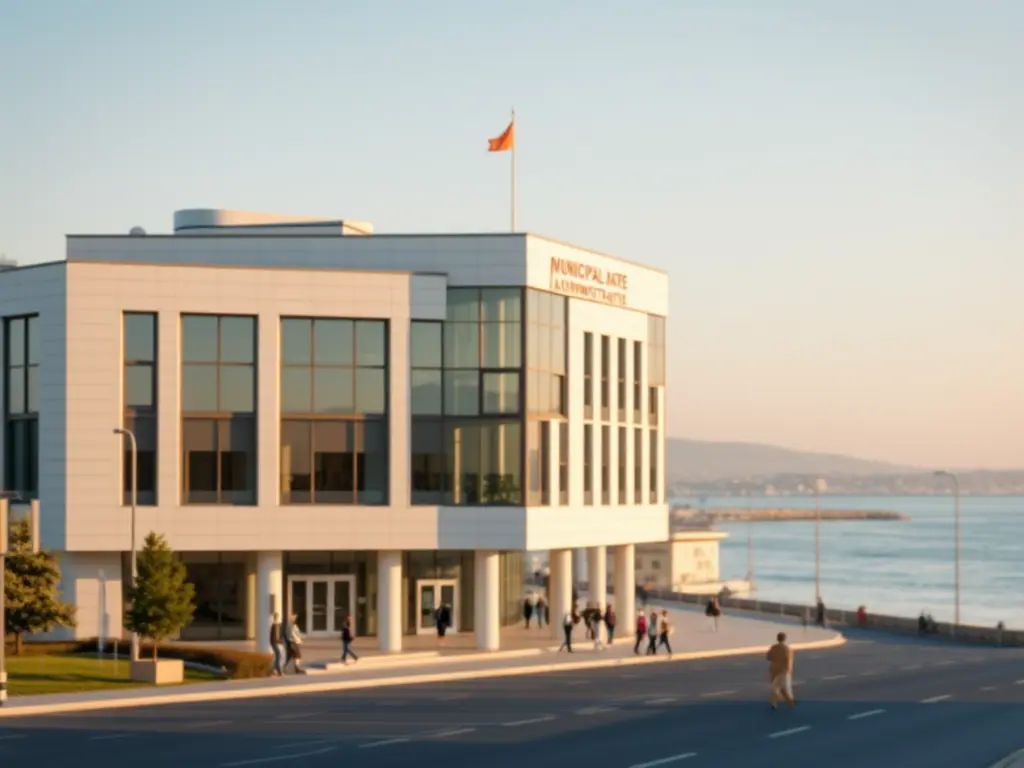
With a focus on achieving greater efficiency in public resources and maintaining financial stability, the Nesebar administration has outlined its key priorities for 2026. A series of measures have been taken to improve the collection of fees and local taxes, as well as to optimize expenditures to ensure high-quality public services. In this context, municipal councilors have officially approved the financial framework for next year's budget, which amounts to 73.538 million euros.
The allocation of the planned total expenditure of 73.538 million euros is structured as follows:
- State activities – 18.5 million euros;
- Local activities – 50 million BGN;
- Additional funding – 5 million BGN.
Local revenues and receipts are generated through several main sources: 24.2 million euros from taxes, 20.3 million euros from non-tax revenues, 6.764 million euros as a carryover balance from 2025, and 1 million euros set aside for contributions under Art. 60 and Art. 64 of the Waste Management Act (ZUO). Added to these amounts are a general subsidy from the state budget of 19 million euros (including a carryover balance of 1.335 million euros), as well as 21.200 million euros secured from European projects and programs.
An important part of the financial plan is the 13 million euro investment program (with an 880,000 euro targeted subsidy from the Central Budget), aimed at infrastructure development. A number of improvements are planned:
- Construction and rehabilitation of the street network, sidewalks, and lighting;
- Installation of new traffic light systems;
- Creation of playgrounds and sports fields;
- Construction and renovation of public buildings;
- Purchase of long-term assets – from hardware and software to waste containers and new transport vehicles.
Social policy remains a key pillar of the budget through targeted expenditures to support low-income individuals and people with disabilities. Funds are provided for the "In vitro" program, one-time allowances for newborns, support for residents with chronic renal failure for hemodialysis, free public transport, and free food for children up to 3 years of age in municipal milk kitchens. Public order and cultural life are also supported through the maintenance of fire and police services (including teams during the summer season), subsidies for local community centers, support for sports clubs, mass sports and organization of sporting events, as well as for non-profit organizations within the territory of the Nesebar municipality.
The entire document is designed as a balanced budget that takes into account the real needs of the population and the municipality's financial capabilities, while also providing funds for co-financing current projects under Operational Programs.

Comments (3)
73 милиона евро за Несебър… Хубаво! Дано отидат за нщо полезно, а не за корупция.
Седемдесет и три... милиона? В Несебър ли наистина са толкова пари? Странни числа са тези.
Еми, да видим как ще се усетят тия 73 милиона в Не