
At the beginning of 2026, Bulgaria finds itself at a key turning point: the economy is growing moderately, and the pressure to reduce emissions and pollution is forcing the country to restructure entire sectors. Recent forecasts outline GDP growth between 2% and 3.1% in 2026, depending on the scenario – the European Commission expects around 2.7% growth, while the Bulgarian National Bank forecasts 3.1% real growth for the year. Against this backdrop, climate policies are gradually ceasing to be just an expense and are becoming a tool for new investments, jobs, and a cleaner environment.
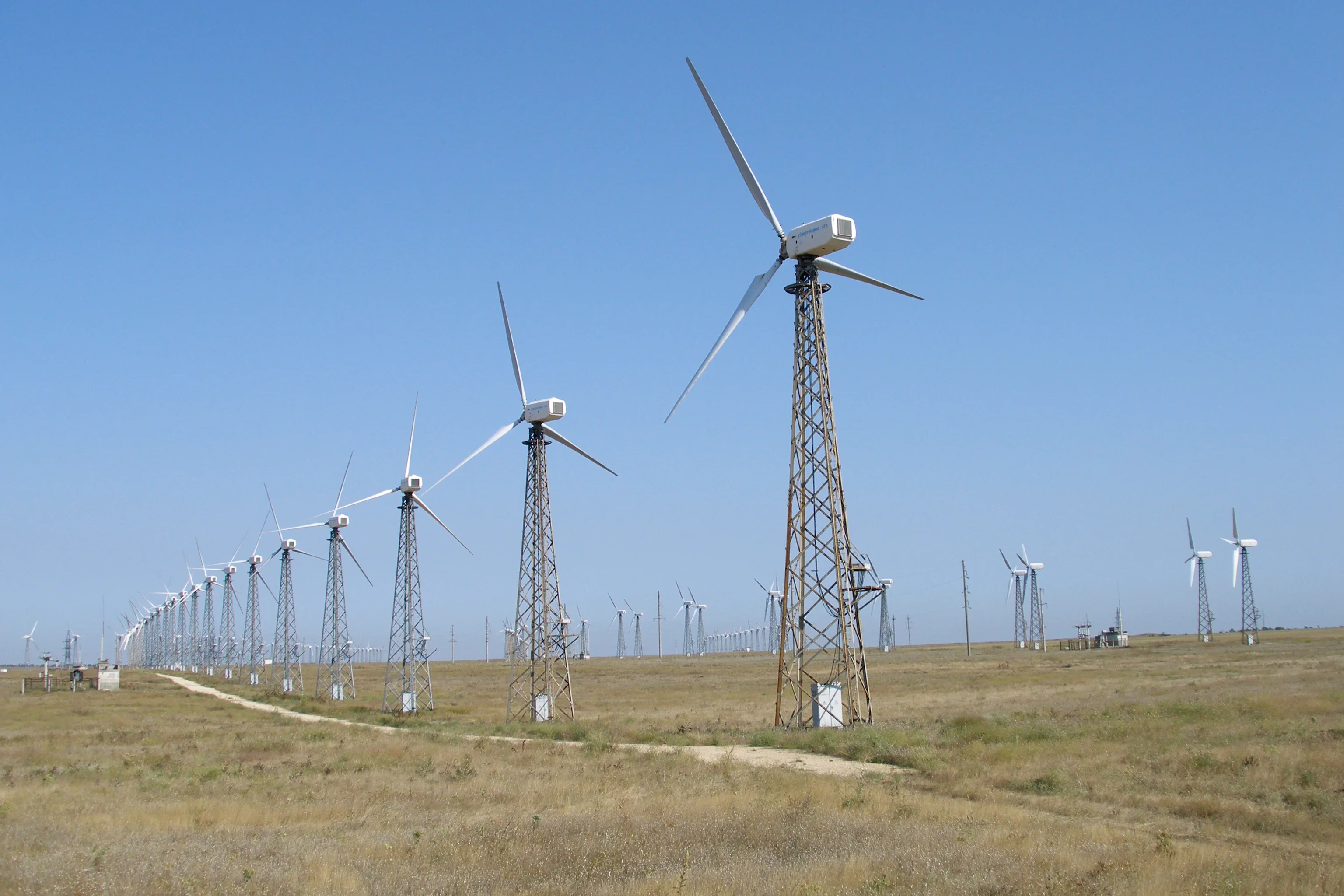
From coal to sun and wind
One of the most visible examples of turning climate requirements into opportunities is the energy transition. Under the Recovery and Resilience Plan and the integrated "Energy and Climate" plan, Bulgaria is committed to an accelerated reduction of the share of coal and an increase in renewable sources in the energy mix by 2030.
In March 2026, the European Commission announced that 55 million euros would be provided under the RENEWFM-2026-INVEST Renewable Energy Financial Mechanism for projects for ground-mounted photovoltaic power plants with battery energy storage systems in the regions of Stara Zagora, Pernik, and Kyustendil – regions traditionally dependent on coal. Each project must have a capacity between 10 MWp and 100 MWp, which opens up a field for medium and large investors.
Green investments in coal regions
Funding for photovoltaic plants in Stara Zagora, Pernik, and Kyustendil has a dual effect: on the one hand, it reduces dependence on coal and emissions, and on the other, it creates new economic activities and jobs in regions threatened by depopulation and unemployment.
In parallel, the European recovery plan provides for a total of 1.2 billion euros for clean energy in Bulgaria – funds that are linked to specific reforms, including changing the structure of energy production and better management of state-owned enterprises. Thus, climate commitments become a condition for access to significant financial resources.
Economic growth in a "green frame"
The Vienna Institute for International Economic Studies forecasts growth of the Bulgarian economy of 2% in 2026, accelerating to 2.2% in 2027 and 2.4% in 2028, despite the shock in energy prices caused by the war in Iran. At the same time, the BNB sees a scenario with higher growth – around 3.1% in 2026 – with a smooth decrease in unemployment to about 3.4%.
In both cases, the green transition is seen as an opportunity to modernize the economy, but also as a risk: investments in clean energy, energy efficiency, and infrastructure must compensate for higher energy costs and prevent the "leakage" of industries to countries with weaker environmental requirements.
Photovoltaics and batteries: the new industry
In recent years, Bulgaria has become one of the fastest-growing markets for photovoltaic capacity in the region, with numerous new projects, including power plants with their own energy storage. Investments in battery systems allow for better grid management and the integration of large amounts of solar energy without compromising the security of supply.
Such projects not only reduce emissions but also create export potential – from engineering services to component manufacturing. Some of them are supported by European programs such as "LIFE" and the renewable energy mechanism, aimed at the transition to clean energy.
Climate policy and scientific basis
According to analyses by independent experts, 2025 was a "year of the climate turning point" for Bulgaria – a period in which the topic of climate policy moved beyond the framework of declarations and began to be supported by more transparent data and scientific argumentation.
The integrated "Energy and Climate" plan and its update contain scenarios for reducing emissions in energy, transport, and industry, as well as measures for adaptation to climate change – from water resource management to protection against extreme weather events.
A clean environment as an economic resource
Climate policies are not limited to energy. Bulgaria also relies on its natural capital – protected areas, mountains, the Black Sea coast – as a resource for sustainable tourism and green activities. Improving the quality of air and water, limiting industrial pollution, and better waste management are key to attracting "green" tourists and investors.
Part of the projects under the Recovery Plan include rehabilitation of water pipelines, modernization of treatment plants, and measures to reduce pollution in urbanized areas – all activities that simultaneously improve the environment and create employment in construction and services.
Risks: slower reforms and delayed investments
The European Commission warns that the growth of the Bulgarian economy could slow down to about 2.7% in 2026 and near 2.1% in 2027 if domestic activity – consumption and investment – remains weaker. This means that a delay in reforms and the implementation of green projects could reduce the positive effect of climate investments.
The Commission has already set a deadline of the end of August 2026 for the implementation of key reforms, including in the energy sector, in order to receive the remaining funds from the post-pandemic fund. This puts additional pressure on institutions to accelerate the implementation of solutions related to clean energy and decarbonization.
Social dimension: jobs and a fair transition
The transition from coal to renewable sources inevitably has a social dimension. Reducing the role of coal mining in the Maritsa basin and other regions requires retraining programs and the creation of alternative jobs. Part of the funds from European funds are aimed precisely at a "just transition" – support for workers and communities affected by the closure of coal capacities.
At the same time, low unemployment – forecast at around 3.4–3.7% in 2026 – creates additional pressure on the labor market, which makes attracting new investments and increasing productivity even more important.
The climate course as a strategic choice
Climate challenges – from extreme heatwaves to droughts and floods – already have a real cost for the economy and society. Instead of perceiving them only as a risk, Bulgaria is gradually trying to use them as an occasion for modernization: clean energy, more efficient infrastructure, digitalization, and new green industries.
Whether this course will turn into a sustainable strategy depends on the fulfillment of the commitments made, the speed of reforms, and the ability of institutions to turn the available European and national funding into real projects on the ground. If this happens, the climate transformation could turn out to be one of the greatest economic opportunities for Bulgaria in the next decade.



Коментари (9)
Абе хорааа... да ви кажа аз! 😂 Чета я тая новина и все едно съм гледал реклама на някаква празна кутия - "пълна с възможности!". Ясно, че европарите са си европари, без тях щяхме да си се пържим на дърва. Но к'во става с тия пари? Нали
абе, тва "превръщане на риска в растеж" май е най-голямата шега! шест пъти съм чел новината и все едно слушам една и съща празна приказка. да, европа дава пари 🙄
Ехе, ама гледам оптимизъм! Дано не се окаже само празни приказки за туристи... Важното е да
Ах, да, "превръщане на риска в растеж"... Разрешете ми да задам един наистина фундаментален въпрос: След всичките обещания и планове от последните десетилетия – наистина ли някой очаква, че ще видим *значима* промяна само до 2026 година? И това не е обикновена песимистична забележка, а сериозен въпрос относно ефективността на нашите управленски стратегии.
Ех... ама наистина ли? Дано не се окаже пак като с магистралите - обещания на куп, а