
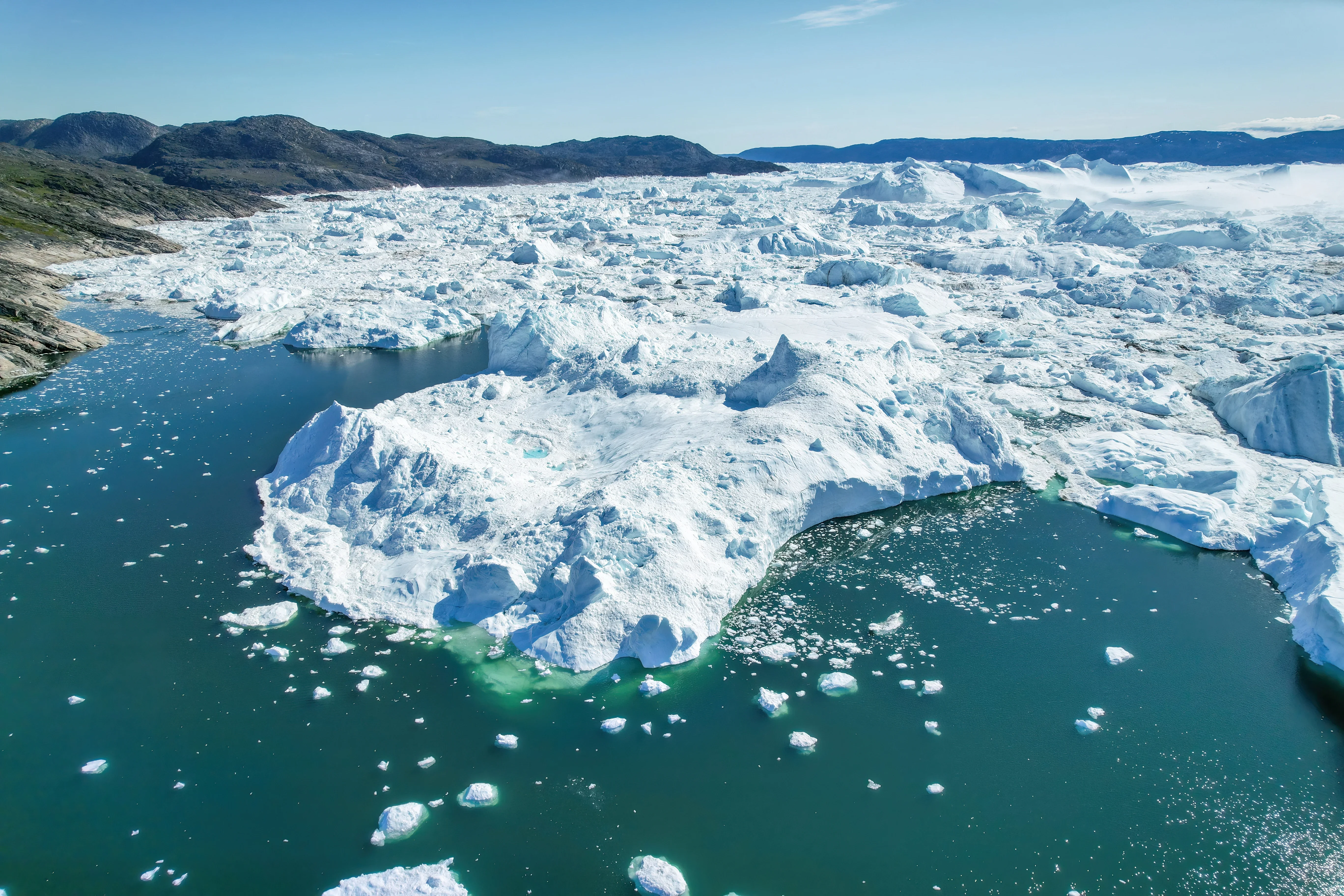
Greenland experienced the warmest January since meteorological observations have been kept. According to preliminary data from the Danish Meteorological Institute, the average temperature in the capital Nuuk reached 0.2°C, while the usual January value for the period 1991–2020 is around -7.7°C. This is almost eight degrees above the climatic norm – a difference that clearly shows how quickly the Arctic climate is changing.
The record-breaking warm month is not just a curious fact from the statistics. It is another signal that climate change is redrawing the reality of the huge island – from the way people make a living to Greenland's role in global geopolitics.
The Arctic is warming in "accelerated mode"
"Climate change is already categorically visible in Greenland," emphasizes Dr. Jakob Højgaard, head of the National Climate Research Center at the Danish Meteorological Institute. According to him, the analysis of the data shows that the island is warming approximately four times faster than the world average.
This means that the trend is not just "a little warmer winters", but an accelerated process with an effect on glaciers, sea ice, ecosystems and infrastructure. Milder winters lead to thinner and more unstable sea ice, which every year reaches less south along the coast and stays for a shorter time. This changes traditional ways of moving and reflects centuries-old habits related to hunting, transport and everyday life.
The economy under pressure: fishing and warm sea
The Greenlandic economy is highly dependent on the sea. Fishing provides approximately 23% of the gross domestic product and about 15% of employment, according to the Greenland Statistical Office. The export of shrimp, halibut and cod is the backbone of the island's foreign trade.
However, the warming of the ocean is beginning to rearrange marine ecosystems. Scientists warn that changes in water temperature and salinity can displace migration routes and habitats of key species. The shrimp catch is already under pressure – stocks are declining, quotas are shrinking, and this is hitting local communities' incomes directly.
At the same time, the cod catch is rising sharply, which temporarily compensates for some of the losses. But this "change of the main characters" in the sea is a double-edged sword – it shows how dynamically the system is changing and how difficult it is to plan in the long term, when the climate literally rearranges the map of resources.
Higher temperatures and thinner ice also make sea transport difficult, especially in the more remote areas where ice has traditionally served as a natural "path". Locals and businesses are already feeling that the winter season is not what it used to be – and this has a price.
Geopolitics on melting ice
Climate change does not come alone – it adds a new layer to the geopolitical interest in the Arctic. With the growing strategic importance of the region, Greenland finds itself in the center of attention not only because of its geography, but also because of its resources.
US President Donald Trump has repeatedly stated that Greenland is of "key importance" for American national security, and in the past there were even public statements about the possible acquisition of the island. Later, after diplomatic tensions, the White House abandoned the ideas of pressure through force or trade measures, but the message remained clear: Greenland is a strategic board on which the great ones play.
The island has deposits of 25 of the 34 minerals that the European Commission classifies as "critical raw material fuel" – including rare earth elements needed for high-tech industries and for the production of components for clean energy. They are the basis of batteries, wind turbines, electric vehicles, electronics.
On the one hand, warming and the retreat of ice make some of these resources more accessible. On the other hand – the harsh climate, limited infrastructure and sensitive ecosystems mean that the mining sector is still years away from mass, stable commercial exploitation. Greenlandic society is also divided on the question of how far mining can go without sacrificing nature and the traditional way of life.
Future at a crossroads
Dr. Jakob Højgaard emphasizes that it is too early to make categorical predictions about the exact economic consequences of record warming. "The transformation is already visible in the landscape itself," he says – melting glaciers, a changed snow regime, different marine and coastal conditions.
Greenland is both a "thermometer" and a "litmus test" for the world. As climatologists say, what is happening in the Arctic today may become a reality for other regions tomorrow. The record warm January is not just an anomaly, but part of a trend that puts the island at a crossroads between economic opportunities, environmental risks and geopolitical interests.

Comments (12)
Пич, сериозно ли? 0.2 градуса през януари?! Това вече е яко зле, а не "уау" като някой филм. Четири пъти по-бързо... Тцтцтц. Явно глобалното затопляне си прави каквото иска, без да пита никого. И на нас ни касае пряко - ще има повече миграция, промени в климата и т.н.
Сериозно ли? Гренландия +0.2 градуса януари?! Какво става
Боже мой, наистина ли?! 0.2 градуса през януари в Гренландия... Това е страшно, да си го кажем. Четири пъти по-бързо от цялата планета – какво ще стане с ледниците, с морското равнище? Мисля си за последствията за всички ни, не само за Европа, а за целия свят. Надявам се политиците най-после да разберат колко спе
абе, чакай малко... януари в гренландия с +0.2? 🥶 да сте видели нещо
ама хайде сега, сериозно ли такива новини четем? 😳 януари половин градус над нулата в гренландия… и то не някъде, а там! четири пъти по-бързо се стопля арктика – да ви кажа, яко ме при