
World Cup 2026 Final: when, where, what time, who is playing, and what are the predictions
The 2026 World Cup is entering its final and most anticipated chapter – the final match that will determine the world champion. After dramatic eliminations, spectacular semifinals, and a series of records, the football planet is looking at MetLife Stadium near New York, where the fate of the trophy will be decided on July 19.
When and where the final will be played
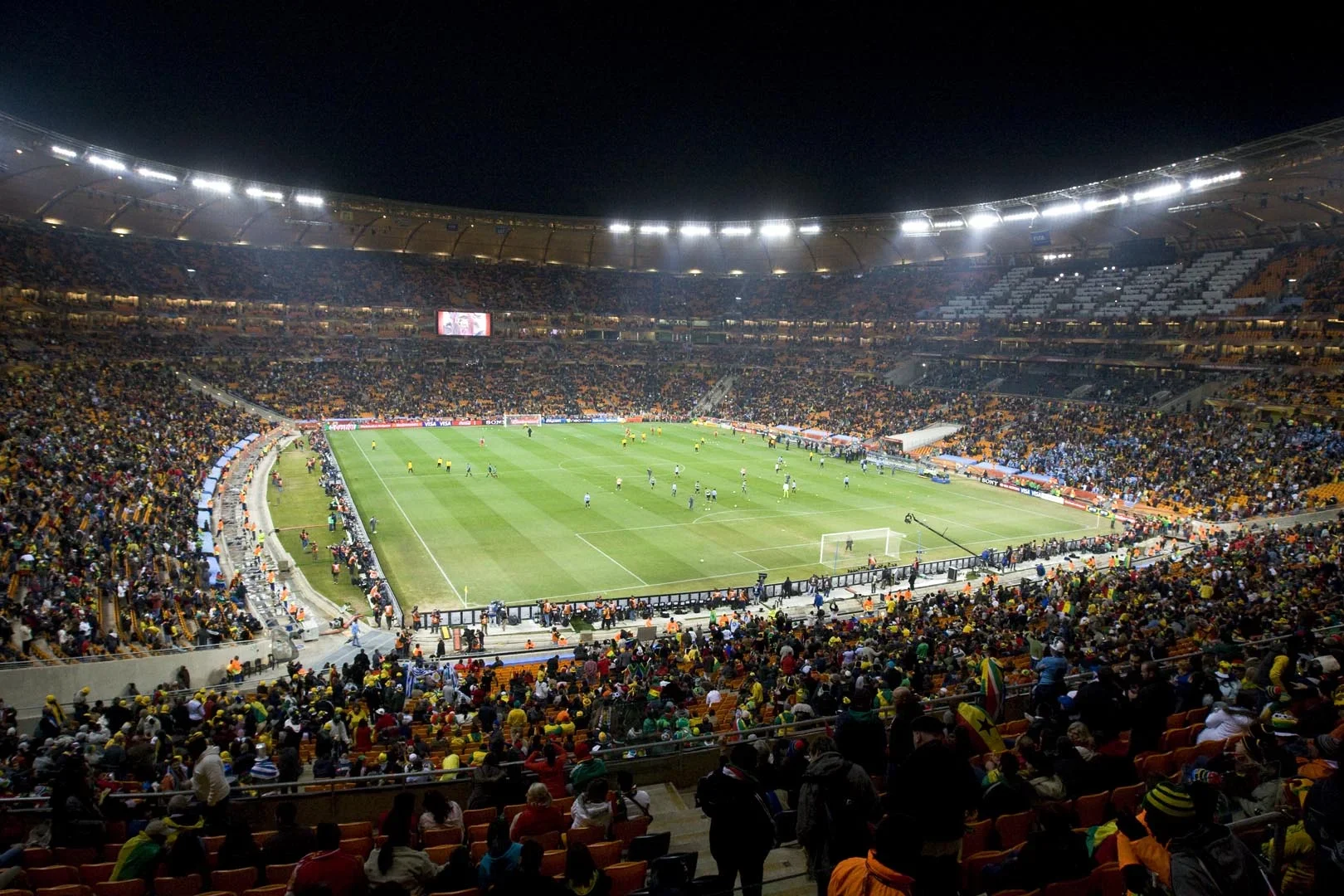
According to official information from FIFA and leading sports media, the 2026 World Cup final will take place on July 19, 2026 – Sunday, at the end of the largest tournament in history with 48 participating teams and a total of 104 matches. The host of the final duel is MetLife Stadium in East Rutherford, New Jersey, located about 16 kilometers west of New York.
The stadium is known during the championship under the name "New York New Jersey Stadium" – this branding is part of FIFA's policy of temporarily removing corporate names of arenas during world finals. The arena with a capacity of about 82,000 spectators has already hosted a number of key matches in the group stage and playoffs, and the final is the culmination of this program.
The start time of the final is 22:00, a time cited by a number of international media in the context of different time zones. Specialized financial and sports sites note that this is an evening slot, chosen to be convenient for the television audience in both America and Europe.
Who is playing in the final: the path of Spain and Argentina
By mid-July, the picture of the semifinals had already outlined the main contenders for the final. Spain reached the title match after beating France 2:0 in the semifinal – a match described in Bulgarian media as "Spain hit France and is in the final of the 2026 World Cup". The reports emphasize the total superiority of "La Furia Roja" and the shocking statistics for the "terror of France": zero real chances, not a single successful dribble from Ousmane Dembele, and numerous errors in building attacks.
The Spanish approach in this match is described as an extreme evolution compared to the classic "tiki-taka". The analyses emphasize that De la Fuente's selection has "broken its own DNA" and replaced prolonged ball possession with high-speed transitions, vertical attacks, and a game resembling "Formula 1" in pace. This makes Spain's path to the final an example of tactical revolution, in which control of the match is no longer measured only in percentage of possession, but also in speed of attack and efficiency.
The other big hero in the semifinals is Argentina, which qualified for the final after a dramatic 2:1 victory over England in Atlanta. Reports from July 15 indicate that the match unfolded like a classic thriller: England took the lead in the 55th minute through Anthony Gordon, but Argentina turned the result around at the very end with a goal by Enzo Fernandez in the 85th minute and a winning goal by Lautaro Martinez in stoppage time – the 90+2 minute.
The duel also showed another trend – despite England's strong defense and tactical discipline, Argentina's mental resilience in the eliminations remains decisive. "The first curse of the 2026 World Cup is already a fact. Bad news for Messi" – this is how Bulgarian media described the statistical burden on the star, yet his team found a way to the final, even when the top scorer was not in the center of the scoring.
Results from July 15: the semifinal context
On July 15, the football world received a definitive answer as to who would be the second finalist. In Atlanta, Argentina won against England 2:1 in a semifinal that Bulgarian reports describe through the prism of key individual and tactical moments – "two goals by Bellingham and the cable-assist of England-Norway" are context from the previous match of the English, but against Argentina they failed to repeat the same efficiency.
At the same time, the other semifinal – France against Spain – ended with the categorical 2:0 victory for the Spaniards. Bulgarian analyses examine the match through numbers: "France's horror in numbers: 0 chances, 0 dribbles for Dembele, 20 errors for Olise" – statistics that show not only Spain's tactical control, but also the psychological collapse of "Les Bleus" at the most important moment.
On the eve of the final, the topic of France and its elimination remains important for the overall picture of the tournament, but the focus is now on Spain and Argentina – two teams that have shown different types of dominance throughout the World Cup: European speed and structure versus South American resilience and individual class.
Tactical and statistical predictions for the final
Predictions for the final rely on several key statistical trends. Spain comes into the match with an impeccable series in the knockout phase – a convincing success over Austria, a tactical victory over Portugal, and dominance against France. The team shows it can control both teams that rely on possession and those that play on the counter-attack.
Argentina, for its part, already has heart-stopping victories over Cape Verde and Switzerland behind it, as well as a dramatic success against England. Some international sources note that the defending champion, led by Lionel Messi, is becoming a "tournament team" – one that doesn't always play the most beautiful football, but finds a way to win in critical moments. The two late goals against England are further proof of this.
Statistically, Argentina already has a series of wins in the playoffs in which it scored decisive goals in the last 15 minutes – a trend that could be a factor in the final, especially if Spain starts stronger. At the same time, Spain has demonstrated that it knows how to "kill" games through control of the tempo and deep rotation in the midfield. The balance between these two styles makes the final difficult to predict, but many analysts see Spain as a slight favorite due to their more stable defense and wider circle of goalscorers.
Expectations and significance of the final
The 2026 World Cup final will be not only a battle for the trophy but also a symbolic clash between two football eras. Spain comes as a representative of modern European football, which has evolved from "tiki-taka" to "turbo-positional" play, while Argentina defends the tradition of South American passion, built around legendary figures like Messi.
For the global audience, the match at MetLife Stadium will be a test for the new tournament format – 48 teams distributed across three host countries, and a long calendar from June 11 to July 19. If the final offers high quality and a dramatic plot, it could strengthen the image of the expanded format as successful, despite concerns about player load and logistics.
From a Bulgarian perspective, the final is the culmination of a series of storylines followed throughout the tournament – "Morocco's second consecutive quarterfinal", "the horror of France", "the evolution of Spain", and the "curse" around Messi, which never manages to stop Argentina. On July 19, all these stories will meet in one match that will decide who will be the world champion in the first tri-continental World Cup.

Comments (8)
Ооооо, пичовеее! Нямаааам какво да кажа, яко е! ФИНАЛ на Световното в Ню Йорк?! Браво, браво, добре се пораздвижиха малко нещата! Честно казано, досега все едно гледахме стадионите като за свети Петък, а сега - нещо ново, нещо различно!
Абе, хора… все пак, Ню Йорк за финал на световното… ебаси! Първоначално се усмихнах, като го прочетох, че нщо ново и интересно. После ме хвана тъга - 3 сутринта... да гледаш футбол в петък рано сутрин? Това не е нормално.
Аааа, Ню Йорк... Да гледаме футбол в 3 сутринта...
Ееее, Ню Йорк за финал ли? СЕРИОЗНО?!
Абе, пичове, сериозно ли? Ню Йорк за финал на Световното… да, яко е глобалното разширение и всичко останало, ама 22:00 в Ню Йорк значи 3:00 сутринта тук! Тва е супер неудобно. Разбирам, че искат да привлекат повече зрители в Щатите, но да гледаш финал на Световното в петък рано сутрин… майтап сме си.