
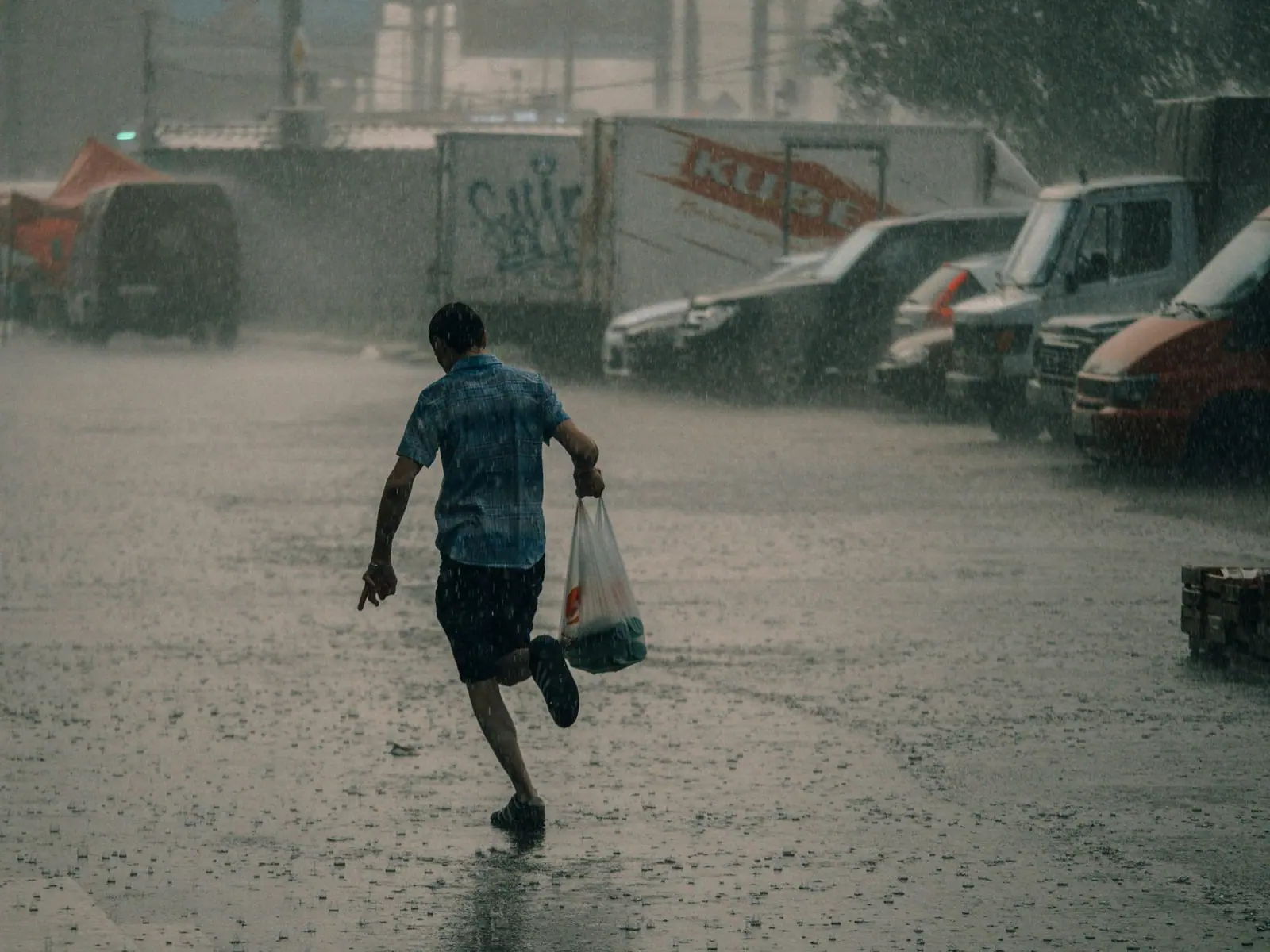
One person has died, rivers have burst their banks, and homes and streets are under water on Crete after heavy rain.
Greece's fire service operations centre says it has logged 255 calls over the bad weather. Firefighters are pumping out water, cutting up fallen trees and moving people to safety, while local councils in the three worst-hit regions are sending in heavy machinery to clear roads blocked by mud and debris.
The regions of Rethymno, Heraklion and Lasithi have been hit hardest. In Heraklion, near the villages of Maladhes and Phinikia, the Drakoulis river overflowed, and crews pulled 13 people out and pumped water at eight sites. In Rethymno, near Mylopotamos and Zoniana, crews rescued 3 people and pumped water at 15 sites. In Lasithi, near Minoa Pediada, there was 1 rescue and 15 pumping operations.
Mylopotamos has declared a state of emergency after mayor Yorgos Kladhos asked Greece's climate crisis and civil protection ministry for help. On the mayor's orders, schools in the area will stay shut on Friday, October 2, along with municipal nurseries and kindergartens.
The worst-hit spots in the municipality are Zoniana, Livadia, Axos and Perama, though other areas have had problems too. Water, mud and debris have swept into villages, streets have turned into rivers, and roads and buildings have been damaged.
In Rethymno, rescuers found the body of an 80-year-old shepherd who had been missing since the day before. A neighbour said the man had gone out to his sheep pen in the evening, worried the metal roofing would blow off and kill his animals, and was apparently swept away by floodwater near Karines.
Three alerts went out to people in the affected areas through the 112 emergency system, telling them not to travel unless they had to. The alerts went out at 9:34 a.m. for Minoa Pediada, 10:02 a.m. for the Agios Nikolaos area of Lasithi, and 11:09 a.m. for Maladhes and Phinikia.
In Anogia, nearly 400 tonnes of water fell on every 1,000 square metres in just a few hours — roughly what Athens gets in an entire year. "These amounts are extreme. The readings are biblical," said meteorologist Nikoleta Ziakopoulou. Half of Crete is mountainous, and the mountains are getting the heaviest rain.
Greece's National Meteorological Service says the heavy rain and storms over the southern Aegean, mainly over Crete, will keep easing off and picking up again through Sunday midday. Forecasters expect up to 200mm of rain. Strong northeasterly winds in the Aegean, reaching force 8 to 9, will blow until Saturday afternoon, October 3.
Ziakopoulou says she is almost certain conditions will worsen again from Friday afternoon and evening, with her data pointing to roughly as much rain again. "I'd even go as far as to say winds of force 10 in the Aegean, along with fresh heavy storms, will hit Crete," she said.
Meteorologist Nikos Kanderes forecasts at least five days of on-and-off rain, heavy in places, with large amounts of water and the worst problems expected in the Chania and Rethymno regions. What matters most is how well the water drains away, since there will also be dry spells between the downpours. The rest of Greece has no rain problems — Evia might get a little, but not much. Boats are barred from sailing in winds of force 8 and 9. The wind will ease day by day and the sun will come out more, but temperatures will stay low throughout.

Comments (0)
Все още няма коментари.