
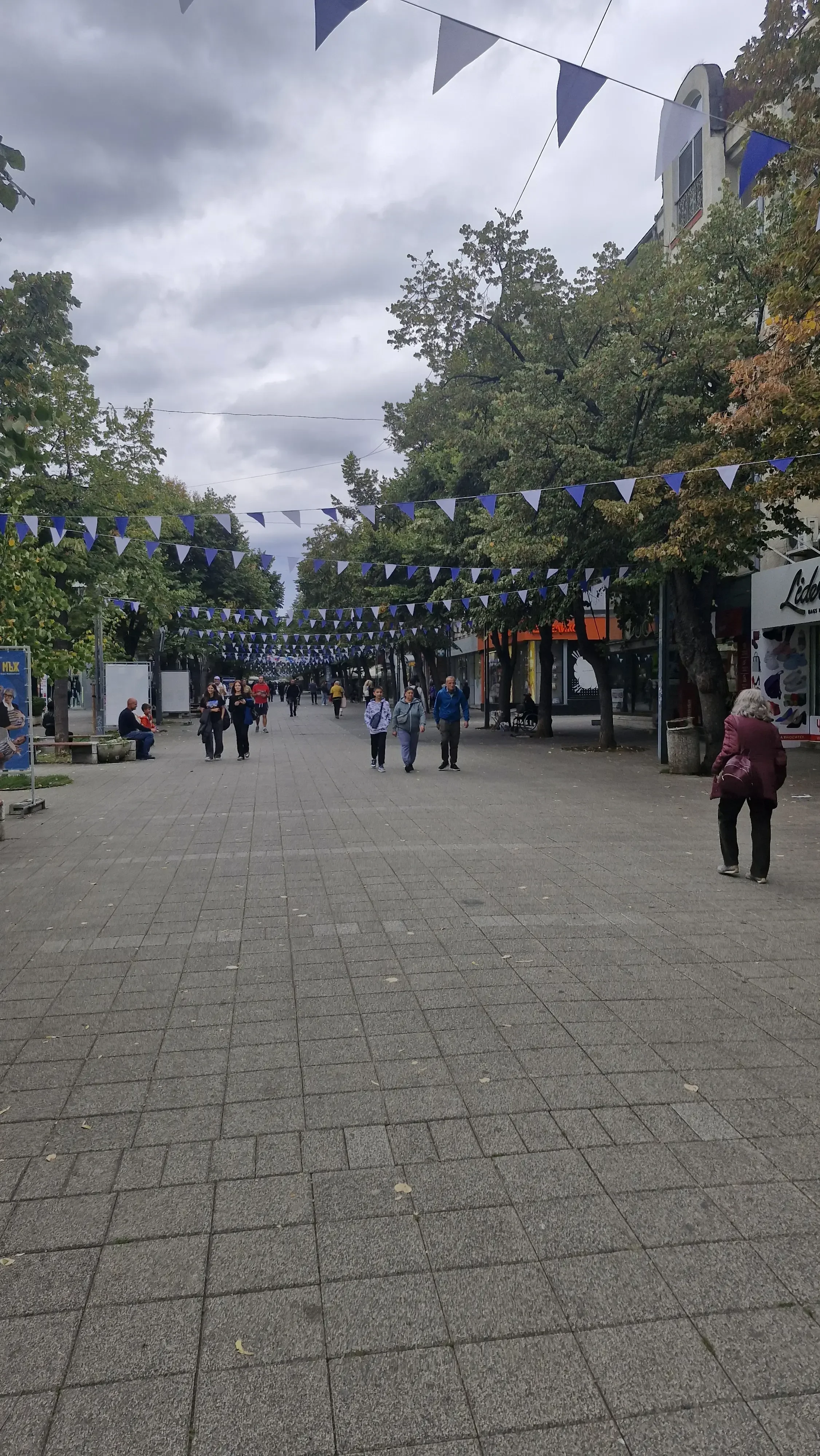
Bulgaria enters 2026 with increasingly pronounced demographic pressure on its economy: the population is shrinking and aging, and the labor shortage is deepening despite rising imports of labor. At the same time, the economy maintains moderate growth based on exports, services, and industry, but experts warn that demographics are already "eating away" at a significant portion of its development potential.
Bulgaria 2026: fewer people, higher average age
According to NSI data from the 2021 census, the country's population was 6,519,789 – 844,781 fewer than ten years prior, or a decline of 11.5%. The reduction process has continued since then, with macroeconomic analyses for 2024–2025 reporting accelerated shrinkage, partially mitigated only by the increasing import of labor.
The aging is clearly pronounced: as of 2021, people aged 65+ accounted for 23.5% of the population, and by the end of 2024, their share reached approximately 24% – 1,544,245 people. The average age of the population increased from 40.4 years in 2001 to 45.2 years at the end of 2022, placing Bulgaria among the countries with the highest average age in the EU.
The negative demographic effect on growth
A report by the Economic Analysis Council shows that the demographic picture has a strongly negative impact on GDP growth. The assessment is that demographics reduce annual economic growth by an average of about 0.9 percentage points – approximately 45% of the average growth rate for the 2010–2021 period.
Translated into monetary terms, this means lost benefits for the economy – for just one year, the "demography" factor is estimated at over 1.6 billion BGN in lost potential. Without these negative effects, GDP would have grown faster, and resources for social and investment policies would have been greater.
Aging and pressure on the social system
Because of the rising share of people over 65 and the decreasing number of people of working age, the ratio between workers and dependents is worsening. Data show that by the end of 2024, for every 100 people of working age, there were 61 inactive people, compared to 46.5 in 2011 – a trend that directly impacts the pension and healthcare systems.
The Ministry of Labor and Social Policy reports a sustained negative natural increase, high mortality, and an aging population, defining demographic policy as a priority that "does not tolerate delay." For 2025, over 640 million BGN have been earmarked for family benefits and birth incentives, but the effect remains limited.
Emigration, labor migration, and labor shortages
The lack of personnel is becoming one of the most serious limitations on growth. Analyses by the Center for Sustainable Communities Development point out that the shortage of qualified labor has been a constant problem over the last 30 years, with labor migration to wealthier countries in the EU playing a key role.
A report by an economic institute shows that the import of labor from third countries has tripled since 2021, but despite this, the deficit in the labor market has grown by over 25%, reaching nearly 262,000 people. The phenomenon of "replacement labor migration" is also noted: cheap foreign labor fills positions in construction, hospitality, and industry, displacing local young and less educated workers.
Immigration: a solution or a new risk?
In an attempt to compensate for the demographic decline and the lack of staff, Bulgaria is accelerating procedures for hiring foreign workers. In recent years, the number of work permits issued to citizens from countries outside the EU has increased manifold, mainly for low- and semi-skilled positions.
Expert analyses warn that without parallel investments in education, qualification, and increasing productivity, mass imports of cheap labor could deepen structural problems instead of solving them. Bulgaria has over 1 million economically inactive people, of whom about 85,000 express readiness to work – a reserve comparable to the entire current import of personnel.
Policies for birth rates and the return of Bulgarians from abroad
Minister of Labor and Social Policy Borislav Gutsanov outlined the demographic crisis as the "next major national goal," pointing out that the population under 39 years of age continues to decrease, while that over 65 is growing. BAS forecasts indicate that between 2030 and 2035, an intensive decrease of the population aged 40–64 will begin if urgent measures are not taken.
Among the planned priorities for 2026 are raising maternity benefits (especially for the second year) to levels close to the minimum wage, additional support for the first, second, and third child, and incentives for the return of Bulgarians from abroad. Even so, the minister himself admits that "all these measures are not enough" without a horizontal approach and the participation of all institutions.
Structure of the economy: growth with old problems
Economic analyses for 2025–2026 describe the Bulgarian economy as "restructured growth with old problems": exports and industry remain drivers, but added value is still lower than the European average. The IT and outsourcing sectors are growing dynamically but fail to compensate for weak productivity in traditional industries.
Demographic pressure is felt particularly strongly in public systems – healthcare, education, social services – where the same or a smaller number of professionals must serve an increasing number of elderly people and chronically ill patients. This leads to tension, burnout of staff, and additional emigration of doctors, nurses, and teachers.
Automation and digitalization: a chance to catch up
One of the ways to compensate for demographic decline is accelerated automation and digitalization. Bulgarian companies in industry, logistics, and services are gradually implementing robotic lines, process management systems, and software solutions that allow for more production with fewer workers.
The challenge is that these technologies require investments and qualified personnel, which are lacking. Without targeted support for innovation and training, there is a risk that automation will be concentrated in a few large companies, while other businesses continue to rely on cheap labor and lag in productivity.
Immigration, integration, and human capital
The import of workers from third countries also raises questions about integration: language barriers, cultural differences, access to education, and healthcare. The lack of a systematic policy for integration can lead to segregation in the labor market and limited social mobility for new migrants.
On the other hand, Bulgaria has untapped internal potential – economically inactive individuals, women with low employment in certain regions, and young people who are not studying or working. Activating this resource through training, flexible forms of employment, and regional programs may prove to be a more sustainable solution than the mass import of cheap labor.
Can Bulgaria grow sustainably with a shrinking nation
Reports on economic development outline two main scenarios. In the first, with limited reforms and a dominant low-value-added model, the demographic crisis continues to shrink the workforce and reduce growth potential – estimated at about 0.9 percentage points annually. In the second scenario, with a restructuring toward an economy with higher value-added, longer labor activity, higher female employment, and better-managed immigration, the demographic effect could be significantly mitigated.
The experience of countries like Germany and the Scandinavian nations shows that even with an aging population, sustainable growth is possible if one invests in human capital, innovation, and strong institutions. For Bulgaria, the key question is whether it will use the remaining time until the "intensive decline" of the working-age population to make a strategic shift, or continue to compensate with short-term solutions like higher benefits and importing labor.
In this sense, the demographic crisis is not just statistics, but a framework in which economic policy must be rethought – from the labor market and education to social security and regional development. Whether Bulgaria will remain a competitive and prosperous country with a smaller and older population depends on the speed and courage of the decisions made today.




Коментари (12)
Бах мамата! 🤦♂️ Свиваща се нация... а те за растеж говорили? Я да
Абе, писна ми вече с тия прогнози! Свиваща се нация, растеж… все едно си говорим за две различни държави. Къде е логиката?! Хората бягат от тук, защто няма бъдеще, а те за растеж. Мама му стара! Трябва да се погледне истината в очите – трябва работа, трябва заплати нормални, трябва образование качествено. Иначе как ще задържим младите? 🙄
Сериозно ли? Как ще растем устойчиво с все по-малко хора?! Да си гледаме демографията
А бе, наистина ли никой не мисли за младите?! Как ще имаме бъдеще с тия темпове, 🔥
абе хора, честно... 🤯 сериозно ли още обсъждаме растеж, докато населението ни намалява с брутална скорост?! все едно да говориш за отслабване