
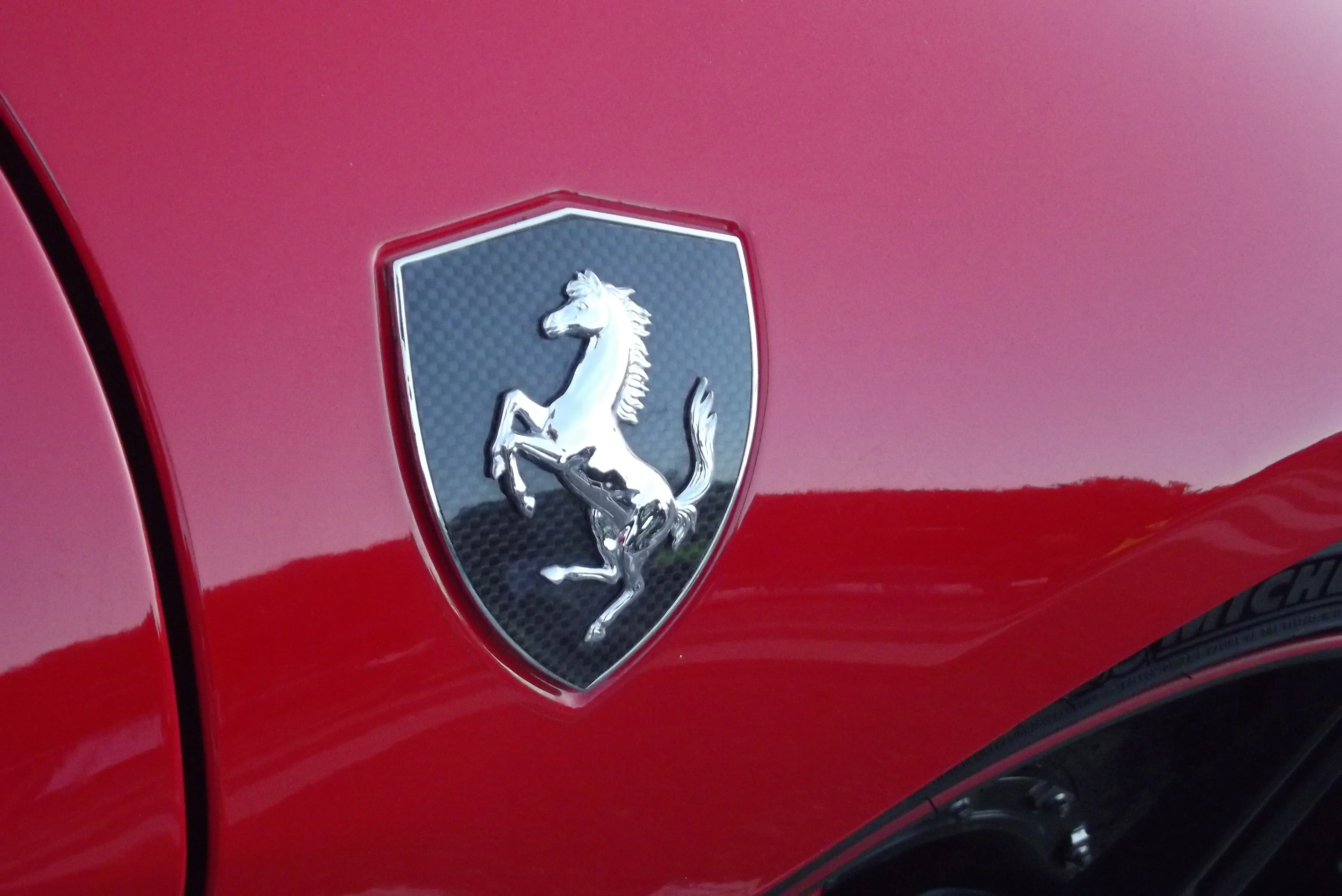
The presentation in Rome of Ferrari's first fully electric model – the "Luce" supercar – became a historic moment for the brand, but also a warning signal for investors. In the days around the car's premiere on the Milan stock exchange, Ferrari shares declined noticeably as the market assessed not only the car itself but also the company's broader strategic course toward electrification and updated financial targets.
The new "Luce" model is positioned as an ultra-luxury electric supercar with a price tag of around 500,000 – 640,000 dollars (approximately 460,000 – 600,000 euros), a top speed of up to about 310 km/h, and power exceeding 1,000 hp. Despite the impressive technical parameters, many analysts noted that the market's reaction was skeptical rather than enthusiastic.
"Luce": a technological leap with a high price
Ferrari presented "Luce" as "the most radical project in the brand's history" – the first model without an internal combustion engine, entirely oriented toward electric propulsion. The car was developed to maintain the road behavior characteristic of Ferrari – sharp response, precise handling, and a feeling of "soul," despite the absence of the traditional V8 or V12 engine.
However, some fans and investors perceive "Luce" as an overly expensive and somewhat "risky" experiment. In the ultra-luxury sports car segment, customers remain conservative, and the electric format has not yet proven its long-term appeal to the wealthiest collectors. An additional question is posed by the development and production costs, which weigh on the profit margin.
Market reaction: stock decline following the presentation and new strategic plan
Shortly after the premiere of "Luce" and the presentation of updated financial targets for the period up to 2030, Ferrari shares headed downward. In trading in Milan, the company's shares registered a decline in the 12–15% range compared to previous levels, returning to their lowest values since 2016. Some analysts described the market reaction as a "punishment" for the management's overly cautious tone.
The company forecasts that its revenues will grow to about 7.1 billion euros in the short term and to about 9 billion euros by 2030 – values that barely differ from earlier projections and were perceived as too conservative against the backdrop of Ferrari's growing valuation on the stock exchange. Investors clearly expected a more ambitious scenario, especially after the announcement of the first electric vehicle.
Correction of electrification plans
Another signal that cooled the sentiment was the revision of the electric vehicle plans. Ferrari announced that by 2030, electric models will account for about 20% of the range, hybrids for a significant additional share, and traditional internal combustion engines will remain a key component of the portfolio.
In theory, this reflects the philosophy of preserving the brand's exclusivity and heritage. In practice, however, some investors read this as a signal that the company is moving slower than its competitors toward electrification, which could put it under pressure in the face of stricter regulations and shifting consumer preferences.
Investor skepticism: why the "first electric car" was not enough
Despite the historical nature of "Luce," for the financial market it turned out to be more of a marker for strategic dilemmas than a cause for euphoria. Several factors weighed in a negative direction:
– The extremely high price of the electric vehicle limits the potential market to a very narrow circle of customers, making the model more of an image piece than a significant source of revenue.
– The conservative financial plan until 2030 provides no basis for investors to expect a sharp jump in profits, despite entering a new technological segment.
– The correction of the targets for the share of electric vehicles suggests that Ferrari is not ready to bet aggressively on an electric future, but prefers to maintain a "mixed" model in which the internal combustion engine remains king.
Ferrari's strategy: between heritage and the future
The company's management defends the chosen course as a logical evolution, not a radical turn. For years, Ferrari has built its image as a brand with limited production, high profit per unit, and strong control over exclusivity. In this sense, the relatively "modest" targets for 2030 are in sync with the philosophy of avoiding mass-marketization – even in the electric era.
The problem is that the capital market often values growth potential over stability. Against this background, the idea of selling a very expensive but low-volume electric car, without a radical increase in total sales and margins, seems insufficiently attractive to some investors.
What's next for "Luce" and shareholders
The first deliveries of "Luce" to customers are planned for the end of 2026 or the beginning of 2027, with orders for the model already being accepted from selected clients. The actual market performance – how quickly the quotas will be exhausted and whether there will be waiting lists – will be a key test of whether the market's skepticism is justified.
For shareholders, Ferrari remains a paradox: a company with an extremely strong brand, high profitability, and a loyal clientele, but with an electrification strategy that is perceived as too cautious, and with financial targets rated as "flying too low." If "Luce" manages to convince the most demanding customers, the market may rethink its initial reaction. If, however, demand proves weaker than expected, the decline in shares could be just the first signal of a deeper correction in expectations for the brand's electric future.

Comments (7)
Хм, интересно... Инвеститорите наистина са били малко по-студени от очакваното. Мислят ли, че "Ferrari" е заложили на гре
Абе, кво става бе? Падат акциите... нщо
Абе, наистина ли това се случва? Ферари и акции на надолу?! Интересно ми е, тоа "Luce" въобще харесвали ли го хората, освен инвеститорите? Да не би да са си помислили, че Ферари са се отказали от бензина и вече няма да има рев на двигател? 🤔 То все пак, какво очакваха да стане с електромобил? Все едно
абе хора, вие се шегувате, нали? ферари падат акциите... 🤣 аз си мислех, че ще летят до марс! то все пак, нормално е да има колебания, бе! все едно очакваме всеки да изскочи от колата и да каже: "ооо, много съм доволен от електричеството!".
Ебаси! Ферари падат акциите?! Не може да бъде! Тва