
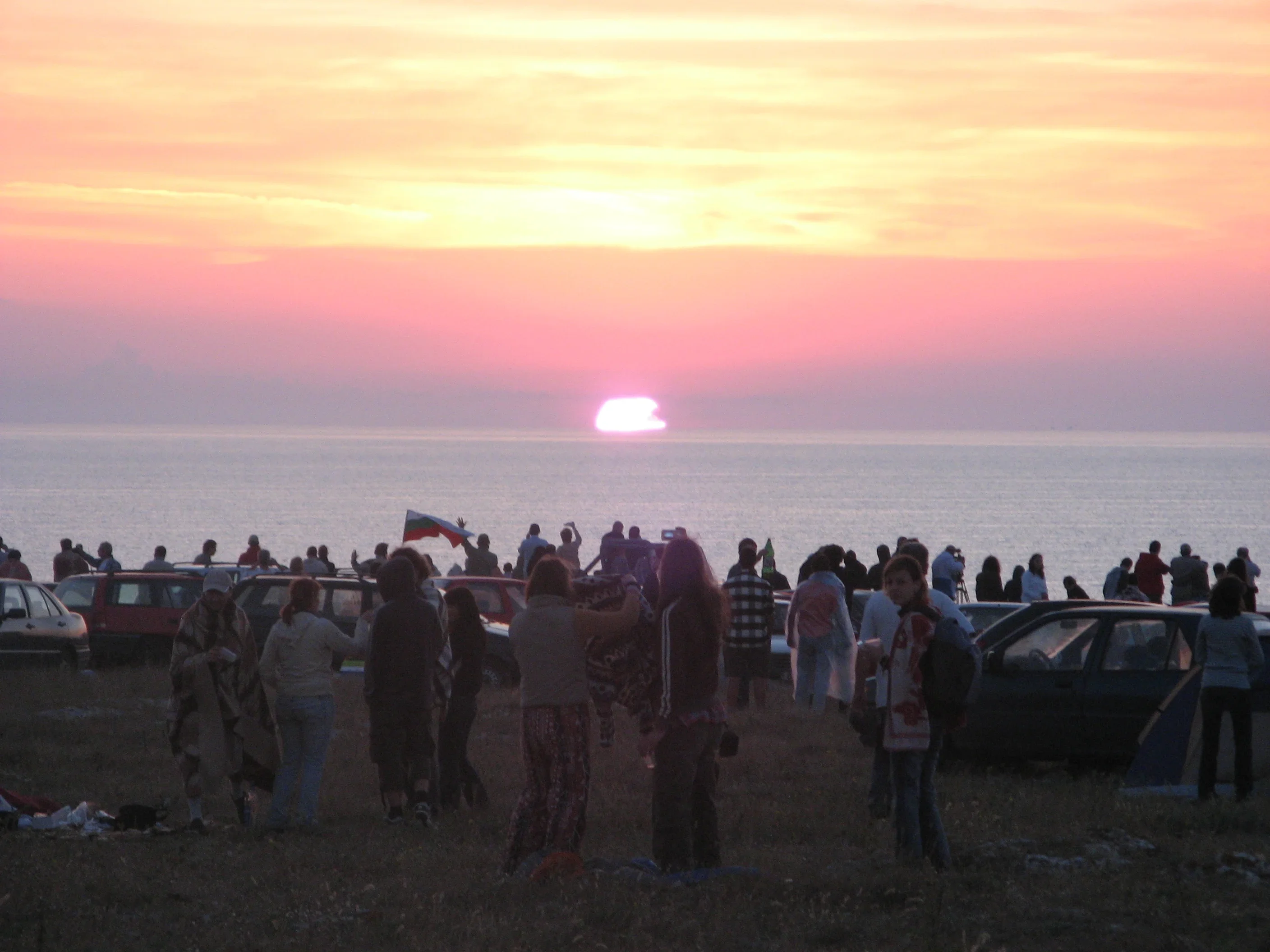
"July Morning" – or "Dzhulay Morning" – is one of the most distinctive and iconic traditions in contemporary Bulgarian culture. Although it does not have the official status of a holiday, it is deeply embedded in the youth and rock history of the country: on the night of June 30th to July 1st, thousands of people head out to the Black Sea coast and high points in the country to welcome together the first rays of the July sun – often to the sounds of the legendary song "July Morning" by the band "Uriah Heep".
What is "July Morning"
The "July Morning" tradition is associated with the hippie movement and the idea of a "new beginning" and "freedom". According to the description on Wikipedia, July Morning is a ritual for welcoming the sunrise on July 1st, symbolizing the welcoming of summer and the anticipation of a better future. Every June 30th to July 1st, many people gather along the Bulgarian Black Sea coast to see the first July sun over the sea together.
The name of the holiday is directly related to the song "July Morning" by the English rock band "Uriah Heep" from 1971. The track became extremely popular in Bulgaria during the 80s and gradually turned into a kind of anthem for the ritual – a song that many play or perform live on the night before sunrise.
How the tradition began
Historians and researchers point out that "July Morning" emerged as a hippie holiday along the Bulgarian Black Sea coast during the 1980s. According to various sources, the first organized sunrise welcomes took place in "Varna" – around 1980 or 1985, when a group of young people with guitars gathered at the Varna breakwater, played, sang, and welcomed the first July sun.
Anthropologist "Svetlozar Levi", author of the monograph "July Morning as a National Phenomenon – An Anthropological Perspective", defends the thesis that the holiday originated in 1986, with the initiator being a young man from Varna known as "Tyanata". Urban legends, cited in publications, tell that after barracks duty on the night of June 30th to July 1st, Tyanata decided that a person should not be locked up and alone while welcoming the July sunrise. Thus, he gathered friends in a meadow in the Sea Garden in Varna – a place that many people still call "The July spot".
Over time, "July Morning" turned into an unofficial social festival – a place where people sing, play music, dance, recite poetry, discuss ideas, and meet people from different parts of the country. Many authors emphasize that the ritual is also perceived as a "quiet protest" against the communist government in the late 80s, expressed in the message of the "Uriah Heep" song – a striving for freedom, change, and personal awakening.
Unique, Bulgarian, "incomparable" to others
It is interesting that although the name is in English, the tradition is authentically Bulgarian. In the English-language "Wikipedia", July Morning is described as an "annual Bulgarian festival", unique to Bulgaria, with no analogue in other countries: people from all over the country travel – sometimes hitchhiking – to the Black Sea coast to welcome the first rays of sun on July 1st. There is no mandatory ritual or official ceremony – participants decide for themselves how to spend the night: around campfires, with music, with concerts, with tents on the beach.
Gradually, "July Morning" spread from the initial Varna locations to various points along the Black Sea coast – "Kamen Bryag", "Kavarna", "Shkorpilovtsi", "Irakli", "Burgas", "Sozopol", "Varvara", "Ahtopol", "Chernomorets", and others. A particularly popular place became "Kamen Bryag" – the rocky shore at the easternmost point of Bulgaria, where the sun's rays first touch the land. There, for years, concerts and gatherings have been organized specifically for July Morning.
How "July Morning" is celebrated today
Today, July Morning is not an official holiday in the calendar, but it is an important part of summer culture. Thousands of people every year welcome the sunrise along the shores of the Black Sea or at high places – mountain peaks, cliffs, hills. The ritual most often includes:
- Gathering groups of friends or families at a chosen location – beach, cliff, pier;
- Tent camps or sleeping in the open air;
- Music – from personal playlists to live performances by rock bands; the song "July Morning" by "Uriah Heep" almost invariably plays around sunrise;
- Campfires, conversations, sharing, improvised concerts, and readings.
In some years, local municipalities and organizers prepare official programs – concerts with famous musicians, including the legendary vocalist of "Uriah Heep", "John Lawton", who has visited July Morning in Bulgaria many times. In other years, the holiday is more informal, left entirely to the spontaneity of the people.
Meaning and symbolism
The meaning of July Morning is interpreted in various ways – from a purely romantic welcoming of summer to a social and political protest. Most participants associate it with the symbolism of the "new beginning" – welcoming the first July sunrise with hope for change, personal freedom, and a brighter future.
In articles dedicated to the holiday, it is often noted that July Morning was a "rebellion against the system" during the years of socialism – a place where hippies, rockers, and rebels could say their "no" to the regime, let their hair down, and sing about freedom to the sounds of "July Morning". In the post-socialist years, the ritual gradually turned into a more general celebration of informal culture, meetings, and personal awakening.
Statistics: how many people welcome the July sun
There is no official national statistic for the number of participants, but individual media and municipal data provide an idea of the scale. Photos and reports from recent years show that at key locations such as Kamen Bryag, Varna, and Burgas, thousands of people gather on the night of June 30th to July 1st – sometimes tens of thousands across the entire coast. Photo galleries and reports describe July Morning as the "sunrise of hope" and a "scene of freedom, music, and a new beginning" – especially for the young, but also for entire families.
How to celebrate "July Morning"
For those who want to join in July Morning, there is no strict rule – that very freedom is part of the spirit of the holiday. Nevertheless, a few ideas are widely accepted:
- Choice of location: Black Sea beach or a high point (Kamen Bryag, mountain peak, hill above the city). The idea is to have a clear view of the horizon and the sunrise;
- Company: a group of friends, family, or even solo – many people use July Morning for a personal, quiet experience;
- Music: the song "July Morning" by "Uriah Heep" is a classic, but a wide selection of rock and alternative music is often listened to, sometimes with live instruments;
- Night under the open sky: a tent, blanket, fire, food, and water – everything for a comfortable night;
- Personal ritual: some people write down wishes or goals for the new period, others simply contemplate the sunrise as a moment of "recharging".
The important thing is to follow basic safety rules – to protect nature, not to leave trash, to be careful with fires, and to respect other participants. July Morning is a ritual born from a striving for freedom and meaning, and that is precisely what has kept it alive for more than three decades, without being an "official" holiday.
Thus, "July Morning" remains a unique Bulgarian phenomenon – inspired by Western rock music, but turned into a symbol of the national spirit, rebellion, and the personal choice to welcome the sun instead of just "sleeping through" the first July sunrise.

Comments (14)
Оооо, яко! 🤩 Толкова хора на едно място да посрещнат слънце
абе хора, к'во се заяждате? яко е като изгрява слънцето, музика
Абе хора, вие какво говорите всъщност? "Бунт", "СВОБОДА"... Да, разбирам, че песента е вдъхновена от едно време, ама все пак - хората си ходят да посрещнат слънцето, да се позабавляват. Не е като да са строили барикади, нали
Абе, пичове, наистина ли говорехме за "бунт" тука?! 🤣 Сериозно, да, хубаво е да посрещнеш слънцето, супер яко е да си пуснал "July Morning" и да пееш с приятели – кой не би искал, а? Но да го наречем "бунт"... сякаш сме на площада с флагове и лозунги! 😅
И кърти ли нещо, че хората си празнуват по стар наш начин? Не разбирам акъла