
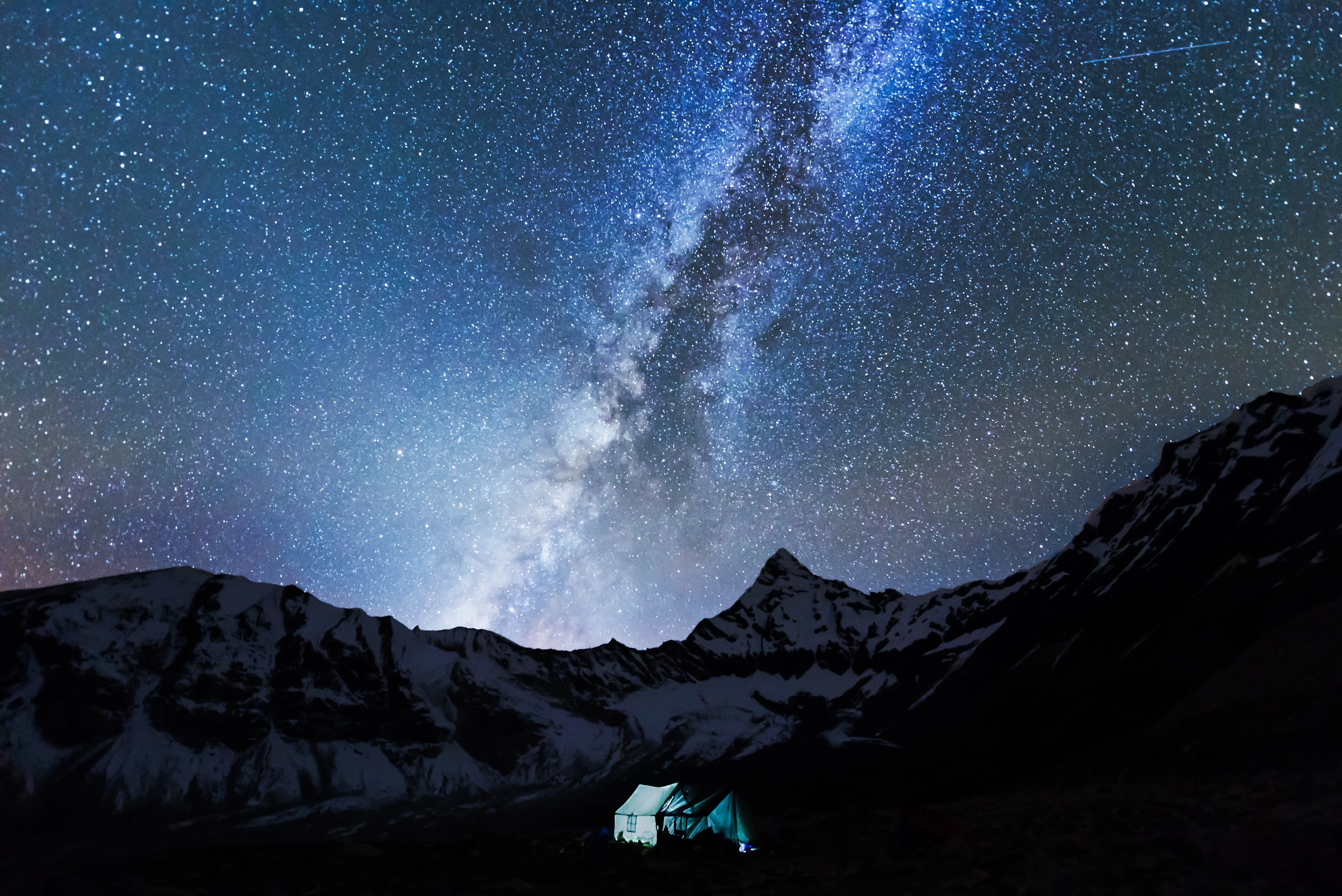
Can you imagine something that has survived unchanged for billions of years? Traditionally, globular star clusters were thought to be exactly that - ancient fossils from the early years of our galaxy. But what if these ancient structures are not as stable as we have assumed?
The discovery
New observations show that one of these star clusters, called NGC 6569, is actually in the process of disintegration. Astronomers are observing how the stars from this cluster are separating and are gravitationally attracted to the center of the Milky Way.
This star cluster is thought to be about 13 billion years old. It is slowly but surely losing stars that are heading towards the central bulge of our galaxy. It's like a slow, cosmic cannibalism where gravity plays a key role.
“We conducted the first wide-angle medium-resolution spectroscopic survey of NGC 6569. Our results show that this cluster is actively losing stars due to tidal disturbances,” the researchers note. This discovery is rare evidence of the process of disintegration of these objects, which are otherwise considered stable.
Where is NGC 6569 located?
NGC 6569 is located about 35,500 light-years from Earth, deep in the heart of the Milky Way. This is an area crowded with stars, where millions of suns are clustered in a relatively small area. The cluster is quite massive, with a mass about 230,000 times that of our Sun. The stars in it contain more heavy elements than many other globular clusters.
Working in this area is especially difficult. The high density of stars makes it difficult to distinguish the stars of NGC 6569 from the other stars in this zone.
The tools of astronomers
To overcome this problem, scientists used the Anglo-Australian Telescope as part of the “Extra-tidal Stars in the Milky Way Bulge” (MWBest) survey. The goal was to understand how globular clusters are destroyed by gravitational forces near the center of our galaxy.
The team analyzed spectra of 303 stars in and around NGC 6569. These spectra allow scientists to determine the chemical composition and velocity of the stars. With these data, combined with precise measurements of proper motion, they are able to identify stars that were once part of NGC 6569, but are now moving away from it.
What did they find?
The results are impressive. Astronomers have discovered 40 stars that are located far beyond the main body of the cluster - at distances of 7 to 30 arcminutes from the center. All of these stars have the same chemical and kinematic characteristics as the stars in NGC 6569. This suggests that they have been detached from the gravitational attraction of the Milky Way.
Five of these stars form a faint halo of debris around NGC 6569. This shows that the cluster is literally leaving a trail of lost stars. Comparison of the stars still connected to the cluster with the stars in the surrounding area shows that about 35% of these stars have the same motion as NGC 6569. This means that the cluster is “immersed” in its own trail of debris.
The cosmic clock
Using chemical data and dynamic modeling, scientists estimate that NGC 6569 is losing mass at a rate of between one and one and a half solar masses every million years. On a billion-year timescale, this represents about 5.6% of the total mass of the cluster.
This result helps resolve a long-standing problem in astronomy. Theoretical models have long predicted that globular clusters near the center of the galaxy should lose mass. Direct observations of this process, especially in the central bulge, have been scarce.
Although about a quarter of the globular clusters in the galactic halo have tidal “tails”, such structures are difficult to detect in the central bulge. This study shows that tidal disruptions there are possible and are currently active.
The significance of the discovery
The results show that clusters like NGC 6569 play an important role in the formation of the central bulge of the Milky Way. They gradually transfer their stars to it. On the other hand, scientists emphasize the limitations of the study. The suggestion that the cluster is moving through a “tube” of its tidal debris remains a hypothesis that needs to be confirmed.
The question is: what else can these ancient star clusters tell us about the evolution of our galaxy? Are they just passive objects, or active participants in the cosmic dance? And what else will we learn about the dark matter that surrounds these clusters?




Comments (12)
Хм, интересно… все повече ни показват колко е нестабилно всичко. И тук, в космоса, и тук
Абе, тоя Млечен път, дето ни го хвалят, май си пада? 😅 Ще ни падне
Ех, кво остана да ни учуква все пак... Пак някакви звезди се разпадат, а ние тука си гледаме проблемите. Интересно е като наука, разбира се - как работи всичко там горе. Но и да те кара да се замислиш колко крехки сме всъщност, всичките ни "велики" постижения... Все едно
Ееее, хорааа, направо ми иде да изскоча от радост! 🤩 Тоя Млечен път май наистина е жив организъм, а не просто куп звезди! Четат го тия нашите астрономи и разкриват такива неща... Направо ме кефи, че България има такива умни глави, които да гледат в космоса и да ни казват кво става там!
Абе, хора, що за тая новина? Да, хубаво е, разбира се, че разни звезди си играят на криеница и се разпадат... ама кво да го правя аз с тоя факт в момента? 😅 Все едно ми казват, че някъде далече, нещо се случва. А тука – токчетата не издържат, пенсиите са смешни, магистралите... айде, стига!