
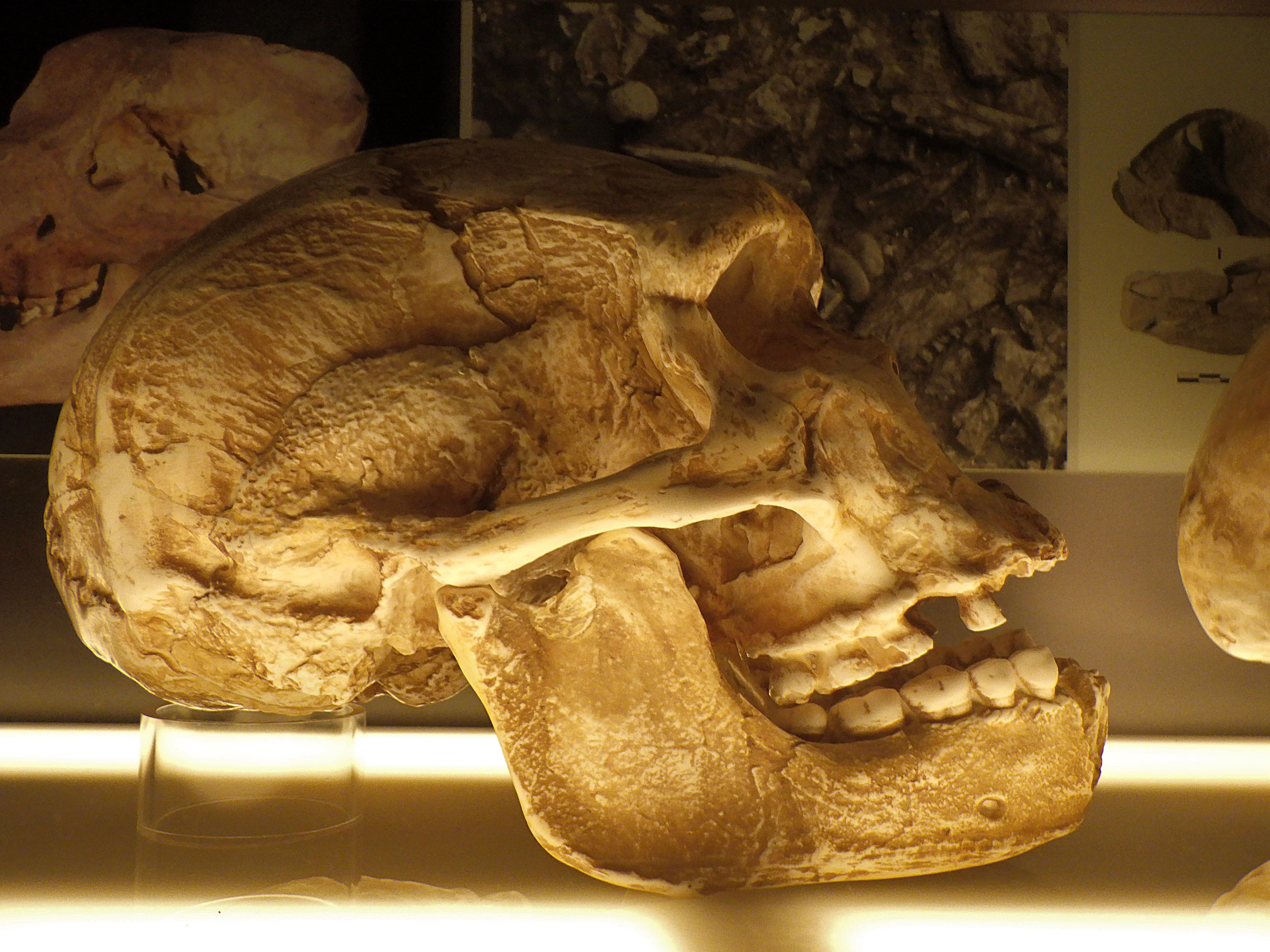
Scientists have for the first time successfully extracted and analyzed genetic material from Homo erectus – an ancient human ancestor and the first representative of the genus Homo to leave Africa. The study, published Tuesday in the journal "Nature," describes the extraction of protein molecules from the enamel of teeth aged around 400,000 years, found at three archaeological sites in China. The results show that H. erectus interbred with Denisovans and passed on genetic variants that are also found in some modern humans.
Ancient teeth, modern methods
The team, led by Qiaomei Fu from the Institute of Vertebrate Paleontology and Paleoanthropology at the Chinese Academy of Sciences, analyzed the teeth of six H. erectus individuals – five males and one female – found at the "Zhoukoudian" (the famous site of "Peking Man"), "Hexian," and "Sunjiadong" sites.
Because fossilized remains of ancient hominins are irreplaceable and extremely valuable, scientists developed a low-destructive sampling method based on acid etching. It allows for the extraction of molecular information without damaging the macroscopic structure of the teeth.
Two amino acid variants were found in the enamel protein ameloblastin (AMBN) across the six samples. The first, "AMBN(A253G)," has never been observed in humans or other primates before and appears to represent a molecular marker unique to East Asian H. erectus populations. This is the first evidence that individuals from the three Chinese sites belong to a single evolutionary population.
The second variant, "AMBN(M273V)," was previously thought to be unique to Denisovans, but it is now clear that it was also present in H. erectus.
A prehistoric "love triangle"
The presence of "AMBN(M273V)" in both H. erectus and Denisovans suggests interbreeding between the two groups during their prolonged coexistence in East Asia.
According to the authors, this variant most likely entered the Denisovan lineage through the mixing of populations and was later passed on to some modern human groups in Southeast Asia and Oceania through further interbreeding between H. sapiens and Denisovans.
Chris Stringer, a paleoanthropologist at the Natural History Museum in London, who was not involved in the study, describes the results as "very interesting and important." Speaking to "Gizmodo," he notes that "in China, there was likely at least 200,000 years of coexistence between the last populations of H. erectus and the early Denisovan lineage," which provided "multiple opportunities for interbreeding between these lineages."
Beyond DNA: new horizons for paleoproteomics
The study also marks a major advance in paleoproteomics – the science of sequencing ancient proteins, which are preserved significantly longer than DNA.
While the oldest ancient DNA samples extracted to date are around 2 million years old, proteins from dental enamel can be preserved even longer and under more extreme conditions. This opens a window into the evolutionary history of species from which no intact genetic material remains.
The team is developing new computational and experimental tools, including a method for determining the sex of ancient hominins based on the male-specific enamel protein "AMELY." These approaches expand the possibilities for reconstructing the biology and demography of extinct populations.
Katerina Harvati-Papatheodorou, director of the Paleoanthropology department at the University of Tübingen, commented to "Gizmodo" that the work "sheds important light on the relationships between H. erectus and the Denisovans" and adds "significant new information to the discussion about human evolution in Asia."


Comments (10)
Хм... интересно. Замислящо е как могат да се проследят такива древни
ей, бая история... ама к'во значи това "връзка с денисовците"? значи, нашите прадеди са се смесили с други? да не би да е някаква стара руска измисли 💥
Абе пичове, к'во значи това "генетичен материал" бе? Да не го правят за да оправдаят някакви теории за произхода на българите от денисовци ли? Не казвам, че е невъзможно, ама все едно... викам си дали пак някой се опитва да ни докаже нещо, което не е баш така. Аз лично гледам на тези неща с недоверие – винаги има някой интерес зад
абе хора, яко е това, ама... да не се взимаме много насериозно! 400 хиляди години назад, зъби... наистина, невероятно е как успяват да извлекат нещо от тия останки, признавам си. и фактът, че има връзка между homo erectus и денисовците - добре, интересно е, наука е.
ебаси, наистина ли са изкарали генетика от зъби? 400 хиляди години... тва е яко! ама тоя факт за денисовците и кръстосването с homo erectus... все едно ни разказват приказки. дано не го използват пак да се доказва, че сме от някакви други племена, а не сме си българи. важното е да се развиваме като държава и