

June 2026 is shaping up to be a typical Bulgarian start to summer – "warmer than normal," but also with "dynamic weather," frequent afternoon storms, hail, and abrupt shifts between sunshine and downpours. Monthly forecasts from the National Institute of Meteorology and Hydrology and specialized meteorological platforms describe a picture of an unstable atmosphere: temperatures generally around and above the climatic norm, but with frequent fronts bringing brief, sometimes intense rainfall.
Temperatures: from 8° in the morning to 37° in the afternoon
According to the NIMH monthly forecast, the average monthly temperature this June is expected to be "around and above the norm." The norm for most of the country is between 20° and 22°, around 23° along the "Struma" river valley, 17°–19° for the high fields, and 4°–12° for the mountains.
The forecast outlines a wide range: "the lowest temperatures" during the month will be between 8° and 13°, and "the highest" – between 32° and 37°. This means that on certain days, the western and southern regions could reach classic July values, while mornings – especially in the basins and high fields – remain relatively cool.
The beginning of June: summer degrees, unstable skies
June begins with "summer weather" and maximum temperatures between 28° and 33°. In the first full week, however, the weather "maintains its restless character": between June 5 and 10, the passage of another "cold atmospheric front" is expected, bringing typical seasonal summer storms – more often over Western and Central Bulgaria, less frequently over the East and the Black Sea coast.
During the first and second ten-day periods, daily maximum temperatures remain "1–2 degrees above the norm" – usually in the 26°–30° range, and on individual days they may reach over 30°. This creates a feeling of early summer, but in combination with the unstable atmosphere, it increases the risk of powerful convective developments.
Precipitation: the rainiest month with potential for extremes
Climatologically, June is the "rainiest month" in most of the country – "brief downpours," "thunderstorm activity," and "hail" are characteristic. June 2026 is no exception: forecasts expect almost "daily afternoon showers," often accompanied by thunder, especially over mountain massifs, western regions, and Central Northern Bulgaria.
Already at the beginning of the month, synoptic maps show "yellow codes" for rain and storms in Western and Northern Bulgaria. On some days, rainfall can reach 40–60 l/sq. m within a few hours, especially around the Central Stara Planina and the Rila-Rhodope massif, where conditions for hail exist. This type of concentrated downpour carries a risk of local flooding, especially in urban areas with problematic drainage infrastructure.
Regional picture: West, North, Black Sea coast
Western and Southwestern Bulgaria are among the regions most affected by the unstable atmosphere. Forecasts for the beginning of the month warn that the "most significant and intense" phenomena will occur precisely around the Central Stara Planina and in Southwestern Bulgaria – with brief but strong rainfall, thunderstorms, and a probability of hail. In the southwestern regions, maximum temperatures reach 27°–29°, which reinforces convective processes.
In Northern and Northeastern Bulgaria, frequent afternoon showers are also expected, but with lower maximum temperatures – around 21°–24° on some days. This means less of a classic heat sensation, but not a lack of risk of thunderstorms, especially during the passage of fronts.
The Black Sea coast: moderate temperatures, afternoon rains
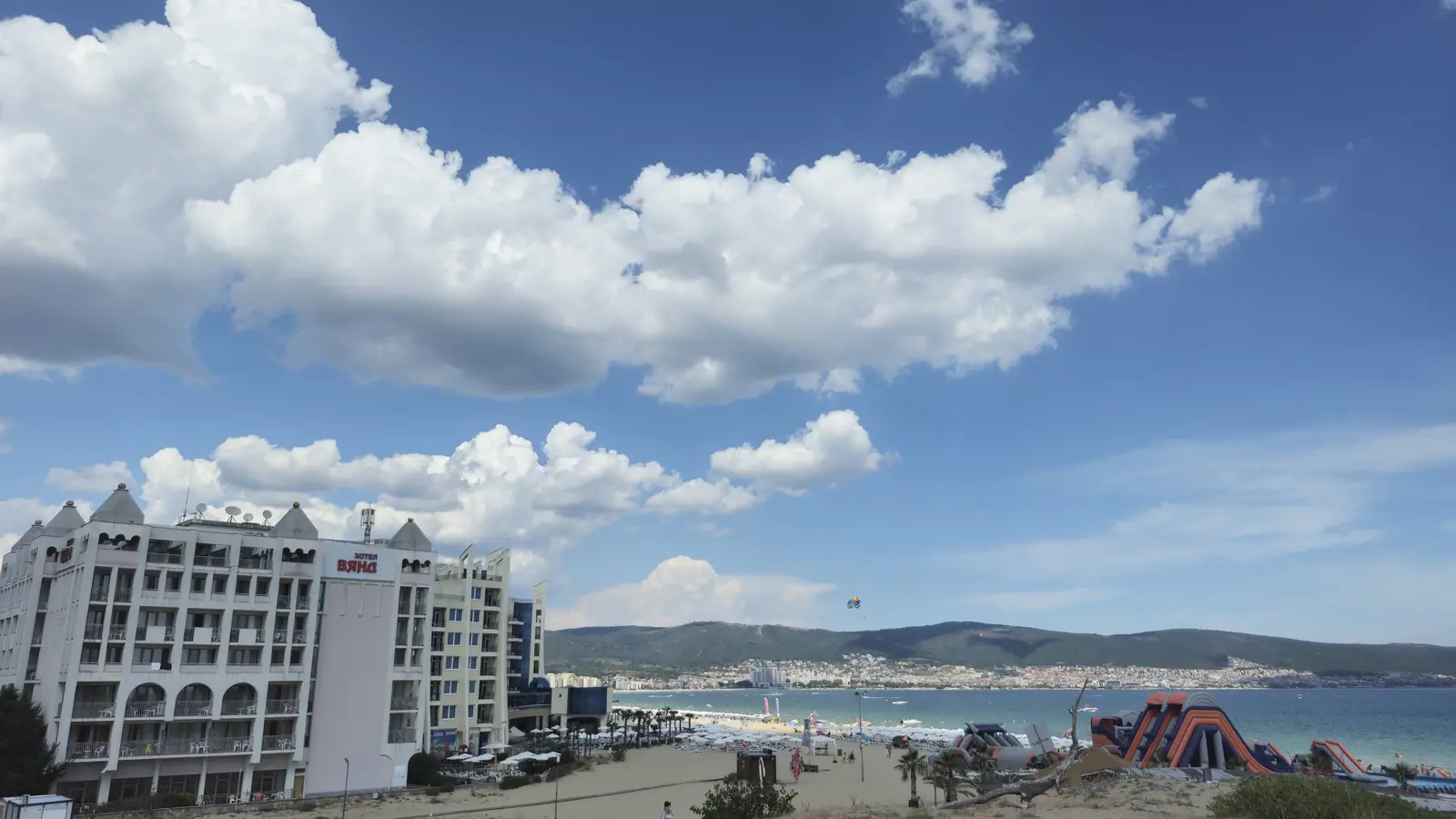
On the Black Sea coast, June 2026 looks relatively more moderate in terms of temperatures, but not calm. Maximum temperatures along the northern coast hover around 22°–24°, while along the southern coast they reach 26°–28°. The sea water at the beginning of the month is around 19°–20°, and the sea state is 2–3 on the Douglas scale.
Synoptic forecasts emphasize that "cloudiness will be mostly significant" on many summer days and that "rainfall" is likely, especially in the afternoon hours along the southern coast. For tourists, this means a real need for planning: mornings will more often be sunny, but afternoons can bring an abrupt change – a storm, strong wind, and a temporary drop in temperatures.
The mountains: thunderstorms and hail
In the mountains, June is traditionally the season of rapidly developing cumulonimbus clouds. The forecasts for June 2026 confirm this picture: "in the afternoon, it will rain and thunder in many places," especially in the Central Balkan and Rila-Rhodope massif, where "hail" is also possible.
The maximum temperature at about 1200 meters altitude is approximately 18°, and at 2000 meters – about 12°. This means a significant difference compared to the lowlands: on days when the thermometer shows 30°–32° in the plains, conditions in the mountains may remain cool, but with strong winds and precipitation, they can feel like late spring.
Concerns: hail, local flooding, risk to agriculture
The combination of higher-than-normal temperatures and an unstable atmosphere amplifies several well-known risks. The first is "danger of hail" – especially in Central and Southern Bulgaria. Yellow codes for rain and thunderstorms with potential hail have already been issued for the beginning of the month, and similar situations will likely recur later.
The second risk is "local flooding" – brief but intense downpours can overwhelm city drainage systems and lead to flooded streets, basements, and critical infrastructure. A third problem is the impact on agriculture: hail in Central Northern and Southern Bulgaria during June often strikes cereal crops, vineyards, and orchards at a key stage of their development.
June as a climate indicator: trends and adaptation
June has long been a month where climate trends become visible: "increased average temperatures," "more frequent and intense storms," "longer periods of drought between downpours." Data from previous years already show that some June months fall among the warmest in history, with average temperature anomalies between 0.5° and 2° above the norm in various regions. June 2026 fits into this trend – not so much through extreme records as through constant "heat plus instability."
For residents and institutions, this means a need for adaptation: better awareness of "yellow and orange codes," action plans for hail, more effective early warning systems, and more resilient infrastructure. For tourists – greater flexibility: beach in the morning, but readiness for a storm in the afternoon; mountain hikes with careful monitoring of forecasts and avoiding high altitudes during thunderstorm risks.
June 2026 shows that the Bulgarian summer increasingly starts with a "combination of extremes": days with 32°–35° in the lowlands followed by stormy afternoons; cool mornings in the basins and unstable afternoons in the mountains. In this context, the forecast is not just a curiosity, but a safety tool – for farmers, tourists, municipal governments, and anyone planning their summer around the weather.



Comments (16)
Ебати, 2026?! 🤯 То от сега времето е
Абе хора, 2026 ли? Сигурно пак ще има някакви политици да обвиняват времето за всичко, а аз да се чудя дали да си купя шал на краката през лятото... 😂 Не 💥
Абе, здравейте хора! Видях тая новина... 2026, а? Добре де, ама какво да кажем, честно казано? Времето от както свят светува се е менило - това не е нщо ново. 💩
абе, сериозно ли вече говорим за 2026 година??!? какво става с нас, бе хора? все едно нямаме достатъчно проблеми от сега! дай малко да си изкарам кафето на спокойствие, че ме стреснахте с тая "юни
Аби хора, гледам коментарите и се замислих... Честно казано, малко ме притеснява тая новина. Юни 2026 звучи далеч, ама времето вече си е доста шантаво от известно време насам. Не казвам, че климатичните промени са изненада за никого, но като го прочета – жеги, бури всеки ден... градушки и наводнения в Западна и Централна България... Имаме си проблеми с инфраструктурата, вижте как