
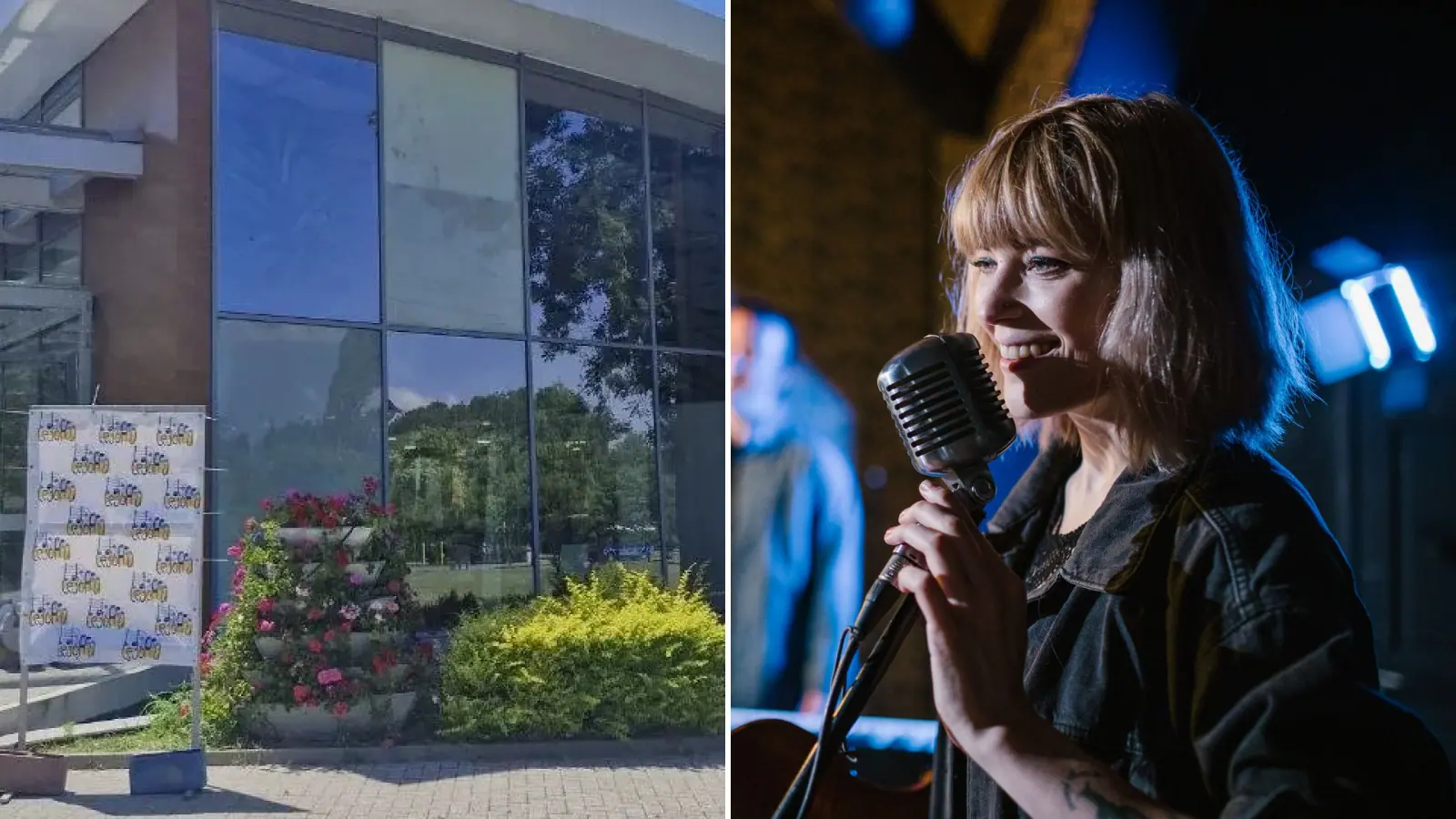
Four students from the pop and jazz singing programme at the Prof. Pancho Vladigerov National School of Music and Dance Arts in Burgas sang with the Burgas Big Band at the first national forum for city ideas, "Gradolyubiteli" ("City Lovers"). The forum took place on 9 October at the Flora Exhibition Centre. The singers were Dimitar Ivanov, Samuil Milkov, Viktoria Sidorenko and Mariana Simeonova.
Two young men and two young women took the stage, and Anastas Kamilarov conducted the orchestra. The music was part of the discussion panels and the awards ceremony. Their teachers Sonya Puleva, Mihaela Teneva-Michelle and Denitsa Yordanova prepared the students for the show.
Civic groups, local authorities, businesses and city initiatives from across Bulgaria came to Flora, along with urban planners and the media. The talks focused on good ideas and approaches that work when a city grows. Speakers from Austria and Romania shared good practice and ways to renew the urban environment.
The forum follows the "Gradolyubiteli" initiative, which has backed people with ideas for changing their city for six years. This year the contest has a wider format and involves the newly created Institute for Urban Ideas. The institute will link civic initiatives, local government and business so they can share experience, form partnerships and develop projects.
Ognyan Georgiev opened the forum. He is the founder and manager of the Institute for Urban Ideas association, the main organiser and the chair of the jury of the national contest. "It always starts with one person, with some idea," he said. Georgiev said the contest has shown over the years that Bulgaria has many active people who want to change their surroundings, but they often do not know each other and are not connected.
The aim has always been to help these people with contacts, partners and sometimes money, Georgiev explained. He said the next step is a community that links the initiatives. It would help them find partners in Bulgaria and abroad, tell people about their work and keep a catalogue of everything that happens in the network. The institute will work on the link between people, business and municipalities. That link is not always good and often breaks, because the sides do not speak the same language, so Georgiev believes they need a go-between and a translator.
Diana Savateva, deputy mayor for culture and religious affairs at Burgas Municipality, presented the city's vision to 2032, tied to its bid to become a European Capital of Culture. She said Burgas's experience shows that investment in the urban environment must go hand in hand with investment in people. "It is important to invest in your people, not only in their surroundings, and to give them a chance to take part," Savateva said.
Ruska Boyadzhieva of the Burgas 2032 foundation spoke about culture and the city's development. Presenting the bid, she pointed to places in Burgas that have come alive thanks to cultural events held there. She said even the best city spaces only gain meaning when people make them their own, and that is where culture belongs. Boyadzhieva believes culture is not only cultural and historical heritage, but also sharing and experience that shape attitudes and lead to a city and community identity.
Iva Petkova of the Sustainable Cities Fund spoke about public involvement in planning and carrying out city projects. She explained that financial instruments cannot pay directly for civic initiatives, but EU funding increasingly encourages people to get involved from the start of project preparation. Petkova called for citizens to be involved more and more actively, as a long-term goal and to avoid problems later.
She said experience from projects in Burgas shows that involving people early affects whether they later make the spaces their own. Projects built without discussion and without civil society taking part are later not accepted as part of the city, Petkova said.
Helfried Carl, founder and chief executive of the European Capital of Democracy initiative, presented its goal and explained how European cities can take part. He stressed the local level as the place where democracy and civic participation are made.
The programme included presentations of initiatives from Bulgaria and abroad, international experience, short 2-minute project pitches and free time for networking. Participants swapped ideas and looked for partners in 5 themed areas. The forum was built around the cause of sustainable city development.
The winners of the sixth "Gradolyubiteli" contest were due to be announced later the same day, during the forum.
Comments (0)
Все още няма коментари.