
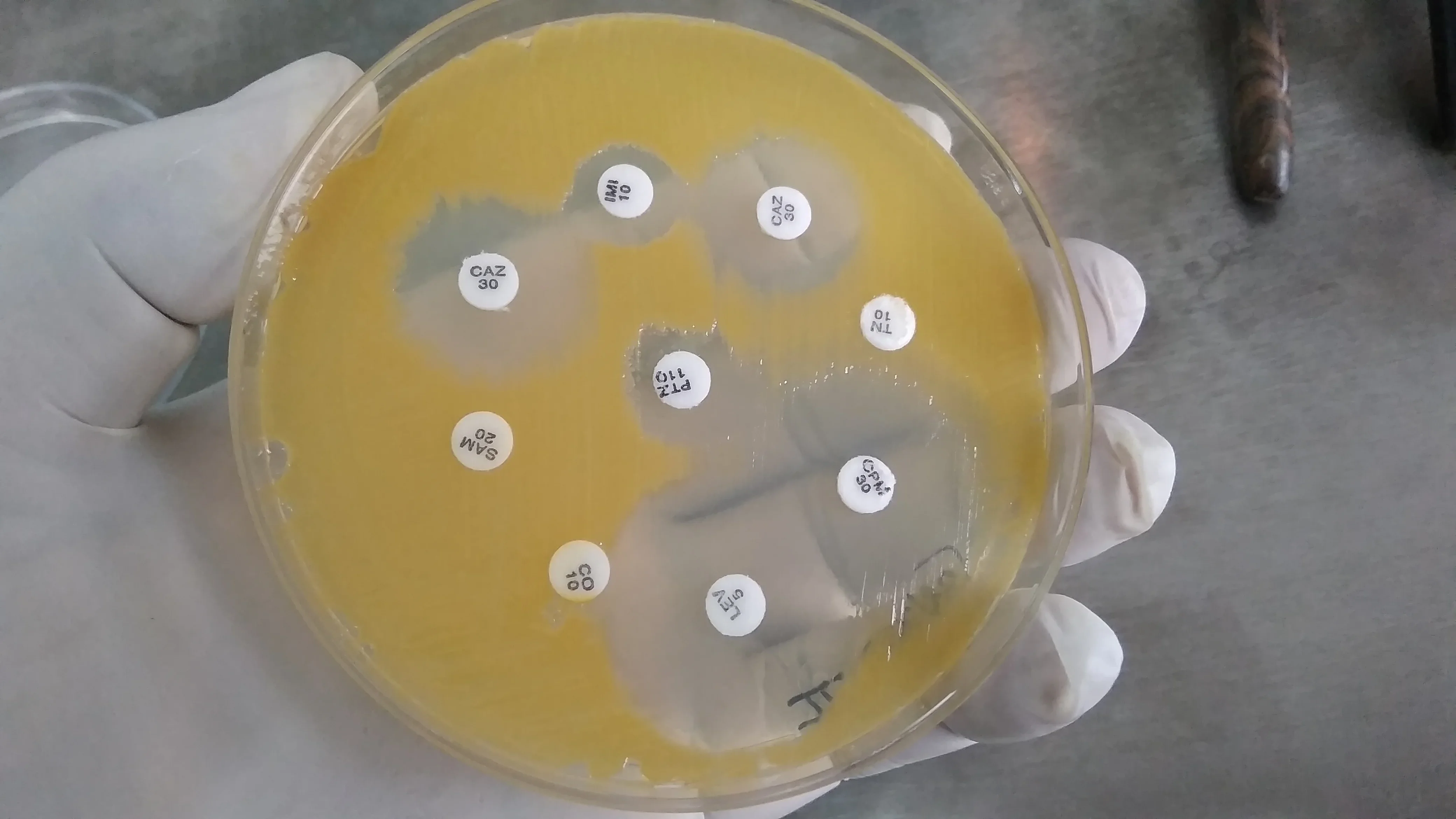
The World Health Organization has officially declared antimicrobial resistance a global health emergency – a move that strengthens calls for immediate international action as drug-resistant infections continue to take lives at an alarming rate. The decision, announced over the weekend, builds on years of growing warnings from health authorities and coincides with new data showing that antibiotic resistance is developing faster than new therapies are emerging.
Growing losses: when infections outpace treatment
A key study published in "The Lancet" shows that bacterial resistance to antimicrobials was a direct cause of about 1.27 million deaths worldwide in 2019 and contributed to a total of 4.95 million deaths in the same year – more than the victims of HIV/AIDS or malaria. This puts resistant infections among the leading causes of preventable death.
Updated estimates, again published in "The Lancet" in 2024, indicate that in 2021, 1.14 million deaths were directly linked to bacterial antimicrobial resistance. The forecasts are even more bleak: if decisive measures are not taken, the annual number of deaths could reach 1.91 million by 2050. Behind these numbers are real stories – from common urinary tract infections that have become difficult to treat, to post-operative infections where "common" antibiotics no longer work.
The global map of resistance: one in six infections is not affected by an antibiotic
A WHO report, published in October 2025, shows that in 2023, approximately one in six laboratory-confirmed bacterial infections in the world was resistant to standard antibiotic treatment. For the period 2018–2023, an increase in resistance was recorded in more than 40% of the observed "pathogen–antibiotic" combinations. In other words – an increasing number of the bacteria we know "learn" to survive the drug attack.
The highest levels of resistance have been found in the regions of Southeast Asia and the Eastern Mediterranean, where about one-third of reported infections show resistance to at least one antibiotic. Particularly worrying is the growing resistance to carbapenems – a group of powerful antibiotics, long considered the "last line" of defense. When they, too, stop working, treatment options are drastically reduced, and in many low-income countries, the alternatives are either unavailable or too expensive.
"Antimicrobial resistance is outpacing the progress of modern medicine and threatening the health of families around the world," warned WHO Director-General Tedros Adhanom Ghebreyesus in a report from October 2025, stressing that without a coordinated response, we risk returning to an era when routine surgeries and infections are once again deadly.
Forming a global response: from the UN to Davos and national parliaments
The WHO's decision comes in the context of a number of political commitments in recent years. In 2024, the UN General Assembly adopted a political declaration on antimicrobial resistance (AMR), in which member states committed to reduce mortality associated with AMR by 10% by 2030. At the beginning of 2026, the WHO Executive Board approved a draft for an updated Global Action Plan on AMR for the period 2026–2036, which is expected to be finally adopted at the World Health Assembly in May.
At the World Economic Forum in Davos in January, more than 50 organizations – from pharmaceutical companies to banks and civil society organizations – signed the "Davos Agreement on AMR", with which they committed to cross-sectoral cooperation to address the crisis. In the US, in March, the "SUPER BUGS Act" was introduced, aimed at strengthening cooperation in research on drug-resistant infections and stimulating the development of new therapies. Meanwhile, a team from the University of California, San Diego, presented a CRISPR-based tool that can deprive bacterial populations of resistance genes – potentially a new front in the battle with "superbugs".
A race against time: too few new antibiotics, too rapidly increasing resistance
Against the backdrop of growing resistance, the development of new antibiotics is painfully slow. According to the "AMR Benchmark 2026" assessment, there are only seven innovative antibiotic projects in late phases of clinical development in the world, targeting the most dangerous drug-resistant pathogens. This is not enough to compensate for the loss of efficacy of existing drugs.
WHO publishes new target product profiles for urgently needed antibiotics to direct pharmaceutical companies to the pathogens and characteristics that are most critical from a public health perspective. However, experts warn that without sustainable funding and a change in antibiotic business models, the pharmaceutical industry will continue to avoid this risky segment. The result could be a world in which banal infections – such as pneumonia or infected wounds – once again become difficult to treat.
Next steps: summit in Abuja and a test of political will
The 5th Ministerial Conference on Antimicrobial Resistance is scheduled for June in Abuja, Nigeria. There, world leaders are expected to review progress on commitments and confirm or update their goals. Key topics will be the funding of new medicines and diagnostic tests, the control of antibiotic use in human and veterinary medicine, and the strengthening of health systems in low- and middle-income countries.
The declaration of AMR as a global health emergency sets a political and moral framework: antibiotic resistance is no longer a "silent crisis", but a recognized global threat, comparable to pandemics and other major health challenges. Whether the world will be able to catch up in the "race" with microbes will depend on how far the declarations will turn into funded programs, changed practices and new solutions in laboratories and hospitals.
Коментари (4)
ебати майката! антибиотиците вече не вършат работа? това е все едно да ти ка
Пълна пародия! Ама наистина, как се стигна до тук, бе?! Да не би да е от тия "лекарства" дето ги внасяха на килограм от Изток? Честно казано, ако продължаваме така... Европа ще ни помогне, разбира се, ама колко още
Абе, хора, сериозно ли? СЗО обявили антибиотичната резистентност за световна криза? Браво, ама да бяха го казали преди 20 години може би... Сега чак ни изненадахте! 🤦♂️
Пич, малеее! Сериозно ли обявиха за световна криза?! 1.1 милиона души... не ми се мисли! И да стават бактериите резистентни – голям зор е това. Трябва ни яко финансиране и от 😁