
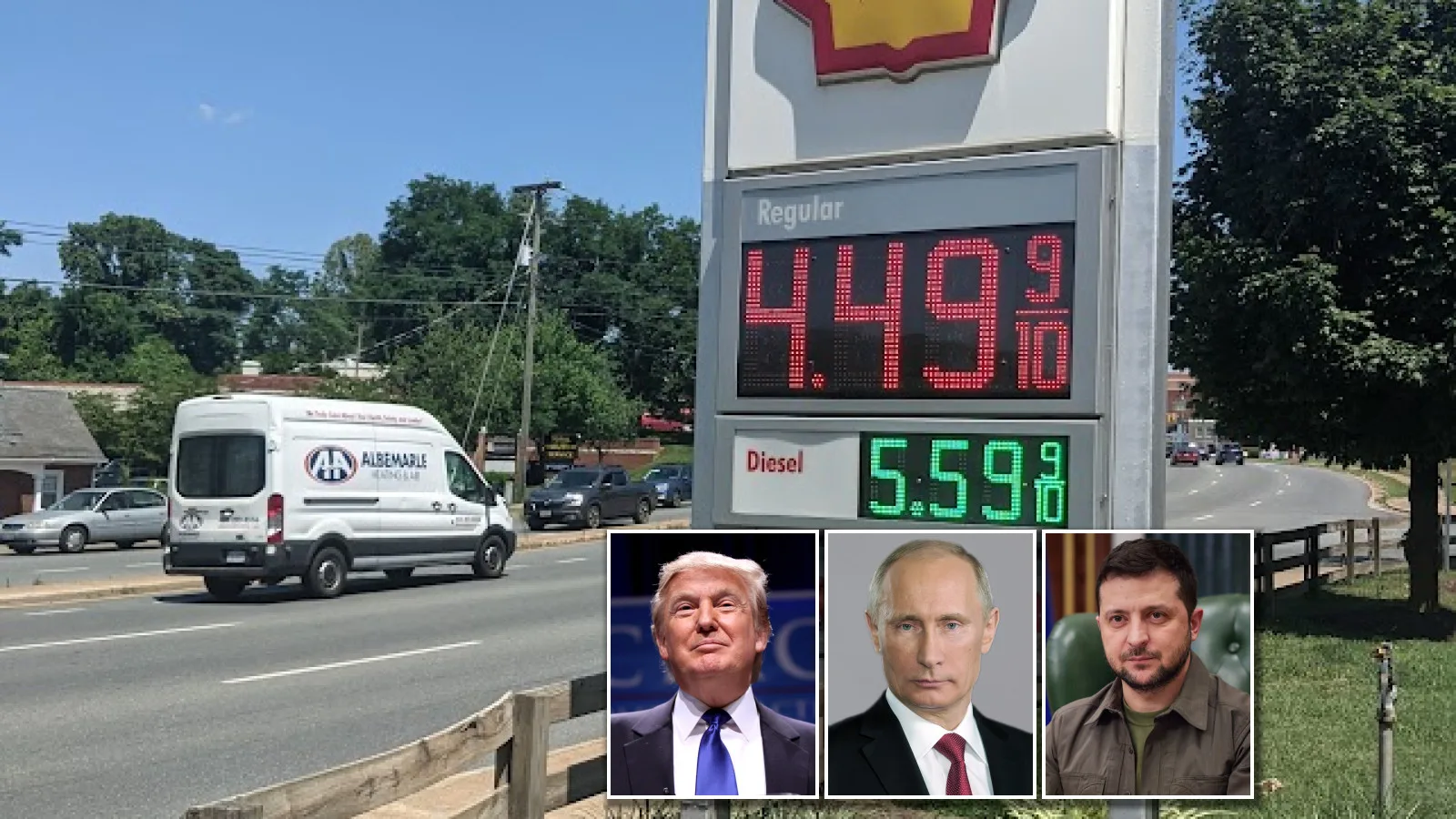
The US Treasury issued General License 135 on 9 October 2026. It allows Russian diesel to be sold, delivered and imported until 7 April 2027.[1] The licence covers only US sanctions. The bans by the EU and Britain stay fully in force[1]. It gives permission, but nobody is required to buy.
Before that, Donald Trump wrote on Truth Social that Russia is ready to hand over more than 300,000 tonnes of diesel at once, another 500,000 in November and a million shortly after. A further 3 million tonnes depend on the state of its refineries. In all, that is more than 4.8 million tonnes[1]. He said the decision, together with US "full control" of the Strait of Hormuz, would bring prices down "not a cent"[2].
How much diesel Russia really has
The promised amount is unlikely to arrive in full. Russia's six largest diesel refineries make half of its output, and Ukrainian drones have halted or sharply cut work at some of them. Kirishi is fully shut, while Volgograd and Nizhny Novgorod run at about a quarter of capacity[3]. Fuel was rationed in the Leningrad region until at least 1 October 2026. There is no information on whether the limit has been lifted since[3].
Moscow has already restricted diesel exports because of these strikes, and the ban was in force until at least 30 September[4]. The available material does not show whether it was lifted or extended. That is the key question: to keep Trump's promise, Russia must reopen its own exports while its plants are under attack.
What 4.8 million tonnes means
Daily US diesel use is not among the data we have, so the scale is easiest to see through another measure. Before the war with Iran, about 900,000 barrels of diesel a day left the Persian Gulf[4]. Taking one tonne of diesel as about 7.5 barrels, the promised amounts look like this.
| Batch | Tonnes | Barrels (approx.) | Days of pre-war Gulf flow |
|---|---|---|---|
| At once | over 300,000 | about 2.25m | about 2.5 |
| In November | 500,000 | about 3.75m | about 4 |
| Shortly after | 1m | about 7.5m | about 8 |
| Depends on refineries | 3m | about 22.5m | about 25 |
| Total | over 4.8m | about 36m | about 40 |
Source: Trump's promises according to shipandbunker.com, Gulf flow according to hydrocarbonprocessing.com, editorial calculations at 7.5 barrels a tonne.
Even if everything arrives, 4.8 million tonnes would cover about 40 days of the flow the Gulf supplied before the war. The first three batches, which do not depend on the refineries, total 1.8 million tonnes, or about 15 days. The licence runs for six months. If the volumes are spread evenly over that time, which is an assumption by the editors, the full package comes to about 200,000 barrels a day, a little over a fifth of the lost flow. The part with no conditions is about 75,000 barrels a day, less than a tenth.
This measures scale and is not a price forecast, because the Gulf flow serves the whole world, not only the US. The conclusion is still clear: at best, Russian diesel is minor relief at the edges of the market, not a turnaround. The purchase is more a chance on paper than a delivery that will crush prices.
Where the price jump comes from
US diesel prices began to climb when the war with Iran started on 28 February 2026. The average price was then $3.76 a gallon, and on 15 September it hit a record $6.27[5]. That is a rise of about two thirds. The material used has no newer data. About 10% of the world's seaborne diesel imports left the Persian Gulf[4], and East Coast stocks at the end of August were the lowest since 1982[4].
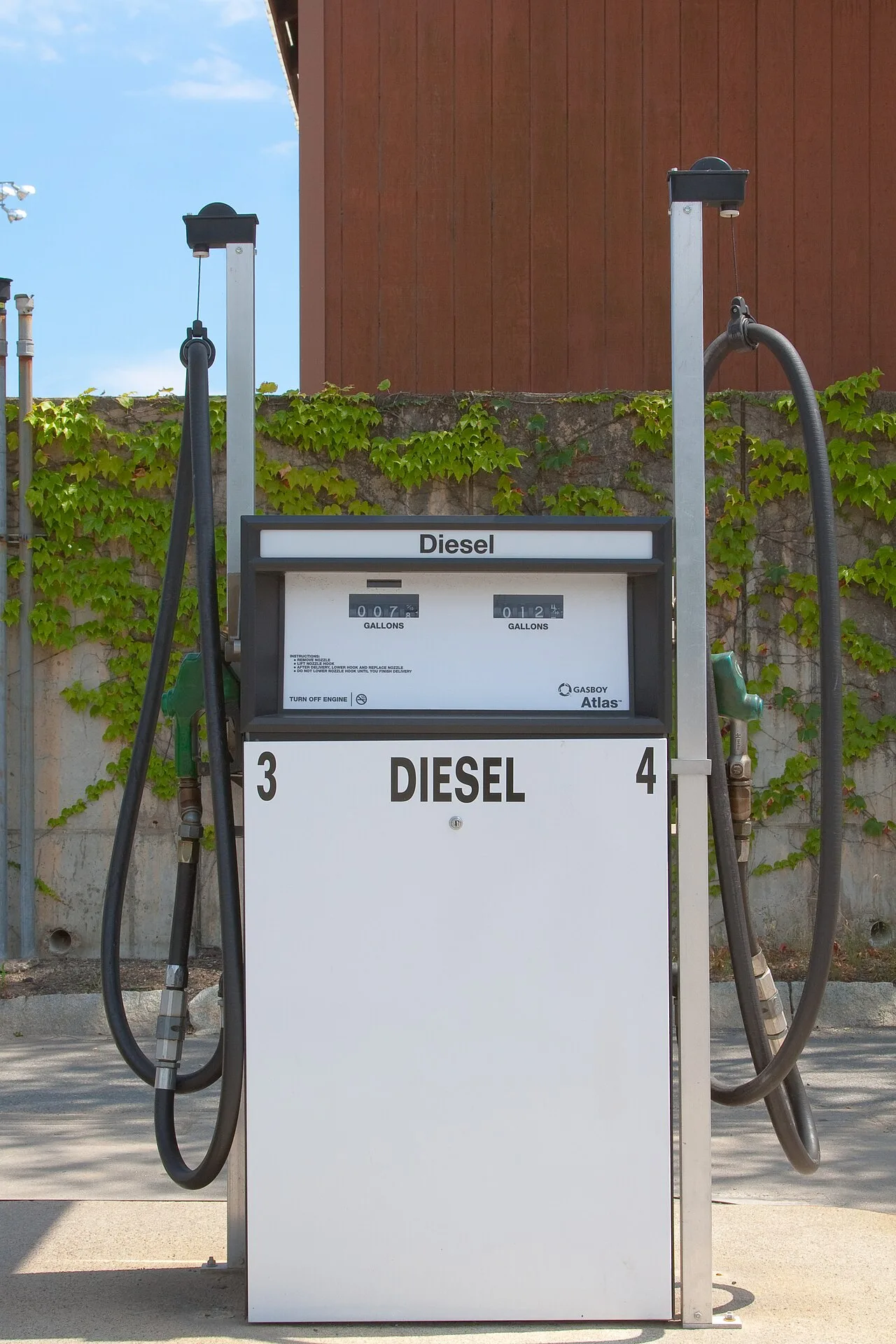
Ukrainian strikes on refineries also weigh on the market, but less. An analyst at Global Risk Management says stopping them would help, but the fuel shortage from the Middle East weighs far more[5]. None of the sources names the strikes on Russian plants as the main cause. Those strikes are a defence against the full-scale war Russia has waged on Ukraine since February 2022.
Who pays the political bill
Zelensky called the deal a "smokescreen" that plays into Russia's hands and lets it kill more and fight longer[2]. Senate Democrats Schumer, Warren and Shaheen called it a betrayal of Ukraine and European allies. Republican Don Bacon said the president has a "moral blindness" toward Putin[2].
The legal argument is the most awkward one for the White House. Congressman Steny Hoyer noted that the licence goes against the Russia and Iran sanctions law that Trump signed three weeks ago[6]. The law is linked with the name of Senator Lindsey Graham. The paradox is that it was written to limit trade in Russian oil products, while the licence allows it. Read to the letter, the law would require the US to impose sanctions on itself. Hoyer called on Congress not to let "a cent" of American money go to Russian oil products[6].
Why the election logic works even without cheaper diesel
Diesel costs $2.60 more than a year ago, and the administration is fighting high prices ahead of the midterm elections for Congress[2]. The motive shows in the calendar: the elections are near, the licence is signed now, and the first batch is promised at once.
The White House's calculation does not depend on whether the price really falls. The move gives voters two things that do not need cheap diesel. The first is visible action: a licence, promised tonnages and a claim of control over the Strait of Hormuz. The second is a ready explanation. If the price stays high, the blame already has an address: the war with Iran, the Middle East shortage that analysts say weighs most, and the strikes on Russian refineries. The administration will be able to say it tried everything and the obstacle lies outside its control.
The effect is limited and costly. The "not a cent" promise is the yardstick it will be measured against. Criticism comes from Trump's own party too. At best for the White House, the move buys time and a campaign theme, but not a result at the pump.
The consequences go beyond the deal itself. A country under sanctions gets relief, while its victim, which is hitting its refineries, hears demands to stop. That weakens the sanctions regime. Europe is left to hold its own restrictions alone while Washington gets around them, and only months ago the administration asked Europeans to release their stocks[2].
The first real test comes in November: whether the promised half a million tonnes arrive, and whether Moscow reopens its exports while its plants are under attack.
Comments (1)
април 2027 година? то значи ще се точат още доста години по тия схеми. ясно стана, че пак някой си прави сметка за гласове и не му пука какво става с енергийната ни независимост. дано поне нашите хора в брюксел го виждат и да действат адекватно, че май ще ни ядовеят скоро!