
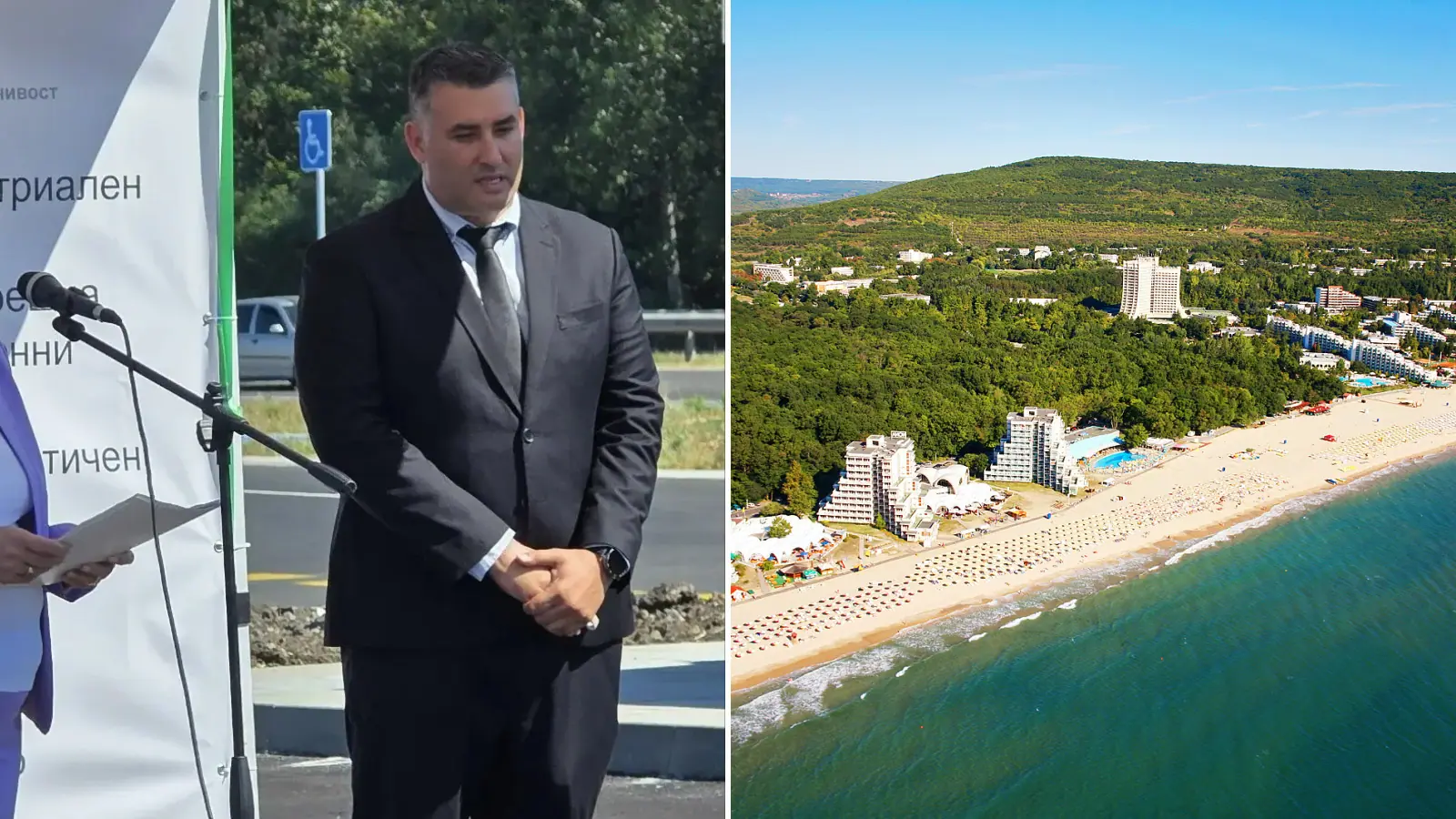
The European Commission now treats Bulgaria's eastern regions as bordering Russia's war on Ukraine. That could open the way to targeted EU funding for dual-use infrastructure, Silvia Georgieva, executive director of the National Association of Municipalities in the Republic of Bulgaria (NAMRB), told BNT's "Speak Now" programme.
Mayors of Black Sea municipalities are already working on the issue, she said. As well as more security measures, she said there is a chance of money set aside for such projects.
More than 600 people are attending the annual meeting of local authorities in Albena. NAMRB turns 30 this year. The main topics are the security of Black Sea municipalities and how EU money will be shared in future.
"Municipal mayors cannot be isolated or stand aside from the shared security concerns of everyone bordering the military conflict in our region," Georgieva said.
Black Sea mayors work on security with counterparts from other European countries that border Ukraine, including Poland. Money for security and infrastructure is expected to be discussed in the EU's next funding period.
NAMRB said talks on the EU's future budget and the split of EU money have already begun. Municipalities will seek support at national and European level. The association says local authorities must defend the interests of municipalities so that the changes do not limit their development.
NAMRB sees risks in the new regional split. Bulgaria will have 4 planning regions instead of the current 6. The reasons are population decline and EU rules on how many people a region must have.
Sofia stays a separate region, while some of its neighbouring municipalities join the large southern region. All of northern Bulgaria will be one region.
NAMRB does not see the new split as the best possible solution. "A mechanical change alone will not improve quality of life in any single town or village," Georgieva said. Regions directly affect how EU money is shared, she said, and that touches every citizen.
In northern Bulgaria, long distances and a poor road network will make it harder for municipalities to work together, Georgieva said. She said regions are not only a channel for EU money but also a way for municipalities to work together and feel like a community.
Partnerships in the current regions took 20 years to build and will have to be built again, she said. Georgieva said the change breaks historic ties between provinces and municipalities that already have joint projects.
Georgieva also said it was not well thought out to give Sofia a metropolitan region. Neighbouring municipalities share city transport and business zones with the capital and have daily links with it, yet under the new scheme Sofia is limited to its urban area.
The size of EU grant aid depends on poverty and the size of the region. For the poorest regions it is 100%, while larger regions get a lower share.
Smaller municipalities around Sofia will be able to get up to 100% in grants, while the capital will get a smaller share. So when Sofia and a neighbouring municipality run a joint project with EU money, the funding will be uneven, Georgieva said. Higher aid is an advantage for small municipalities, she said, but it may make joint projects on transport, business zones and infrastructure harder.



Comments (0)
No comments yet.