
In oncology, one of the most painful questions is: "Will the treatment work for this particular patient?" Immunotherapies with immune checkpoint inhibitors (ICI) have changed the odds for many people with serious diagnoses, but not everyone has a good outcome. Until now, doctors relied on complex and expensive tests – such as tumor mutational burden (TMB) and PD‑L1 expression – to assess the likely effect. It turns out that artificial intelligence can do this more accurately using something far more accessible: routine blood tests.
This is exactly what the "SCORPIO" model ("Standard Clinical and labOratory featuRes for Prognostication of Immunotherapy Outcomes") does – a machine learning system that works with a complete blood count, standard biochemical parameters, and basic clinical information, and manages to predict survival and the effect of ICI therapy with impressive accuracy.
"SCORPIO": artificial intelligence on routine data
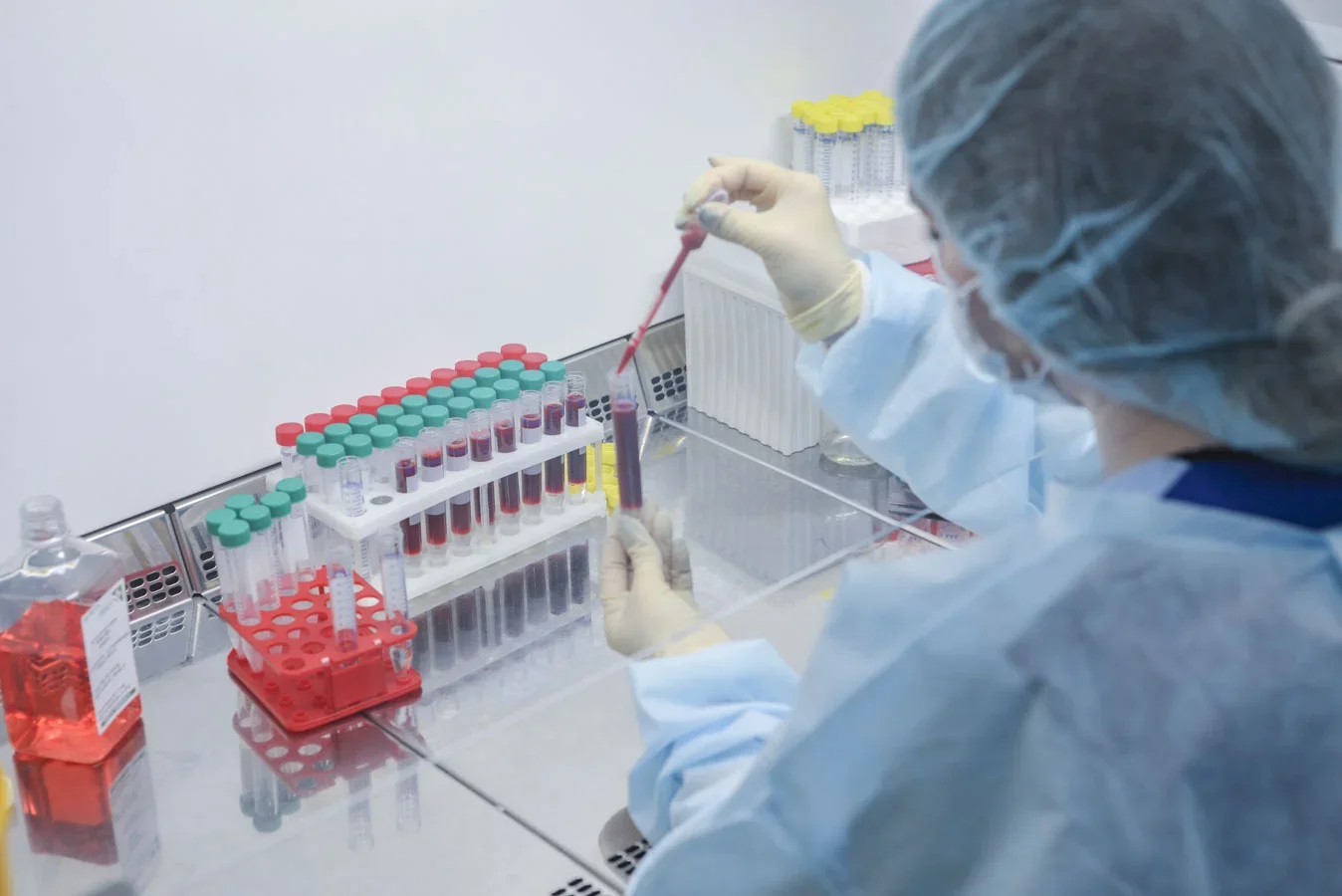
"SCORPIO" is trained on data from nearly 10,000 cancer patients treated with immunotherapy in various clinics and on various regimens. The model uses standard laboratory results – blood count, metabolic profile – and clinical characteristics such as age, tumor type, previous treatment, to calculate the risk of a poor outcome. It does not require genomic panels, complex immunohistochemical analyses, or specialized tumor tests.
In practice, this means the following: the patient gives blood before therapy anyway, and the model "sees" hidden patterns in these numbers that are invisible to the human eye. The result is a digital risk score from 0 to 1, where a higher value means a greater likelihood of a poor response to ICI or early death. Thus, the complex mathematics remains "behind the scenes", and the doctor receives a clear, understandable indicator.
Accuracy 72–76% – more than the "gold standard"
In various cohorts – internal test groups and external real populations – "SCORPIO" manages to predict survival after ICI therapy with an accuracy, which in statistical language is expressed with a time-dependent AUC value around 0.72–0.76. Translated more simply, this means that in about three out of four cases, the model correctly differentiates a patient with a better prospect from a patient with a worse one, when it comes to overall survival.
Even more impressive is the fact that this performance is better than some of the established and regulator-approved biomarkers. In direct comparisons, "SCORPIO" outperforms TMB and shows better or comparable results than PD‑L1 immunostaining in predicting the benefit of immunotherapy. That is, the model, which works only with "ordinary" blood tests and clinical data, does better than tests that require complex equipment and specialized laboratories.
What this means for the patient in the office
For a person sitting across from the oncologist and asking, "Is it worth going through this treatment?", such a tool is not just statistics. If "SCORPIO" shows a high chance of benefit, this may give additional confidence to embark on a path with severe side effects and a high cost. If the model reports a high risk of poor effect, the doctor and patient can discuss alternatives – participation in a clinical trial, combined regimens, more frequent monitoring.
It is important to emphasize that "SCORPIO" does not "decide instead of the doctor". It is another tool – as an additional picture to the scanners, biopsies, and the oncologist's experience. But unlike many other tests, it is based on information that is routinely collected in every hospital anyway. This opens up the possibility of such technology reaching smaller centers, not just the largest university hospitals.
Democratization of precision medicine
One of the biggest criticisms of "precision" medicine is that it is often precise only for those who can afford it – genomic panels, complex immunohistochemical analyses, expensive imaging. "SCORPIO" starts from the other side: it works with what is already available almost everywhere – standard blood tests and basic clinical data.
This makes the model potentially much more accessible – both in countries with limited resources and in small hospitals where there is no expensive equipment, but there are oncologists, laboratories, and patients who need better information. If such tools are integrated into healthcare systems, precision medicine can become less elitist and closer to the real patient in the real hospital room.
What follows: hope, but also a need for attention
The results around "SCORPIO" sound like a promising step towards more predictable immunotherapy, but like any new technology in medicine, this one needs time, validation, and clear rules. The model needs to be tested in even more real-world conditions, in different healthcare systems and in more diverse groups of patients. In addition, transparency – how exactly it works, what data it uses, who supports it – is key to not being perceived as a "black box" that issues verdicts.
For patients and doctors, however, the very fact that from routine blood tests we can extract so much information about the likely benefit of treatment is a sign that the future of oncology will be increasingly linked to artificial intelligence. And if this means less unnecessary toxic treatment, more timely decisions and a better chance for the right person to get the right therapy on time, then "SCORPIO" is not just a model, but another small hope in a difficult conversation.





Comments (9)
Абе, хора, сериозно ли? Кръвна проба да предсказва дали ще хванем рак или няма да хванем и колко време ще живеем… Това наистина е яко, ако е истина, разбира се! 72-76% точност – добре звучи, ама трябва да се види на практика, нали? Честичко си правя кръвни изследвания аз, ама до сега не съм очаквал да ми кажат нещо такова.
Уау! 😮 Този SCORPIO модел звучи бомбично! Ако наистина е толкова точен, ще е
Абе, хора, пичове, супер! 72-76% точност... добре де, това значи, че примерно от 10 човека, на 4-5 ще им кажат "браво, живей дълго и щастливо" или нещо подобно, а на останалите – еми... не. И пак е яко, ако е истина! 😂
Ооо, яко е това! Сериозно, много яко! 🤩 Видях новината и останах доста впечатлен. Представям си колко ще помогне на хората - да знаят предварително дали имунотерапията ще им подейства или не, ще спести време, пари и най-важното – надежда.
Абе, сериозно ли? 72-76%?! Това значи, че все пак има шанс да хванеш правилно отговора на лечението, а? Не е баш като ру