
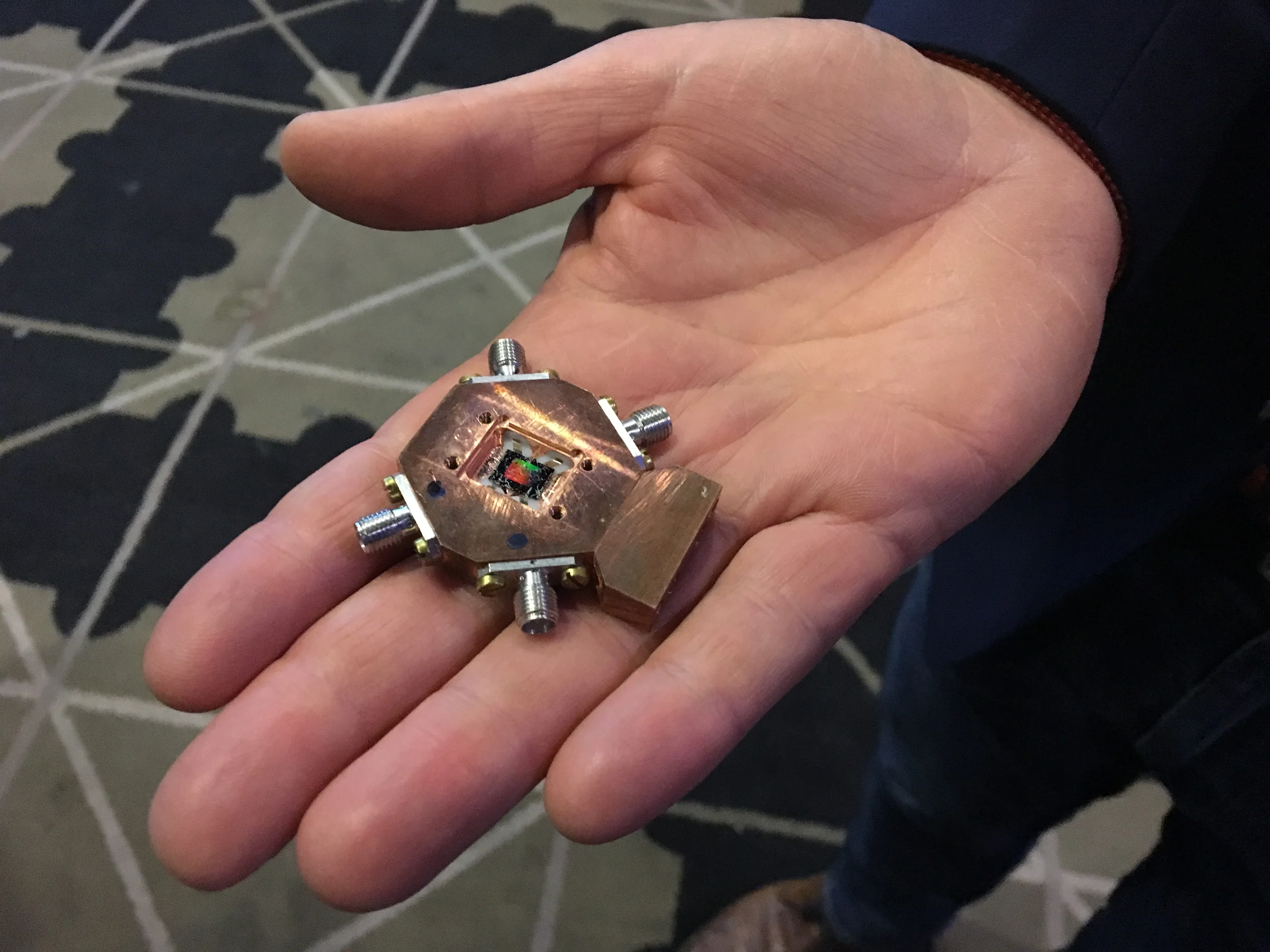
For years, quantum computers lived in a strange zone between science fiction and scientific conferences – many promises, few practical results. The phrase "great technology, but for the next decade" has almost become a cliché. Today the picture is starting to change. With improvements in qubit stability and better algorithms, quantum machines are gradually moving out of the status of "perpetual prospect" and are heading towards specific tasks in which classical supercomputers are already running out of breath.
Qubits are finally calming down – and that changes the game
At the heart of quantum technologies are qubits - quantum "bits" that can exist simultaneously in several states. The problem has always been how quickly they "decay" - lose information due to noise, vibrations, temperature fluctuations. This is where the big news is: in recent years, laboratories and companies have shown schemes for quantum error correction and new types of qubits that extend the coherence time and reduce errors in operations.
Recently, teams of researchers reported a more than three-fold extension of the time during which qubits remain stable, thanks to new error detection and correction schemes. Along with this, companies like IBM, Quantinuum and others are presenting roadmaps to universal, robust quantum computers by the end of the decade – systems with hundreds of "logical" qubits built on thousands of physical ones.
From theories to real molecules: quantum machines in drug development
One of the first areas where quantum computers are beginning to show real potential is the creation of medicines. Modeling molecules, reaction pathways and interaction between potential drugs and target proteins is a task that requires enormous computational power - classical supercomputers often have to work with rough approximations.
Hybrid quantum-classical algorithms are already being used experimentally to calculate energy levels and reaction barriers in real chemical systems. In one study on drug development, a quantum computer was used to simulate the activation of a prodrug and interaction with a specific cancer target, with results approaching experimental data, but with fewer computational resources.
Large consulting companies and pharma giants are already talking about a multi-billion dollar potential in the use of quantum methods to accelerate the early stages of discovery and optimization of molecules. Quantum machines will not "invent" the drugs instead of scientists, but they can narrow the list of candidates and reduce the years and funds needed to move from an idea to clinical trials.
Batteries of the future: longer life through quantum simulations
A second line, in which stable qubits are already being tested, is energy – more specifically, batteries and fuel cells. Lithium-ion systems are extremely complex from a quantum chemistry point of view: dozens of interactions between electrodes, electrolytes and interfaces that determine capacity, charging speed and degradation. Classical models often cannot describe these processes in detail without huge simplifications.
Quantum simulations allow us to "peek" into electrode materials at the atomic and electronic level and to calculate reactions such as electrolyte degradation or the formation of protective layers. Projects in Europe and the US are already using quantum machines to model electrochemical processes in lithium-ion batteries and fuel cells, in order to propose new compositions and structures of electrodes with higher energy density and longer life.
In practice, this means less "shooting in the dark" in the laboratories – instead of testing hundreds of material variants, part of the selection can be done virtually, on quantum-classical simulations. This does not replace experiments, but makes them more targeted and cheaper.
Climate models: a quantum answer to "too complex" equations
The Earth's climate is a system with countless interacting variables – ocean currents, clouds, aerosols, biosphere, human activity. Even today's supercomputers are working on the edge of their capabilities when trying to track all these processes with sufficient resolution and a long horizon.
Here comes the quantum promise: certain classes of algorithms on quantum machines can accelerate the calculations related to the dynamics of complex systems and the so-called Markov processes – one-way chains of states, such as chemical reactions, heat diffusion, even some financial models. It was recently shown experimentally that quantum algorithms can surpass the old theoretical limits for acceleration in such processes, which opens the door for faster and more accurate simulations of climate scenarios.
In human language, this could mean more accurate models for extreme phenomena – heat waves, floods, changes in sea level – and a better basis for making decisions for adaptation and emission reduction.
From "when it grows up" to "how to use it wisely"
It is important not to turn quantum technologies into the new "silver bullet". Even with more stable qubits, mass-available quantum computers are still years away. Most of the applied scenarios so far are hybrid – the quantum hardware takes over a small but critical part of the task, and the rest is done by classical machines.
But the change in tone is obvious. Less and less is being said about "if ever" and more – about "when" and "in which cases". Investors, pharma companies, energy corporations and climate researchers are no longer asking "whether quantum computers will be useful", but "how to be ready when they really become a working tool". This shift – from dream to planning – is the surest sign that quantum technologies are really coming out of the zone of "eternal prospect".
And for us, people outside the laboratories, this may mean not abstract qubits, but more targeted medicines, more reliable batteries in our cars and devices, and more meaningful solutions for the world in which we will live in 20-30 years. Or, simply put: less "magic" and more quiet, but real benefit.





Comments (4)
Ааа, кванти... Щото другото не ни върви. 😅 Не казвам, че е лошо де, ама да видим дали ще стане нещо повече от
Абе хара, баси! Чета коментарите и виждам само скептицизъм... Разбирам, разбирам, много сме били лъгани с обещания през годините, ама тук ми се струва различно. Тая квантова работа наистина почва да заприличва на нещо съществено!
хм, интересно... чета за кубитите и си мисля, че наистина може да има нещо сериозно в тая работа. не казвам, че веднага ще решат всичките ни проблеми с лекарства и климата, разбира се. видяхме как става - едно обещание, после друго... но все пак, идеята да симулират
хм... значи, реално ли ще се случи сега, бе? или пак ще е прах в очите? 🤔