
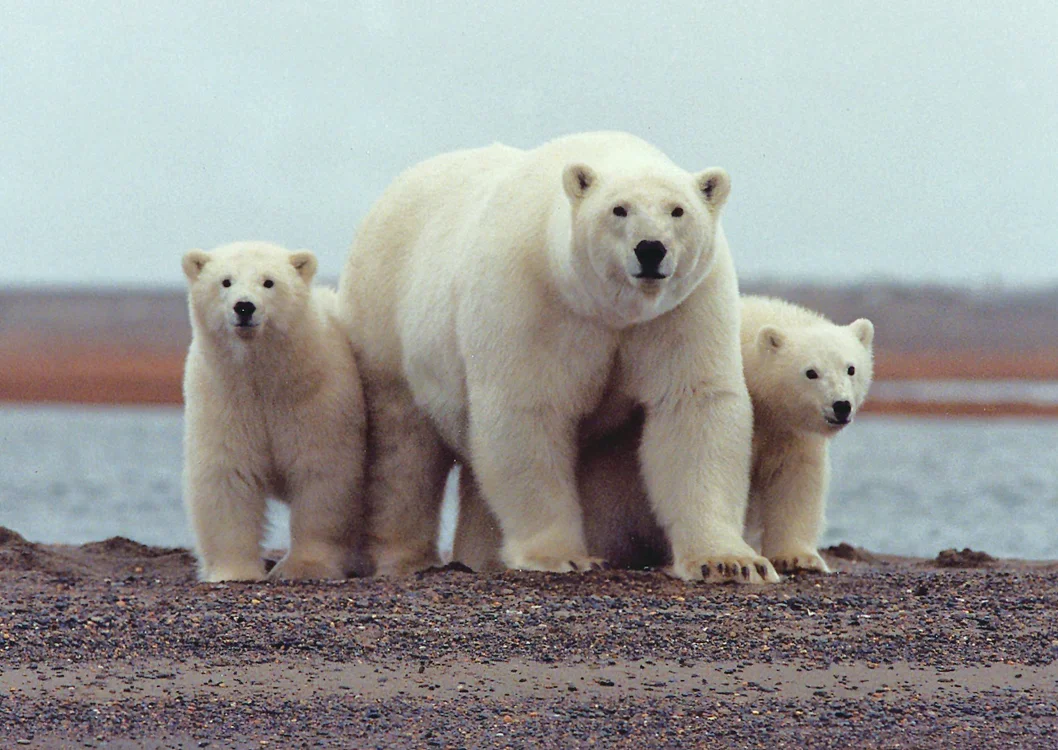
February 27 is "International Polar Bear Day" - a day when social networks are filled with photos of white bears on ice floes. Behind the beautiful shots, however, lies a much more serious conversation. This day was created by the organization "Polar Bears International" to draw attention to the impact of global warming and melting sea ice on polar bears and to remind us that the Arctic is not a distant scene, but part of our common climate system.
The scientific consensus is clear: with the melting of sea ice, polar bears are losing their main platform for hunting and survival. Studies link the reduction of ice with longer periods in which bears are forced to stay on land, swim longer distances and have less time to hunt, which directly affects their weight, reproduction and survival. In some scenarios, a significant decline in populations is expected by mid-century if emissions continue to grow.
But "International Polar Bear Day" is more than a day for biologists. It is a natural occasion to talk about energy. The main driver of climate change is the burning of fossil fuels – coal, oil, gas – which power our power plants, transport and industry. Organizations working to protect the Arctic repeat a simple formula: "Less carbon in the atmosphere means more ice for the bears." This refers directly to topics such as the energy mix, the transition to renewable sources and the efficiency with which we use energy.
Corporations are also in focus. In recent years, initiatives have emerged, such as voluntary commitments by large companies not to use new Arctic sea routes, in order not to stimulate traffic through fragile ice zones, as well as corporate strategies to reduce emissions throughout the chain – from production to transport. For some brands, "not going through the Arctic" is already part of their image, but also of their real contribution to reducing the risk to the region.
The other side of the same coin is us – the consumers. A day like "International Polar Bear Day" is often used to encourage small but specific steps: lower heating temperatures, less car use, choosing more energy-efficient appliances, support for companies with clear climate behavior. At first glance, these gestures seem symbolic, but in their sum - and especially when they affect corporate and political decisions - they turn into a real factor.
The political framework also cannot be overlooked. International climate treaties, national emission reduction targets, regulations for mining in the Arctic and for shipping in polar waters – all this intertwines with the fate of a species that many people perceive as a symbol of northern nature. Discussions about "how much more oil to extract" or "how long to use coal" are not an abstraction, but are directly translated into degrees of warming and centimeters of disappearing ice.
"International Polar Bear Day" reminds us of something else: that complex global issues need a human face to feel them. The polar bear is exactly that face – an emblem of the Arctic and the consequences of our model of development. But the real stake is not only the survival of a species, but the stability of the system in which we live – from the weather outside to the prices of food and energy.
Ultimately, this day is a good starting point not only for sympathy, but for choice. Choice of policy, energy, corporate practices, everyday habits. The polar bear may be far from us, but the way we vote, work, consume and travel is already part of its history – and of our common one.

Comments (9)
Абе, кът да река... тоя свят е малко
абе хора, к'во става с тая тема?! мечките пак ни оправят тока ли? 🤦♂️ сериозно, да си гледаме бюджета, ама да не забравяме от къде идва истинския проблем – зависимостта ни от русия! видя се на кво сме закъсали, когато им хрумна да спират газовата връзка. европа е нашият път
абе, хора, наистина е яко колко са свързани нещата... мечките, токът, русия... всичко си е взаимосвързано! трябва да се фокусираме върху устойчиви енергий
Абе хора, вие сте гении! Бочо е прав – всичко си е свързано! Стечо също – зависимостта ни от Русия е като да се опитваш да ядеш люта чушка с вода от крана... няма смисъл, само гори! Vasil44 е казал най-важното - свят малък. 😅
Сериозно ЛИ? Мечките ни определят сметките за ток?! 🤦♀️ Да се оправят първо в Русия със