
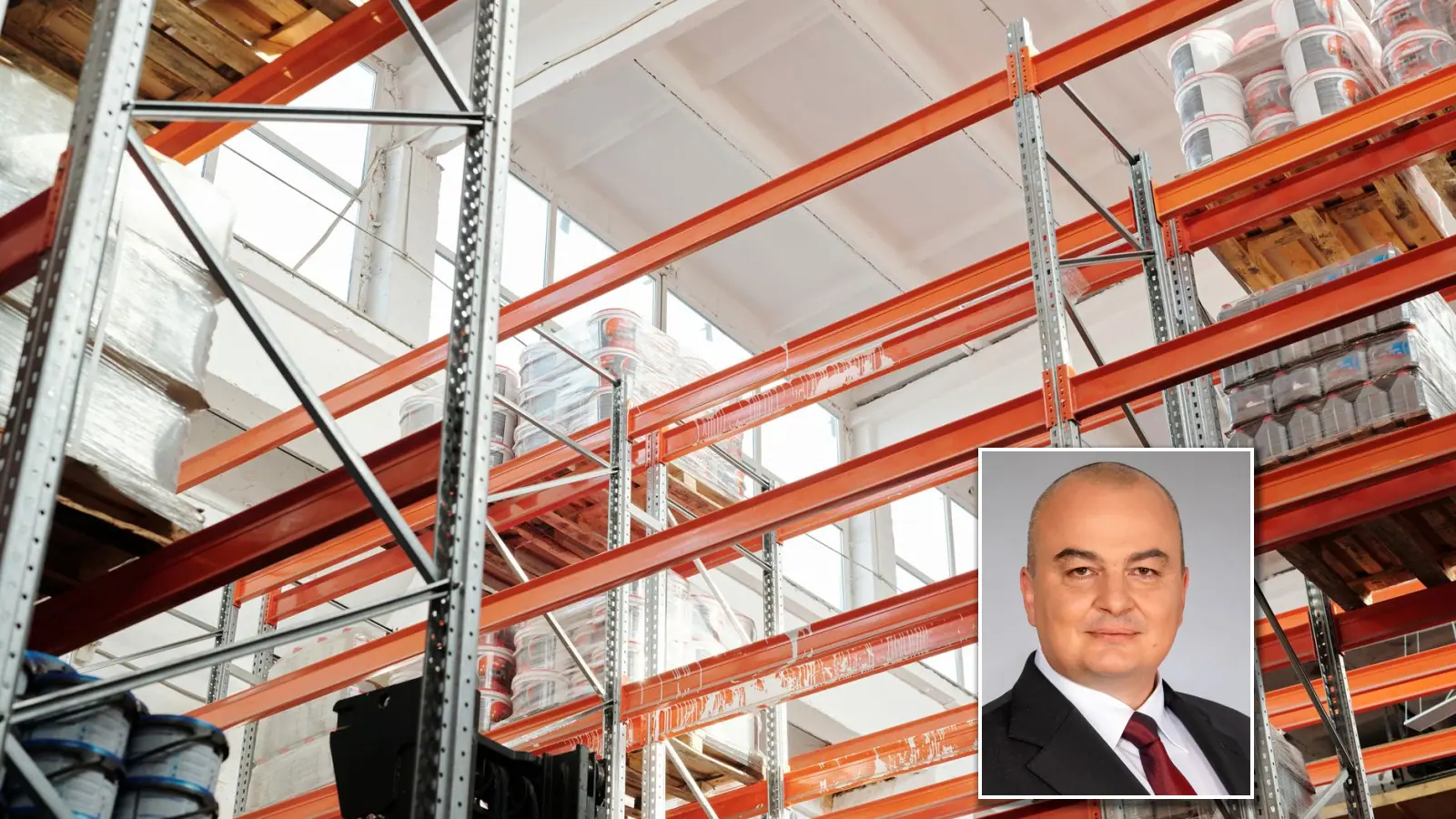
Inspectors began a three-day check today, 21 October, at both Lidl Bulgaria logistics sites, the chain said. Those carrying out the check are agriculture minister Plamen Abrovski, Prof Svetla Yancheva, head of the Bulgarian Food Safety Agency, Maya Manolova, chair of the Consumer Protection Commission, and Boris Mihaylov, head of the National Revenue Agency. They are at the logistics base in Ravno Pole and the logistics centre in the village of Kabile, in Yambol region.
Abrovski said the state has been checking all central warehouses of the retail chains since today.
In Ravno Pole, Yancheva, Manolova and Mihaylov joined the minister. In Kabile, the three institutions are carrying out checks at the same time.
The inspectors asked for financial and transport documents showing how goods are received, stored and moved. They are looking at how deliveries are organised, how products are tracked, how food quality and safety are controlled, and how big the logistics operation is that supplies shops across Bulgaria. The visit is part of tighter controls on the chain. Lidl says it has given full access to its warehouses and is helping the inspectors.
"There are definitely no products at Lidl with markups like those publicised in recent days," the company said.
Lidl says it has no concerns about the checks, works openly and obeys the law. It says its audited financial accounts show there are no such markups. The accounts show a net operating profit of 2% to 5% a year, or between €2 and €5 on every €100 of sales. The company adds that it has worked in Bulgaria for 16 years and is accountable every day to hundreds of thousands of customers. Dragiyska said the extra attention is understandable, because Lidl is the market leader.
She also said controls should not turn into campaigns against "selected" chains. "Real trust in state control is built only when it is applied equally and consistently to all players along the whole supply chain," Dragiyska said.
Lidl says inspectors made 1,228 checks at its sites and on its business from August 2025 to September 2026, an average of 100 a month. Fruit and vegetables are tested in laboratories for more than 800 pesticide residues, under limits many times stricter than the law requires.
The chain says modern retail holds about half of the market, while the other half is traditional shops, which do not sell more cheaply. Lidl believes this shows high prices come from problems that have built up in farming over the years, not from markups.
Lidl works with more than 300 Bulgarian producers, and over a third of them have been partners for more than ten years. In 2025, Lidl sold goods from Bulgarian companies worth nearly €650m, and almost 10% of that went directly to other European markets.
Lidl's management wants this way of working to become common. It says the wrong rules on subsidies, looted irrigation systems, a lack of workers and a lack of incentives to form co-operatives must be fixed. Until then, the chain says, the debate will be populist and of no use to shoppers or producers. It warns that such an approach could lead to confusion, empty shelves and a food crisis at a tense time for the world.
Dragiyska recalled that months ago the company proposed a Food Sovereignty Pact to the government to fix the problems in farming.



Comments (0)
No comments yet.