
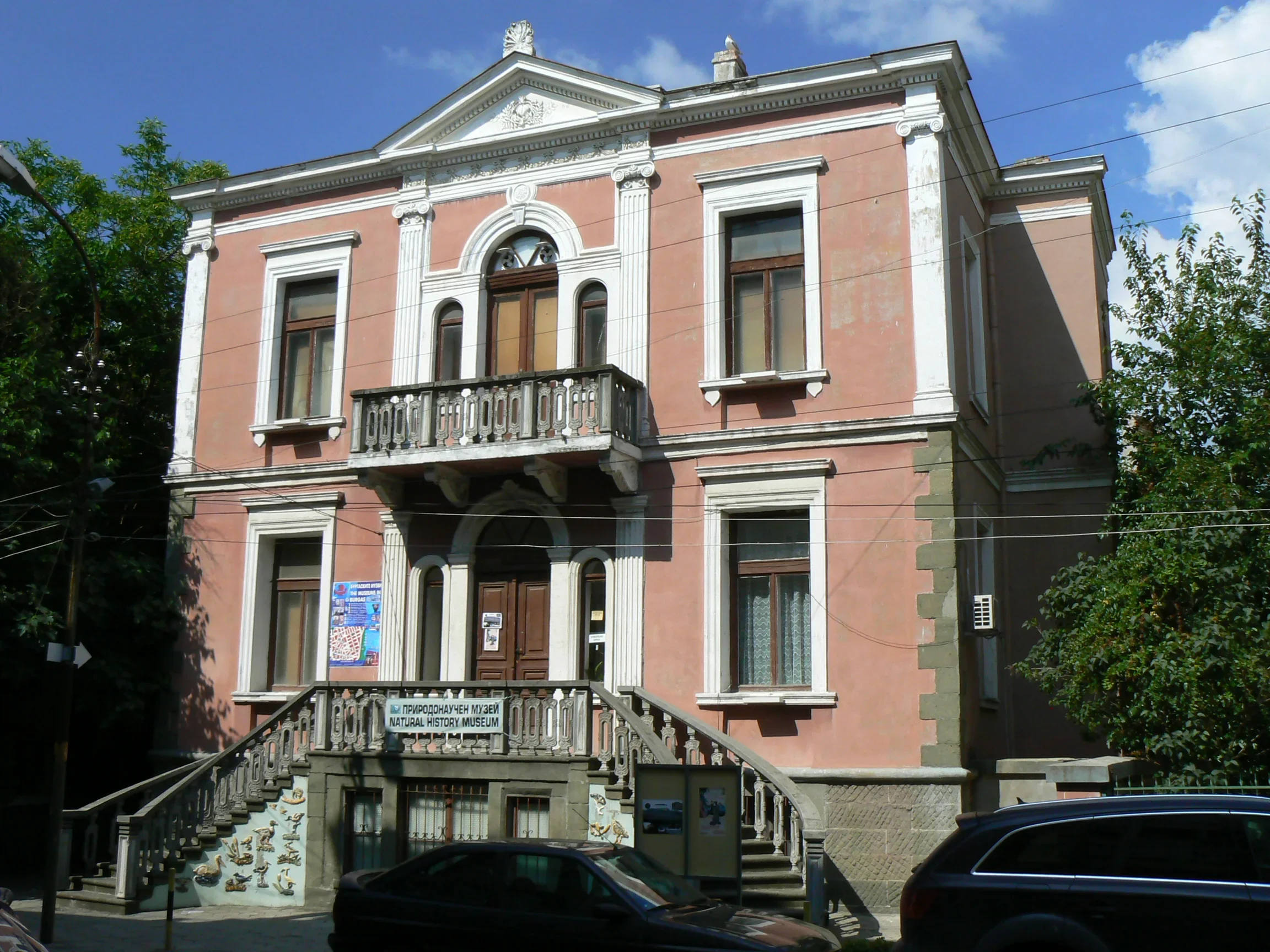
Regional Historical Museum – Burgas, together with the Institute for Balkan Studies with Center of Thracology at the Bulgarian Academy of Sciences, unveil to the public the trilingual poster exhibition, entitled "Egyptian Cults around the Black Sea".
The exhibition, which promises to attract the attention of researchers and the general public, is part of the large-scale scientific project "Thrace and Egypt in the Greco-Roman world", led by Chief Assistant Professor Dr. Vesela Atanasova from IBSCT-BAS.
Given the curiosity that the topic provokes, the exhibition will be located on the fence of the Ethnographic Museum in Burgas, on "Slavyanska" street number 69. Visitors will be able to enjoy the presented exhibits from November 1, 2025.
The essence of the exhibition lies in the presentation of valuable monuments from the ancient cities located on the Black Sea coast. The exhibits come from key locations, including Chersonesos Taurica in Crimea, Olbia in Parutino, Ukraine, Tyras in Bilhorod-Dnistrovskyi, Ukraine, Tomis in Constanta, Romania, Apollonia Pontica in Sozopol, Bulgaria, Mesambria in Nessebar, Bulgaria, Odessos in Varna, Bulgaria, Byzantium in Istanbul, Turkey, as well as Vani in Georgia, and other places that are of exceptional importance for historical research.
These artifacts are systematized into seven separate sections, which allow for a more in-depth understanding of the topic. The sections include epigraphic monuments, objects made of bone, terracotta, bronze, sculpture, gems and rings, and coins. The aim is to illustrate in more detail the penetration of Egyptian religious practices in the region.
The exhibition, which promises to enrich the cultural landscape, traces the early connections between the Black Sea region and Ancient Egypt. This period covers the time from the beginning of the 1st millennium BC, when the first Egyptian amulets began to appear in the Greek colonies, to the period of the Ptolemies. During this period, the cults of the deities from the Nile Valley gained widespread distribution throughout the eastern Mediterranean world and reached the Euxine Pontus.
Comments (15)
Слава Бургас
Вчера бях на изложбата!! 💩
ЕгипетцисабилинаЧерноморе?Койзнае
Бургас!
Мумии на морето! 👎