
On December 24th, the Christian world celebrates Christmas Eve. In Orthodox churches, Matins, the so-called "Royal Hours," and Vespers with the Divine Liturgy of Saint Basil the Great are served.
The night before the birth of the Lord Jesus Christ is mysterious and holy; traditionally, the family gathers together and sits at the table, arranged with modest and lenten dishes. Folk customs dictate that the number of dishes should be odd. Their number is 7 - as many as the days of the week, or 9 - as long as the pregnancy of women lasts. There are regions in Bulgaria where 12 dishes are also placed on the festive table - as many as the months of the year. Usually, the mistress of the house prepares a pita bread, sarmi (cabbage rolls), beans, boiled wheat, peppers, pumpkin pie, dried fruit compote, etc.
A coin is placed in the pita bread, so that upon breaking it by the oldest person, in whose piece the coin falls, it is considered that they will be the bearer of prosperity, happiness, and joy throughout the year. The first piece of the pita bread is left to the Holy Theotokos in front of the home icon.
In some places, straw is spread on the floor, and the table is placed on it in memory of the manger in Bethlehem, where the Infant Jesus Christ was born. In some places, children are given a lit candle, a hand incense burner with incense, wine, bread, and are sent to the outer doors of the house. There, with their pure hearts, they prayerfully pronounce three times: "Come, Grandpa Lord, let's have dinner." Upon returning, everyone gets to their feet, as if they have welcomed the Lord, and the children turn to the adults in the house in unison: "Merry Christmas!", and they reply: "Amen! For many years, for many years!"
Before sitting at the table, the host or the youngest person reads the Lord's Prayer "Our Father ..." and the house, as well as the yard, are incensed.
On Christmas Eve, the 40-day Christmas fasts also end.
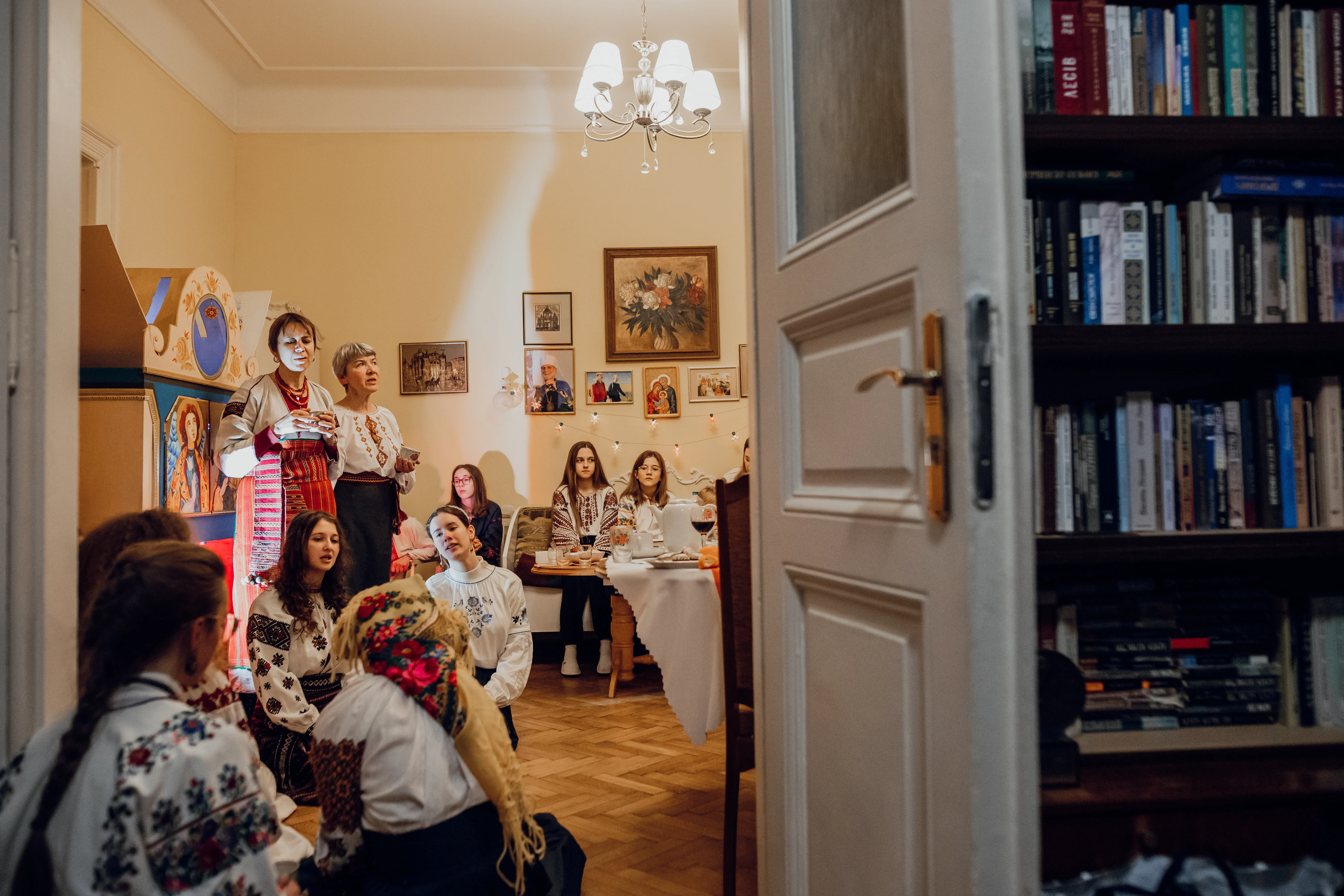
According to an old custom, on Christmas, pious youths, dressed in folk costumes or dressed as shepherds, carol, i.e., visit the homes of believing Christians to wish them a Merry Christmas - Christmas. Hence their name - carolers. Gathered in groups, they sing the troparion - the hymn of the feast and carols. With these songs, they wish the host that his home be filled with an abundance of earthly fruits, joy and happy days. The host gives them money, fruits, kravaï (special festive bread), pogacha (another type of bread) and other products.


Comments (16)
Абе хора, сериозно ли?! Бъдни вечер... Все едно чета учебник по добро възпитание! 😂 Не е лошо като тема, разбира се, никой не е против семейството и традициите, ама все пак – 2024 година е. 🤦♂️
Абе хора, ей! 🤣 Сериозно ли пишете за Бъдни вечер все едно е някаква реликвировка? Аз да питам – нормално ли е вече да се чувствам като единственият децко, дето помни как баба е палила огънчето с въгленчета и казва "За здраве!"? 😅
Евала за статията! Напълно съм съгласен с mega_angel - наистина е хубаво да се напомня за тези ценности. Аз лично много обичам Бъдни вечер, най-хубавото е като баби и дядовци са на масата – тогава истински си спомняш колко си малък и какви прекрасни традиции имаме. Дано повече хора се върнат към тях, че напо 🤦♂️
Хей! Интересно ми е - ами как точно се предава тази атмосфера на Бъдни вечер на децата днес? Има ли нщо, което може да помогне на младите хора да усетят истинската магия на празника, освен статиите
Мда, наистина е хубаво напомняне! Бъдни вечер е нещо специално - усещането за топлина, споделена храна и близки хора. Много ми харесва как се връщаме към корените си