
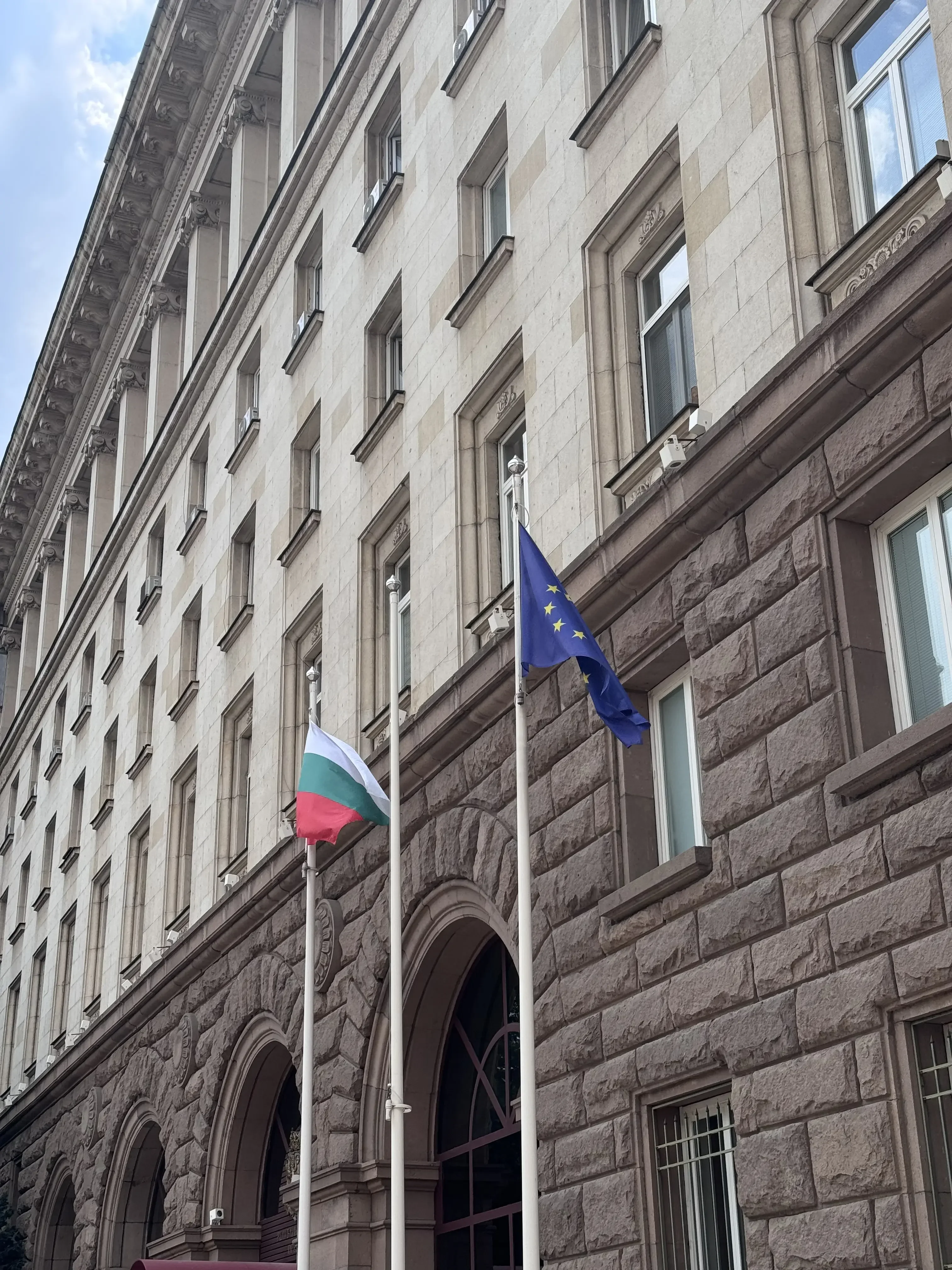
Bulgaria should strive for fiscal consolidation in the first instance. In the long term, the country should deal with the pressure on the fiscal system resulting from defense spending, the green transition, the aging population, and the need for investment, including by strengthening efforts to reduce the informal economy and compliance with tax obligations. These are among the leading conclusions and recommendations of the Organization for Economic Cooperation and Development (OECD) to Bulgaria, which are contained in the "OECD Economic Survey of Bulgaria 2026" published today. The document will be presented at a special event in the Granite Hall of the Council of Ministers by the outgoing Prime Minister Rosen Zhelyazkov and the Secretary-General of the OECD Mathias Cormann.
The study points out that the process of converging incomes in the country with those in developed economies in the OECD continues, albeit at a slower pace compared to other countries in the region, and the difference in productivity remains relatively large. Its authors believe that after a period of prolonged political uncertainty, Bulgaria has the opportunity to undertake more active reforms to stimulate growth, improve the use of invested European funds, and last but not least, to benefit from its membership in the Eurozone.
The review also emphasizes the rapidly aging population, against the backdrop of reduced labor supply due to outward migration, although in recent years net migration has already become positive.
Regarding the economy of Bulgaria, it is said that it maintains relatively rapid growth rates, driven by the strong increase in real wages and low real interest rates, against the backdrop of the country's full membership in the Eurozone from January 1, 2026.
Bulgaria's economic growth, according to official information, should be gradually rebalanced from consumption to investment. In the early phase, the country's membership in the Eurozone should be managed carefully, the OECD points out, an organization according to which achieving a prudent fiscal trajectory will require consolidation in the coming years and in the long term, putting the pension system on a sustainable basis and improving revenues, including through improved law enforcement and adherence to tax legislation.
It is pointed out that Bulgaria's financial system remains stable and lending in general remains low, regardless of the accelerated growth in lending to households observed in recent years.
Regarding the economic growth forecast for Bulgaria, the OECD adheres to a previous forecast of a real GDP growth of 3 percent in 2025 and 2.6 percent in 2026. The Organization already believes that economic development will be mainly determined by the planned gradual rebalancing of the economy from consumption to an investment-driven model. Wage growth is expected to slow down, and the absorption of European funds to increase.
Bulgaria is a country that is relatively less exposed to the risk of rising trade tensions, it is also pointed out in the OECD's economic review.
Private investment and productivity could be encouraged by improving the business environment and removing obstacles to new business creation, more effective support for the private sector and innovation, strengthening competition and the fight against corruption, the organization recommends in the report for Bulgaria.
In the section on investment, the OECD states that they are relatively low, and foreign direct investment is mainly directed to services and residential properties. And while the services sector is performing relatively better, the manufacturing sector is dominated by micro and small firms, focused on low value-added activities. The level of innovation and the use of new technologies is also low. Therefore, the OECD emphasizes the need for a set of structural reforms that will improve the country's attractiveness to foreign investors, improve the business environment and the propensity for innovation, as well as support efforts in the fight against corruption.
The OECD report on Bulgaria also analyzes the actions of the authorities in the country to reduce harmful emissions in the atmosphere. The conclusion is that greenhouse gas emissions are decreasing, but remain high. A clearer plan for the phased removal of coal from the energy mix, reforms in the taxation of vehicles and fuels, and the acceleration of investments in the electricity transmission network would support the country in balancing between achieving a greater reduction in greenhouse gas emissions and guaranteeing its energy security, according to the report.
It also emphasizes that the country's results in the field of education remain poor. The OECD draws attention to the educational reforms started to improve results, recommending further increases in teachers' salaries and undertaking reforms in other areas.
Bulgaria is expected to complete its integration process into the OECD in 2026, thus achieving this national priority after its membership in the Eurozone.


Comments (9)
аби, чакай малко! сериозно ли сега?! оиср пак ни дава акъла - "фискална консолидация", "реформи"... ама до кога ще е така?! 😡 все едно сме вечна колония на някой си запад! да не се окаже, че реформите им са всъщност начин да ни ограбят още малко и да изцедят
Абе, деба! ОИСР пак ли? Винаги едно и също - "реформи", "фискална" еди какво си... Я да видиме кога ще ни оставят на мира бе! Аман от тия
Абе, ОИСР, вие сериозни ли сте?! Да ама да не стане пак кат с другите "реформи" - после само ние хората страдаме, а
Абе хора, стига с тази злоба! ОИСР са си прави работата, дават насоки - това е
Браво на ОИСР, че се интересуват от България! 🥳 Накрая някой да си признае, че трябва да стегнем коланите малко и да правим реформи. Да, ще е трудно, ама кой каза, че ще е лесно? Важно 😡