
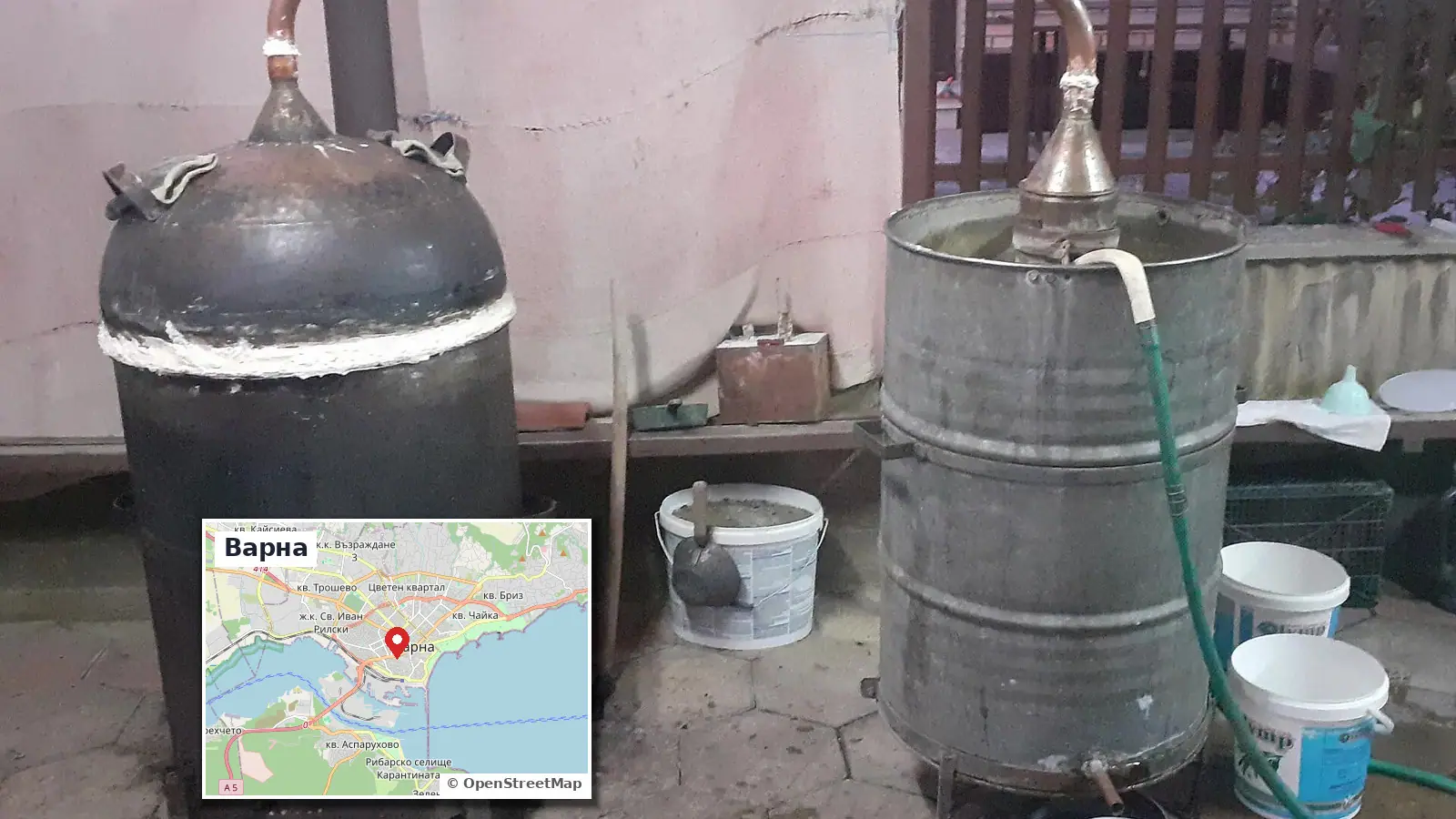
Customs officers seized 1,606 litres of rakia with no excise stamp and no tax papers in two inspections in the Varna customs area between 14 and 17 October, the Customs Agency said. The origin and quality of the alcohol have not been established.
Mobile teams from the Central Customs Directorate stepped up checks in Varna and Shumen regions. They checked how alcohol is stored, made and sold at four sites: tax warehouses, tourist sites and private properties. They found violations at two of them.
At a tourist complex with a restaurant, officers found 431 litres of rakia labelled "apricot", "grape" and "plum". Plastic water containers filled with alcohol stood behind the bar, in other rooms of the complex and in a storeroom. The restaurant's menu listed "homemade rakia" on tap. Officers will draw up a report under the Excise Duties and Tax Warehouses Act (ZADS).
The other 1,175 litres were at two private properties and belong to one individual. At the start of the check, he sold draught rakia without a Bulgarian excise stamp to officers of the Central Customs Directorate and of the Fiscal Control Directorate of the National Revenue Agency (NAP).
Inspectors saw distilling equipment at the properties, which was not running during the check, and many empty plastic containers. The man had no fiscal device, which breaks Article 7 of Ordinance N-18/2006, read with Article 118(4) of the VAT Act. Officers drew up a report on an administrative violation and handed it to him. The case is continuing.
The ruling parties have proposed changes to ZADS that would bring in penalties for traders who sell rakia from village stills. Finance minister Galab Donev said last month that some of this rakia reaches shops and restaurants, even though it carries a reduced excise rate and may not be sold for commercial purposes. Since the start of the year, the Customs Agency has seized more than 15,000 litres of rakia made for home use and sold in commercial outlets, the minister said. He said half of all rakia in Bulgaria is made in home-use distilleries, meaning village stills.
Donev added that the ban also protects people's health. "Rakia like this, made in unclear conditions and of unclear quality, with a high level of methyl alcohol, puts people's health and lives at risk," he said.
Since the start of the year, customs officers have carried out more than 1,000 alcohol checks, a third of all ZADS checks. In about 20% of them, they found alcohol of unclear origin.
Experts say such violations are not isolated cases.


Comments (0)
No comments yet.