
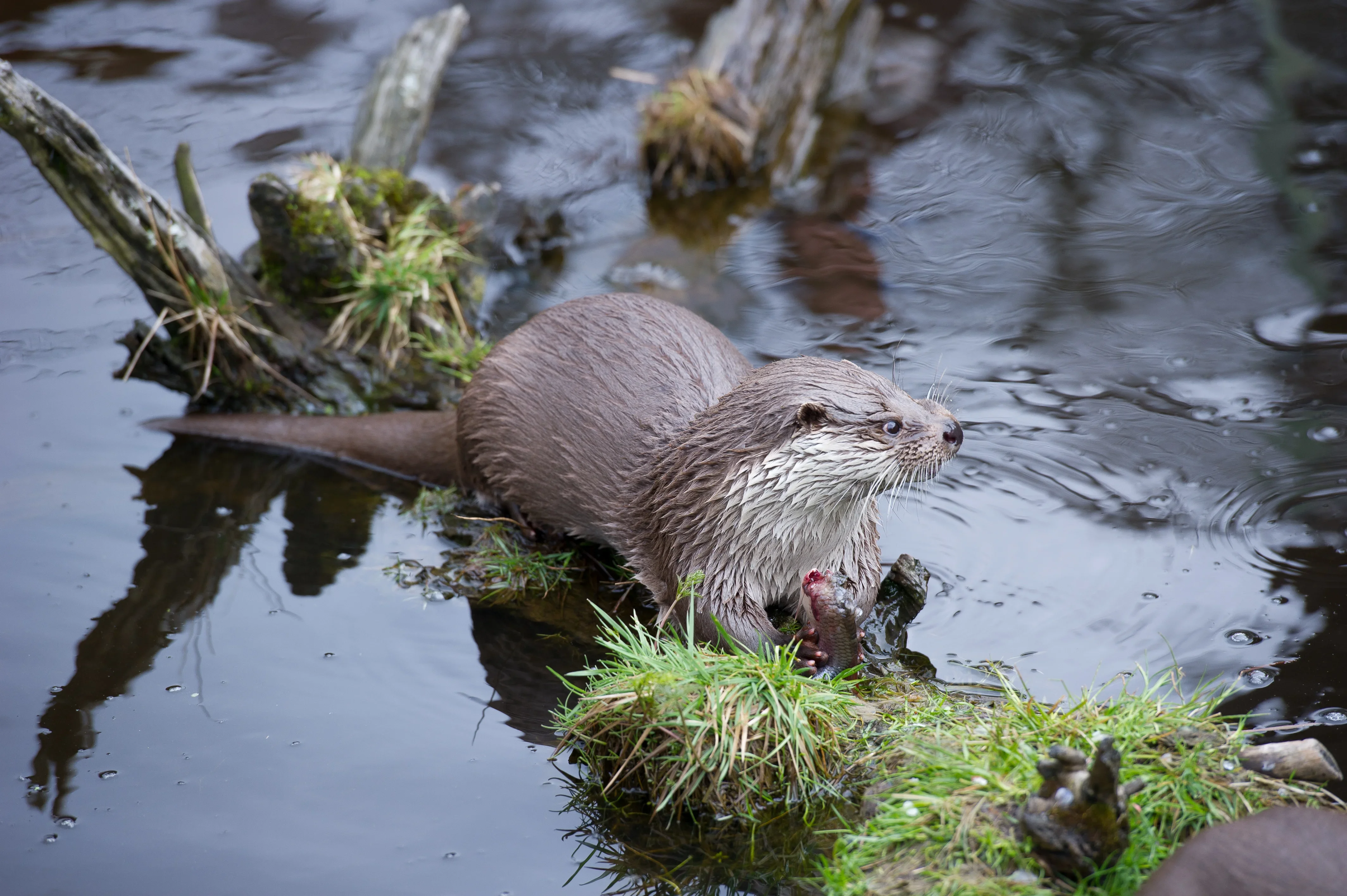
When we talk about Bulgarian nature, we often imagine forests, mountains and rivers, but we rarely think about how fragile their inhabitants are. The "Red Data Book of Bulgaria" – the scientific publication that compiles endangered and declining species in the country – paints a troubling picture: it lists 19 species of mammals. Behind this seemingly small number stand stories of disappearing forests, polluted rivers, pressure from human activity and last-minute attempts at rescue.
Among these 19 species are well-known names – brown bear, otter, wildcat, pine marten, marbled polecat, as well as several bat species. Each of these animals has its role in ecosystems and its own symbolism – from the "king" of the mountain forest to the small night fliers that keep the world of insects in balance.
"The brown bear": a symbol and litmus test for mountain health
The brown bear is one of the most impressive inhabitants of Bulgaria’s mountains. It is listed in the Red Data Book as a threatened species precisely because stable populations require large, calm, interconnected forest territories. The bear sits at the top of the food chain and its presence shows that below it there is a whole functioning system – herbivores, intact forests, and enough "quiet" zones untouched by mass tourism and construction.
The threats are clear – fragmentation of habitats by roads and building, poaching, conflicts with people when beehives or herds are attacked. Being listed in the Red Data Book means that the bear is not a "stable backdrop" of nature but a species that needs active help – from migration corridors to compensation for damage, so that there is no temptation to "punish it with a bullet".
The otter: guardian of clean rivers
The otter is another sensitive species included in the list. It lives along riverbanks and reservoirs, feeds on fish and other aquatic animals and literally "reads" the health of the water. Where there are otters, there are usually clean, living rivers. When the otter disappears, it often means that water bodies are polluted, riverbanks are deforested and fish stocks have dramatically declined.
Together with the destruction of den sites – burrows in the banks, riverside shrubs and trees – pollution and human interference turn the otter into a rare guest where it once was common. Bringing it back to Bulgarian rivers is not only a conservation goal but also a sign that we have restored the health of aquatic ecosystems themselves.
The wildcat, pine marten and marbled polecat: the quiet hunters of forests and fields
The wildcat is a distant, more cautious "relative" of the domestic cat – larger, shyer and strongly dependent on the presence of wild, old-growth forests and dense vegetation. It is listed in the Red Data Book as a vulnerable species – threatened by habitat loss, hybridisation with stray domestic cats and direct human pressure. When a forest is "torn apart" by logging and roads, the wildcat simply has nowhere to hide and raise its young.
The pine marten and marbled polecat are small carnivores that often remain in the shadow of their larger "colleagues". They control populations of small rodents and other animals, but suffer from poisons, traps, ploughing of land and removal of old hedgerows and forest edges. For them, the words "small" and "unnoticed" do not mean "unimportant" – on the contrary, without them the balance between species can easily be disrupted.
Bats: the night "sanitarians" of Bulgaria’s skies
Several bat species are also listed in Bulgaria’s Red Data Book. They are nocturnal animals that often scare people with their unfamiliar looks and habits, but in fact they are among the most useful creatures – each bat can eat huge numbers of insects per night, including agricultural pests and annoying mosquitoes.
The main threats to them are the destruction of their roosts – caves, old buildings, attics, bridges – as well as light pollution and the use of pesticides that wipe out their food. When we lose bats, we lose natural control over insect populations – something we then compensate for with even more chemicals in nature.
What it means to be in the "Red Data Book"
Having a species included in the Red Data Book is not just a label. It means that the scientific community has assessed that its future is in doubt if no measures are taken. Species are classified into categories – endangered, vulnerable, extinct – but the common thread is that we cannot take them for granted.
For these 19 mammal species this means a special protection regime – a ban on hunting and deliberate killing, protection of key habitats, management plans in protected areas, monitoring of populations. In practice, however, the biggest challenge is often not the laws but their enforcement and changes in our attitudes.
Why the fate of these animals is also our fate
The brown bear, otter, wildcat, pine marten, marbled polecat, bats – these are not just "rare animals". They are living indicators of the state of forests, rivers and rural landscapes. If we lose them, it means we have destroyed entire ecosystems, not just a "single" species. And where nature is broken, people also do not live well – erosion, floods, lack of clean water, explosions of pest populations follow.
To protect these 19 species means to protect the places they depend on – old-growth forests, clean rivers, wild meadows, caves. It is a long process in which everyone has a role: scientists, institutions, conservationists, hunting groups, local communities. But the first step is simple – to know that behind the dry sentence "19 species of mammals are listed in Bulgaria’s Red Data Book" stand living beings that are still here and that depend on us.
If one day we want to be able to tell our children "bears live here", "there are otters here", or to see bats over the summer sky, the decision is taken now – in the way we look at nature, at laws and at our own responsibilities as people who guard this land, not just use it.
Comments (10)
Ебати, хора! Сериозно ли никой не го е разбрал още? Да, 19 вида в червената книга звучи като цифра, ама да ви кажа... това е огромен провал за всички нас! Ние сме длъжни да пазим природата си, не е работа на някакви "природозащитници", а на всеки българин!
Абе хора, сериозно ли? 19 вида бозайници в Червената книга... 🤦♀️ Това вече е СМЯХ! Не разбирам как може да стигнем до тук?! Да, важно е да говорим за опазване на природата и т.н., ама писнаха тия празни думи. Трябва реални действия, хора!
Ей, хора, вии го казвате, ама яко е! 19 вида... значи наистина положението ни е сериозно. Тря
Абе хора... чета коментарите и нещо ме е хванало. 19 вида, наистина… ама да си представим какво би било, ако тази книга беше пълна със 50, 60 вида? Все едно да чакаме да изчезне всичко и тогава да се разтревожим, а? 🇧🇬
Абе... честно казано, малко ме е тъжно като го прочетох това. 19 вида… значи наистина не сме се погрижили достатъчно за природата ни. Не казвам, че правим нищо, разбира се, но можеше да се направи повече. За жалост, все така става - чакаме нещо да изчезне почти напълно и тогава започваме да се оправдаваме.