
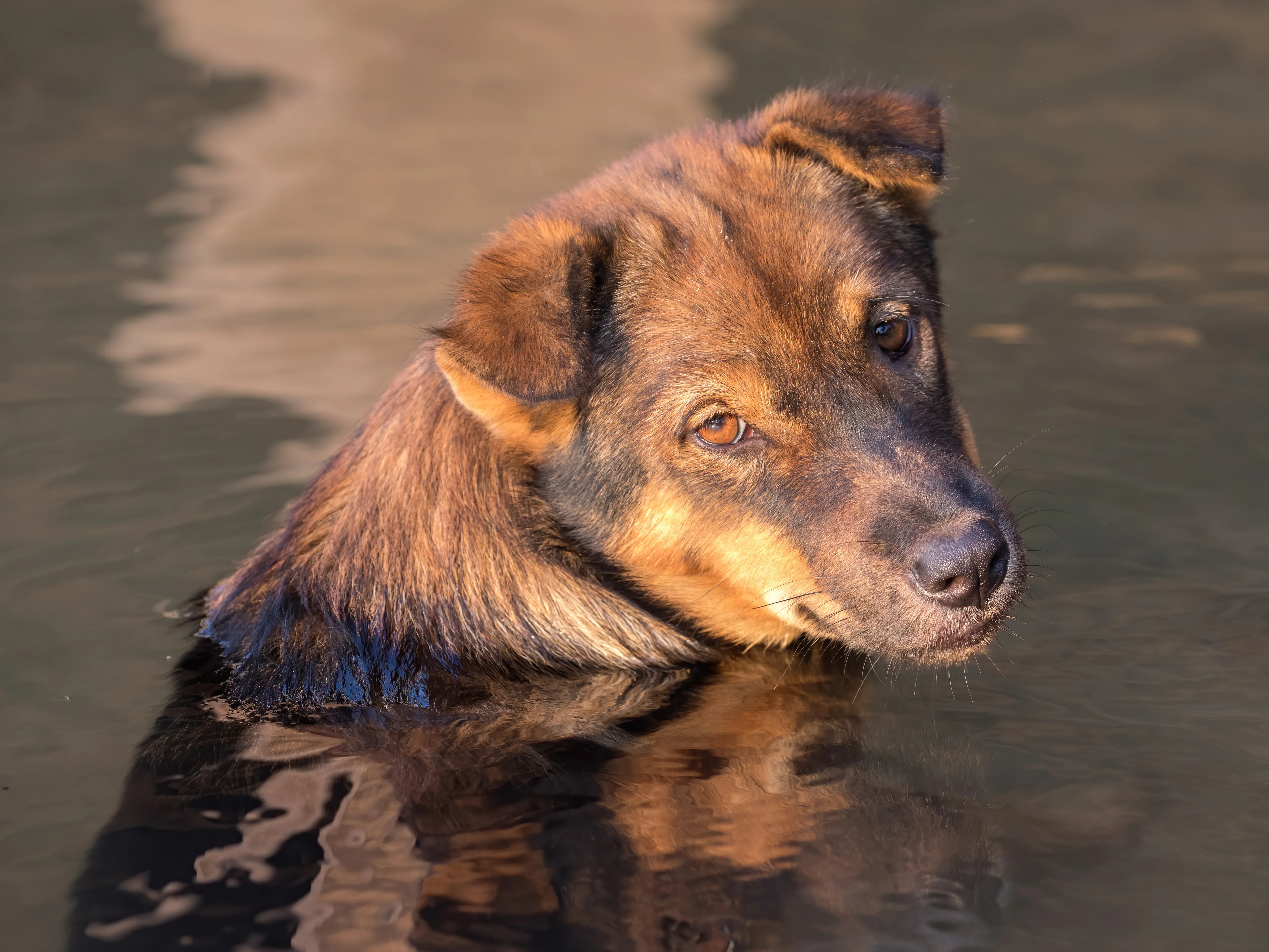
A decade ago, the topic of stray dogs in our country was mainly associated with fear and scandals - bites, poisons, a dispute between defenders and people who want "clean streets". Today, the picture is slowly but visibly changing. Behind the dry numbers - nearly 4,000 adopted dogs per year from municipal shelters and organizations - are thousands of stories of people who have said "yes" to an animal from the street, instead of a pedigree pet from an ad.
The change doesn't happen on its own. It is the result of a national program to control the population, from the efforts of municipalities, shelters and dozens of non-governmental organizations, but also from many personal choices: to adopt, to become a foster parent, to show your children that love is not measured in pedigree.
4000 adopted dogs - figures with a human face
According to the official reports on the implementation of the National Program for the Control of the Population of Stray Dogs, in the last year in Bulgaria about 19,500 stray dogs were caught, of which nearly 4,000 were adopted. This means that every fifth dog that reaches a municipal shelter or partner organization has found a home.
The highest proportion of adoptions is in Sofia (city and region), Pernik, Burgas and Veliko Tarnovo - places where municipal programs work actively in partnership with shelters and volunteers. Some of the adopted animals remain in Bulgaria, others go on a long journey to Germany, England, the Netherlands - countries in which Bulgarian dogs are accepted with open arms.
Behind each of these numbers is a specific moment: a person who entered the shelter "just to see", and left with a friend; a family that told the children "we will give a chance to a dog from the street"; a volunteer who for weeks socialized a frightened animal so that one day it could calmly lie in someone's lap on the sofa.
Foster homes: "the intermediate stop" that often saves lives
One of the most important but less visible parts of the system are foster homes. These are people and families who for several weeks or months take in a dog (sometimes a cat) until it recovers, socializes and finds a permanent home. Organizations such as "Animal Rescue Sofia", "Dare 2 Care Animals", "Four Paws" and dozens of smaller rescue groups rely on such temporary foster care.
Foster parents often say that their role is "to be a bridge": between the street and the home, between trauma and trust. In this period, the most important thing happens - the animal gets used to a home environment, to noises, to people and other animals, to walks on a leash. For the future adopter, this means a clearer idea of the character and needs of the dog, and for the animal itself - a much smaller chance of returning to the shelter.
Foster homes are most needed for the most vulnerable: babies, sick or elderly dogs, animals after operations or serious incidents. Without them, many of these animals would not have a chance to get adopted - not because no one wants them, but because it is too difficult for them to recover in the shelter conditions.
Campaigns that change the point of view: "Without a HOME or AT HOME" and many more
In recent years, campaigns with a simple but strong message have appeared in many Bulgarian cities: "Adopt, don't buy". Sofia Municipality, for example, launched the initiative "Without a HOME or AT HOME. The key is in you", in which over 100 municipal institutions - kindergartens, schools, theaters, libraries - hung posters of dogs and cats looking for a home.
"By adopting a dog or cat, we gain a new friend, while helping to reduce the number of homeless animals" - says one of the deputy mayors at the start of the campaign. Such actions show the animals not as a problem, but as a partner - as someone who is waiting for "their people".
Non-governmental organizations also organize educational initiatives in schools, lectures on responsible breeding, public events for adoption in parks and malls. Thus, children and young people see up close that a "shelter dog" is not "second-hand", but an animal with a character, with a history - and with a great need for a chance.
Why adoption instead of purchase: more than "saved money"
The arguments in favor of adoption are many and do not end with the fact that it is "cheaper". Several important aspects:
- The ethical choice - while there are thousands of homeless and abandoned animals in the country, every adoption is a direct intervention in the problem. One adopted dog means one less on the street or in a crowded shelter.
- Health and preparation - dogs from responsible shelters and organizations are given vaccinated, dewormed, often neutered, with a clarified health status and character. This is not always the case when buying from illegal breeders or advertisements.
- Individual approach - the volunteers who know the animals can help you choose a dog that suits your rhythm - more active, more calm, suitable for children or for living in an apartment.
- The message to children - when a child sees that the family chooses to help an animal in need, and not to "order" perfect, this is a lesson in empathy and responsibility.
This does not mean that purchasing from a responsible breeder is "evil" in itself. But in the context of the Bulgarian reality - with thousands of homeless animals and still a weak culture of castration - adoption has additional weight: it is part of the solution, not part of the problem.
Does Bulgaria still have a long way to go in its attitude towards homeless animals
Despite the positive trends, Bulgaria still lags behind many European countries in terms of the proportion of adopted animals and in terms of mass castration. Illegal breeding, irresponsible breeding and abandonment of unwanted offspring continue to exist. There are still people for whom a dog is a "means of protection", which can be tied to a chain and then "released" on the street when it becomes a problem.
But at the same time, every year more and more Bulgarians choose to adopt. Social networks are full of stories of the type "I saw it in a picture in a shelter, I couldn't pass it by", "we took it on foster care for two weeks, but it stayed with us". Foster homes are growing, although they are not enough. Young people open their homes to animals in distress while working, studying and living in small apartments.
The change in attitude happens precisely there - in these quiet gestures. In the decision to walk past a pet store window and go to a shelter. In the willingness to take in a dog not because it is perfect, but because it is exactly what will one day meet you at the door, whatever happens.
And if you're wondering whether to adopt, one question can help: does my life have room for another family member - with time, care and patience, not just with pictures on social media? If the answer is "yes", maybe somewhere in a shelter or foster home there is a dog waiting for you - without knowing your name, but ready to call you "their people".
Comments (15)
Абе, сериозно ли? 4000 кучета годишно намирали дом… яко е, наистина! Все пак, как точно се случва това? Има ли някаква статистика защо все още остават толкова много бездомни – откъде идват тези животни? Да не би да са изоставени от хора, които после си купуват “породисти”?
Добре е, че има такива инициативи! 4000 кучета... наистина доста голям брой. Интересно ще е да видят дали тази тенденция ще се запази и да видим какъв ефект ще
Супер новина наистина! 💪 Много е яко да виждаме как се полагат грижи за тези животни. ДАНО все повече хора се включат в осиновяването, че да им
евала за новината! сериозно, много яко! 4000 кучета всяка година - това наистина си е работа! браво на хората, дето се грижат за тях, дано има още такива добри хора и по-малко животни по улиците. важно е да се подкрепят тези приемни домове и осиновяванията, че не трябва да се купуват животни! аз лично съм 😁
Ами... добре де. 4000 кучета годишно - цифрата звучи солидно, наистина. Но нека не се подлъгваме от първоначалното впечатление. Това е само малка част от общия проблем. Да, хубаво е, че има доброволци и приемни семейства, които полагат усилия, това трябва да се признае. И кампанията за повишаване на осведомеността също не е лошо нещо. 😜