
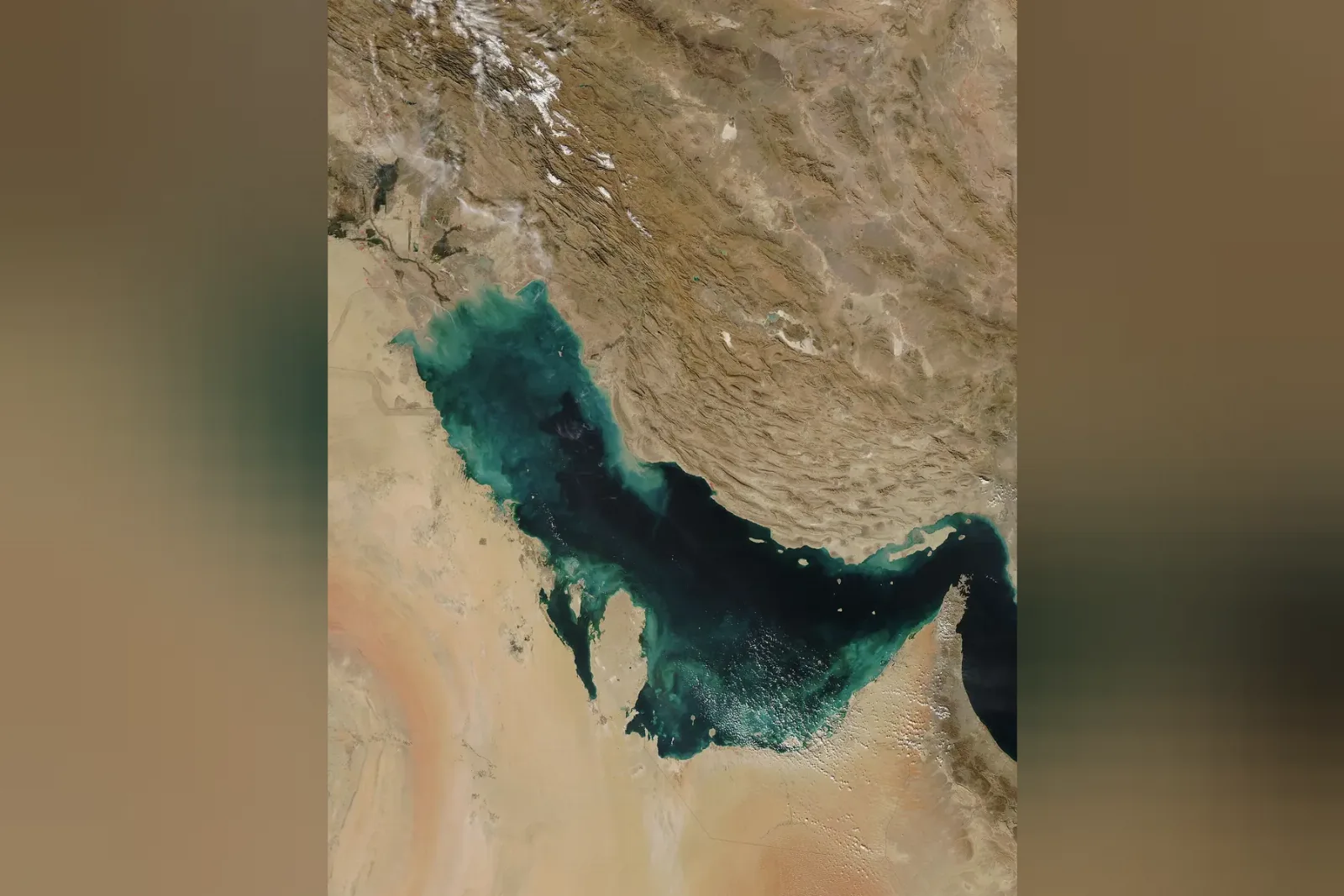
Iran's Revolutionary Guard navy said on Thursday, 22 October, that it hit seven ships in the Gulf.
The Guard said three ships it called "violators" struck sea mines west of the Strait of Hormuz overnight and caught fire. The other four were moving oil from ship to ship in the northern Gulf, which Tehran says is illegal. Iranian forces spotted them on Wednesday, tracked them and then hit them. Another version of the same statement said all four ships were hit at the same time and all caught fire.
The Guard also warned the US military: "if the American army continues its approach in the Strait of Hormuz, the confrontation will spread to its bases in the region". The statement added that "Washington's insistence on pushing ships to pass through the mined channel in the Strait of Hormuz will increase incidents".
Iran's forces are shifting to an offensive and asymmetric defence doctrine, Guard spokesman Hossein Mohebi said. He warned that any country that attacks Iran will face military action.
US president Donald Trump told reporters at Andrews Air Force Base that Washington is not negotiating with Tehran. He expects an outcome "very soon", probably after the midterm congressional elections on 3 November. He said the situation will be settled one way or another.
Oil prices rose because of the strikes in the Gulf and the Houthi attacks, which have raised fears for supplies from the Middle East. At 04:42 GMT on Thursday, a barrel of Brent crude cost $110.75, up $1.93. US light crude traded at $98.58.
The Houthis in Yemen launched new attacks on Saudi Arabia. A drone was aimed at Saudi Aramco's Shaybah oil field. Debris from its interception killed two people and wounded two. One person died and eight were wounded in an attack on King Fahd International Airport in Dammam. The US is pulling some diplomats and their families out of Saudi Arabia.
Mohsen Rezaei, secretary of the Supreme National Security Council, said not a gram of enriched uranium will leave Iran. He said Tehran would accept lowering the level of enrichment under international oversight, but only on Iranian soil. Foreign minister Abbas Araghchi said Iran is ready for a diplomatic solution, but is also prepared to defend itself.
Tehran wants the US sea blockade to end, sanctions to be eased and frozen Iranian assets to be released. Washington wants long-term, verifiable guarantees that Iran will not build a nuclear weapon.
Before the strikes in June 2025, Iran had about 440kg of uranium enriched to 60%, according to the International Atomic Energy Agency. Since the strikes, inspectors have had limited access, so the current amount and the location of much of the uranium have not been confirmed.
Comments (0)
No comments yet.