
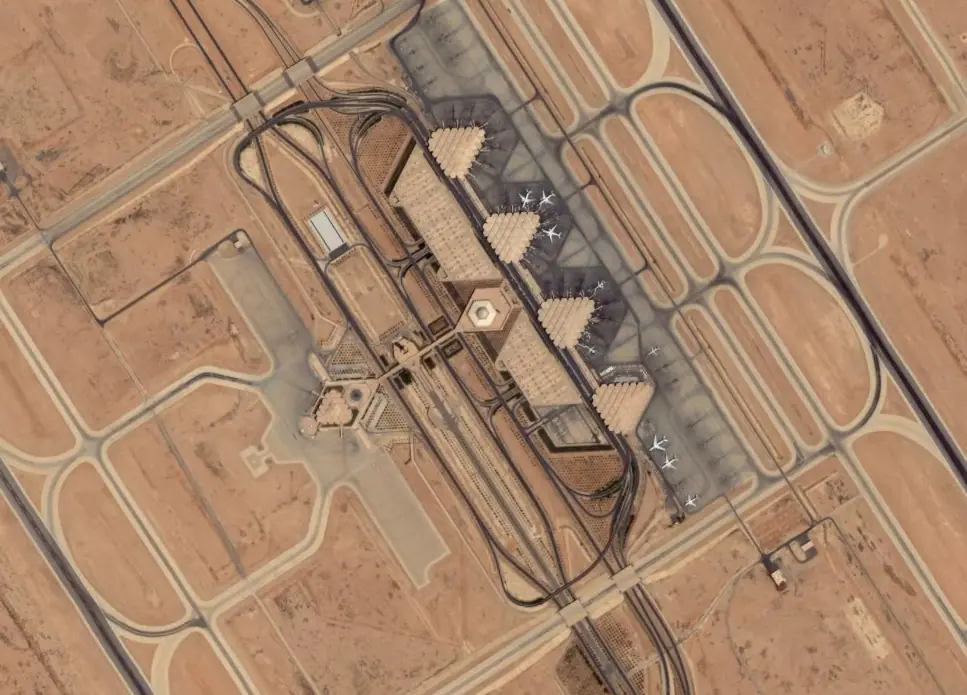
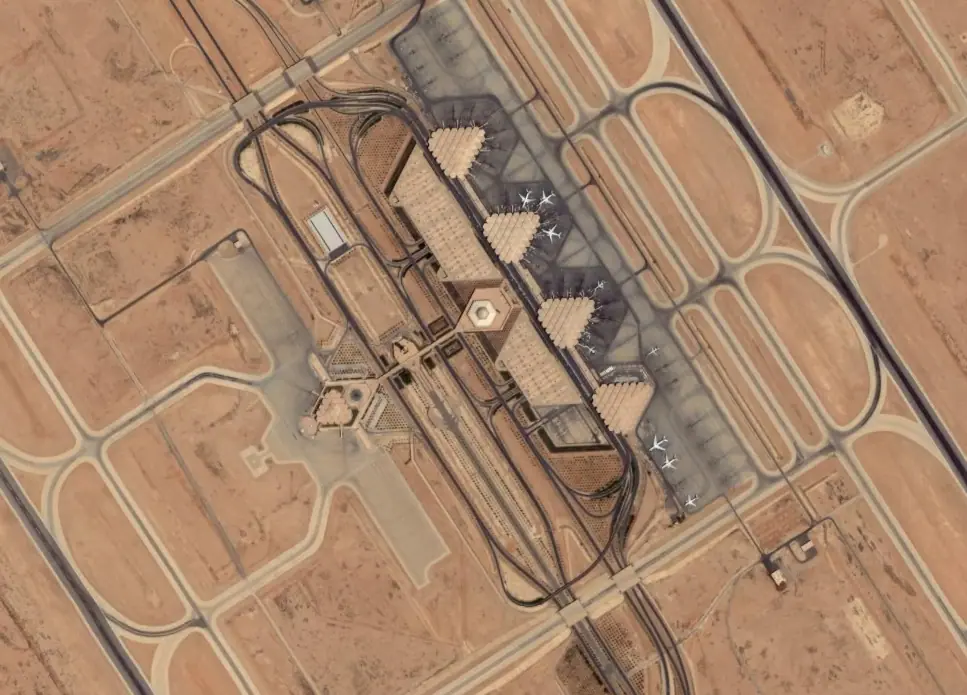
Yemen's Houthis will keep up their air blockade of Saudi Arabia, military spokesman Yahya Saree said on Sunday morning. A day earlier, a Houthi missile hit King Khalid airport in Riyadh, killing 12 people and wounding 309. The Houthis warned airlines, airport staff and passengers not to use Saudi airports and airspace.
The missile exploded near terminals 3 and 4, which handle domestic flights. The dead include four Saudis, two Bangladeshis, an American, an Egyptian, a Jordanian, a Sudanese and a Palestinian. Many of the wounded are in serious condition, and on Sunday morning hospitals in Riyadh were still full of casualties. It is the deadliest attack on an Arab Gulf state since the war with Iran began in February.
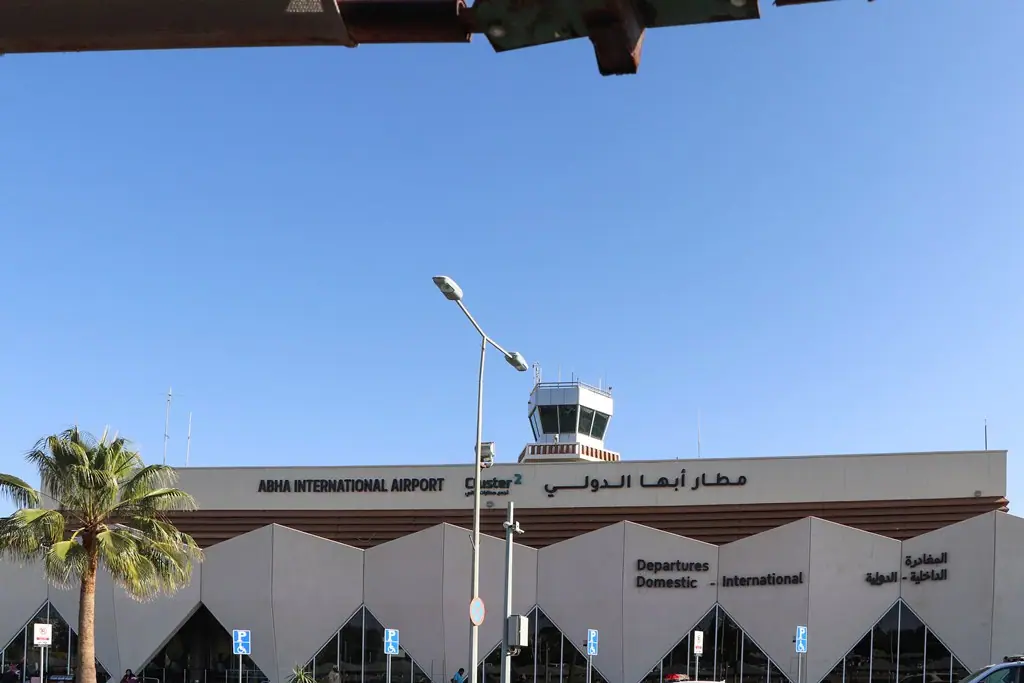
The Houthis also hit the same airport two days earlier. At least one passenger plane, which was empty, was struck, and three Saudis were killed, including a pilot. Strikes on airports in Riyadh and in the southern city of Abha last week killed three more people.
Flights from King Khalid remain suspended. A source in the Saudi aviation industry said the airport was also closed on Sunday morning. The closure has been extended by another 24 hours, until midnight between Sunday and Monday Israel time.
"Airport for airport, blockade for blockade and escalation for escalation, until our goals are achieved," Saree said in his statement. He said Saudi airports and airspace serve as combat arenas for Houthi forces, and that Saudi Arabia is responsible for the consequences of any failed attempt to intercept a Houthi missile. Saree called on people to take the warnings seriously.
The Houthis regard all of Saudi Arabia as a possible war zone. Only Mecca and Medina, the two holiest cities of Islam, are exempt. At the start of last week they declared Saudi airspace an operational zone for strikes on the kingdom and said they bear no responsibility for the consequences if airlines keep flying there. Last month Riyadh accused the Houthis of firing a missile at Mecca and described them as a threat to Islam's holy sites.
The Houthis say their campaign is a response to Saudi air strikes on their positions in Yemen. In recent days they have stepped up attacks on Saudi cities, increasingly targeting airports, in an effort to paralyse the kingdom's aviation and in effect close its skies.
US President Donald Trump on Saturday called the attack a "terrible thing" and "unacceptable". He said the US may join the fighting and help Saudi Arabia with strikes on the Houthis, but stressed that no decision has been made. UN Secretary-General Antonio Guterres said he was "deeply shocked" by the attack, Germany condemned the strike, and European Commission President Ursula von der Leyen called it a "dangerous escalation".
Yemen's civil war began in 2014, and Riyadh later intervened in support of the internationally recognised government. After four years of calm, fighting between the Houthis and Saudi Arabia resumed in July, after the Houthis tried to break an air blockade the kingdom had imposed on them. This came as the war involving Iran, a regional ally of the Houthis, intensified. In recent weeks tensions have risen along with new fighting in Yemen between the Houthis and forces of the internationally recognised government.
Last month the Houthis quickly seized coastal areas in south-western Yemen overlooking the Bab el-Mandeb strait. They have attacked ships in the Red Sea before with long-range missiles and drones, and their advance along the coast gives them tighter control over traffic through the strait. Bab el-Mandeb links the Red Sea with the Suez Canal on the route between Europe and Asia, and about 12% of world trade passes through it. The strait is growing in importance, especially for Saudi Arabia, because the war with Iran has closed the Strait of Hormuz on the other side of the Arabian Peninsula.
At the start of last week, pro-government Yemeni forces backed by Riyadh launched a major ground offensive to push the Houthis out of the newly seized territory and regain control of Bab el-Mandeb. Saudi Arabia is backing them with large-scale air support, including heavy bombing of Houthi areas. According to reports from Saudi Arabia, government forces are advancing around the strait, but how far is unclear. The Yemeni government says it has retaken control of Bab el-Mandeb, the Houthis dispute this, and fighting for the strait continues.



Comments (0)
No comments yet.