
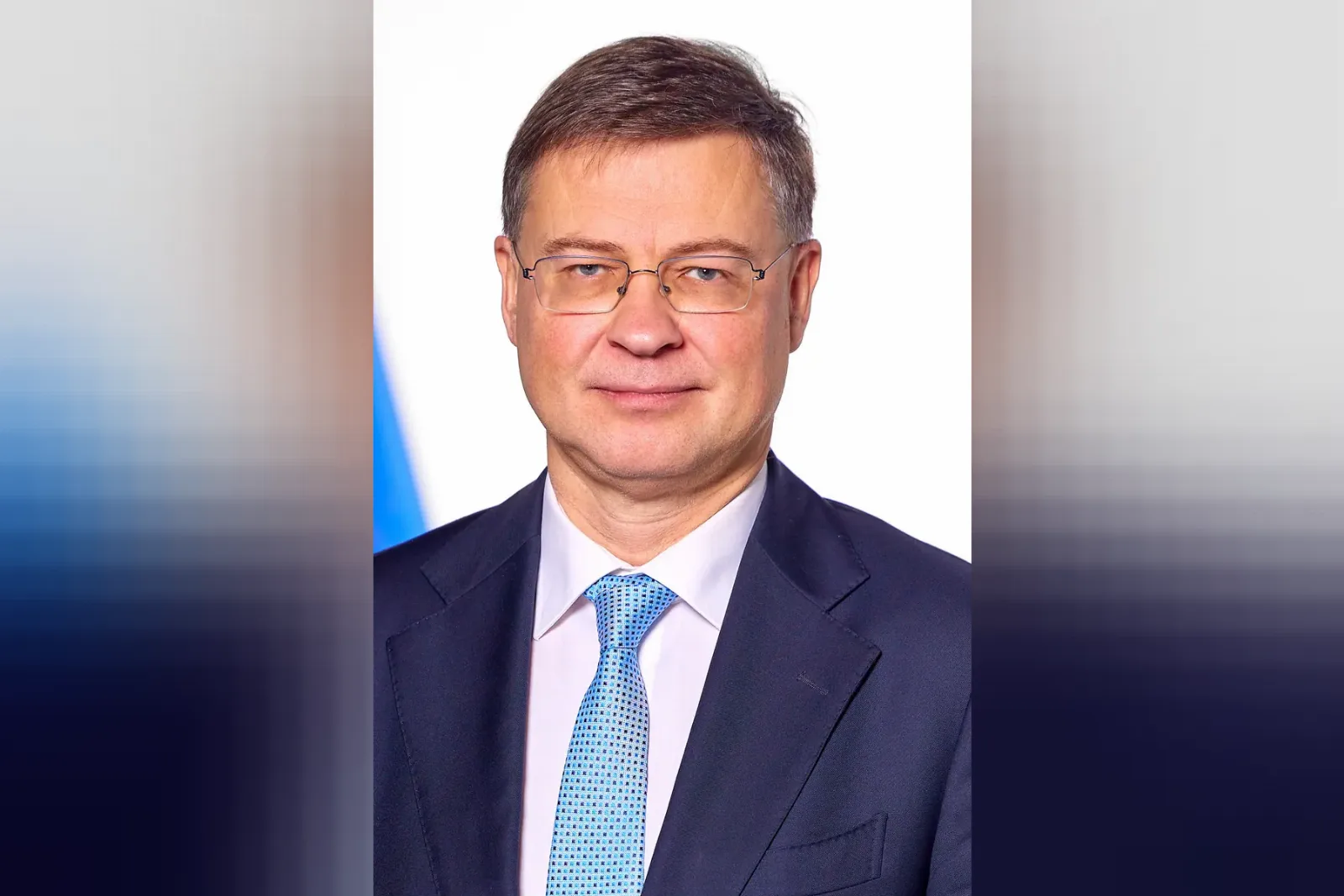
EU economic security measures in individual sectors need clear limits, or they will become a cover for protectionism, EU economy and productivity commissioner Valdis Dombrovskis has said. He was speaking at a panel during the annual meetings of the IMF and the World Bank in Bangkok, Thailand.
The European Commission will probably raise its forecast for EU growth this year soon, Dombrovskis also said. He said the European economy is coping better with the latest jump in energy prices.
He accepted that the defence industry and other sectors important for security may need more protection. But there is a risk that these measures will be stretched too far. Protectionist interests often hide behind the debate, he said, so discipline is needed and every attempt to use it for such ends must be resisted.
"Protectionism is good neither for our competitiveness nor for how the EU is seen as a reliable partner on the international stage," the commissioner said.
The EU's aim is not self-sufficiency but fewer weak points, Dombrovskis explained. The bloc wants to cut the risks of dependence without losing the benefits of open markets with many partners.
Russia launched a full-scale war against Ukraine in 2022. According to the commissioner, it exposed the EU's dependence on Russian energy, which Moscow has tried to use for pressure and manipulation. Since then the EU has found other gas suppliers, changed its transmission networks, built up renewable sources and saved energy. Norway is now the biggest supplier of pipeline gas to the EU, and the US of liquefied gas.
Renewables provide 48% of electricity in the EU, and low-carbon power is above 70%. Dombrovskis believes the investment is already paying off, although the jump in prices still hits activity and inflation. The EU is continuing and speeding up its efforts to import fewer fossil fuels.
The main weak point now is that supplies of critical raw materials and rare earth elements are concentrated in a few places, he said. China controls a large part of the supply chains, and for some raw materials its share is 80%, 90% or more than 90%. The EU is responding with partnerships with different countries and with separate chapters on raw materials in trade agreements.
The ResourceEU strategy aims to cut dependence on selected raw materials by half by 2029. It includes priority projects, more suppliers, funding, stockpiles, joint purchases and better market information. According to Dombrovskis, this may cost budgets and private firms extra. Sometimes rules may also be needed, when a dominant supplier sways prices and makes other projects unprofitable.
Over the past year the EU has worked on agreements with Mercosur, India, Indonesia and Australia, updated its agreement with Mexico and reached a political agreement in principle with the Philippines. Talks are also under way with other countries, including Thailand. The commissioner said wider markets make European firms better prepared and more competitive.
The EU remains a reliable partner because of the rule of law, stable institutions and skilled workers, Dombrovskis said. Europe must raise productivity, invest more in science and innovation, and cut excessive red tape. The European Commission wants to cut the administrative burden by 25% for all companies and by 35% for small and medium-sized firms.
Comments (0)
No comments yet.