
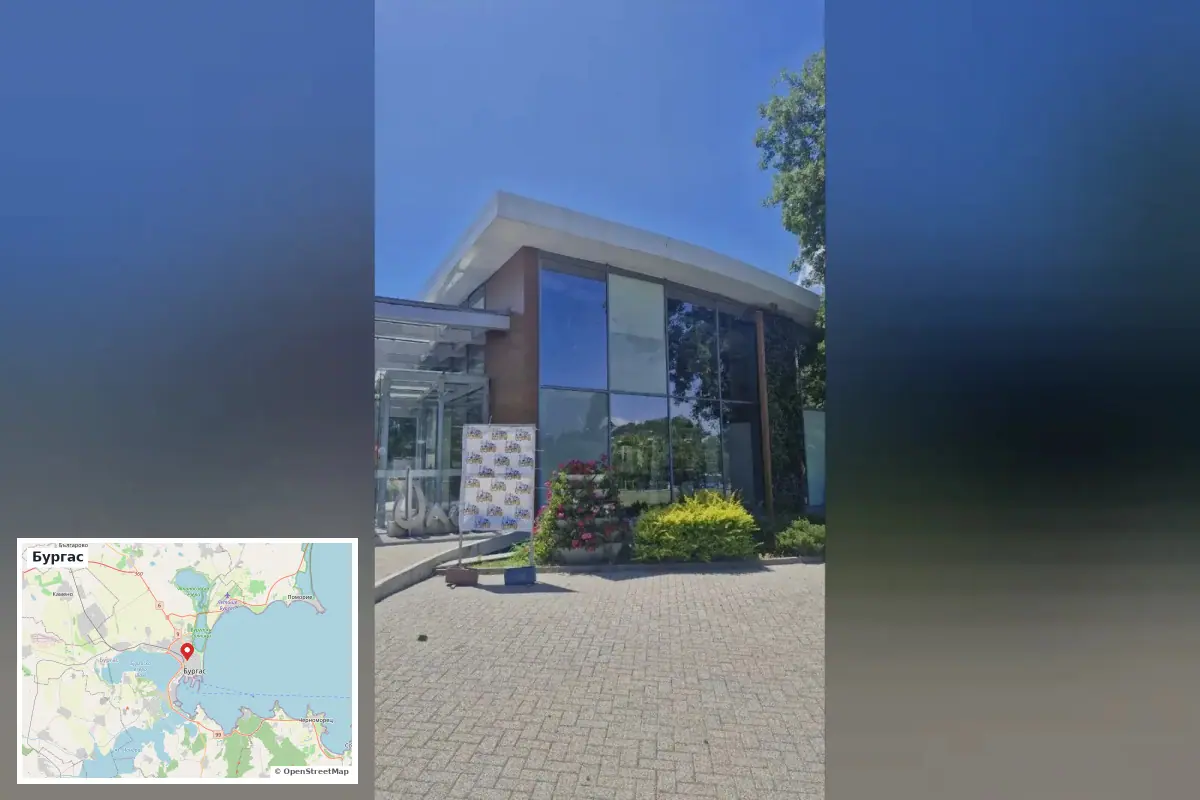
The European project TiCCA4Danu, in which the Municipality of Burgas is participating as a demonstration city, served as the foundation for a large-scale workshop. The initiative is aimed at achieving sustainable development, successfully adapting to climate change, reducing the risks of natural disasters, and significantly strengthening the capacity to address these complex challenges.
The event took place on September 3 at the "Flora" Exhibition Center in Burgas and was organized jointly by the Municipality of Burgas and the Burgas Regional Administration. The working forum was attended by a wide range of representatives from state institutions, local authorities, and organizations, including:
- Representatives of all municipalities in the Burgas region;
- RIEW – Burgas and the Regional Forestry Directorate;
- The Regional Directorate of Agriculture and the Regional Directorate for Fire Safety and Population Protection;
- The Bulgarian Red Cross, the "Poda" Nature Conservation Center, the meteorological service, and various environmental organizations.
The discussions were officially opened by the Deputy Mayor of Burgas Municipality, Mihail Nenov, and the Deputy Regional Governor, Veselin Anestiev. In their remarks, they emphasized the fundamental importance of high-quality strategic planning and the necessity of taking decisive and concrete measures for adaptation and the mitigation of negative climate consequences.
A central focus of the program was practical preparedness for responding to various crisis situations, such as floods, forest fires, and extreme heatwaves. To this end, an emergency simulation was conducted, allowing attendees to apply coordination and interaction mechanisms between different units in real-world conditions.
Through this scenario, the roles and responsibilities of the structures, information exchange, and the algorithm for disaster response were examined in detail. The exercise allowed for the identification of specific challenges and needs in prevention, while exploring opportunities to improve cooperation between the involved parties.
A key element of the meeting was the presentation of the Burgas Municipality GIS platform by experts from the municipal company "Innovation Systems". It was highlighted how geographic information technologies can support spatial planning, risk analysis, and territorial management, with the creation of a regional climate platform remaining among the priorities. At the end of the meeting, participants summarized the lessons learned and outlined future steps for more effective planning and prevention.


Comments (3)
Експо център Флора ли? И там ли ще е, наистина?
Абе, сериозно, Флора?! Там ли ще решават как да се справяме с наводненията и пожарите? Няма ли по-подходящо място – малко повече модерно оборудване де, все пак говорим за климатични промени. Да не е някаква шега с тия експозиции на цветя и растения… Да се надяваме поне да са подготвени, че ако стане нещо наистина, ще е тъпо да си играем на криеница по центъра.
Експо център Флора... Ама сериозно, като за климатични промени - нали все пак си представят