
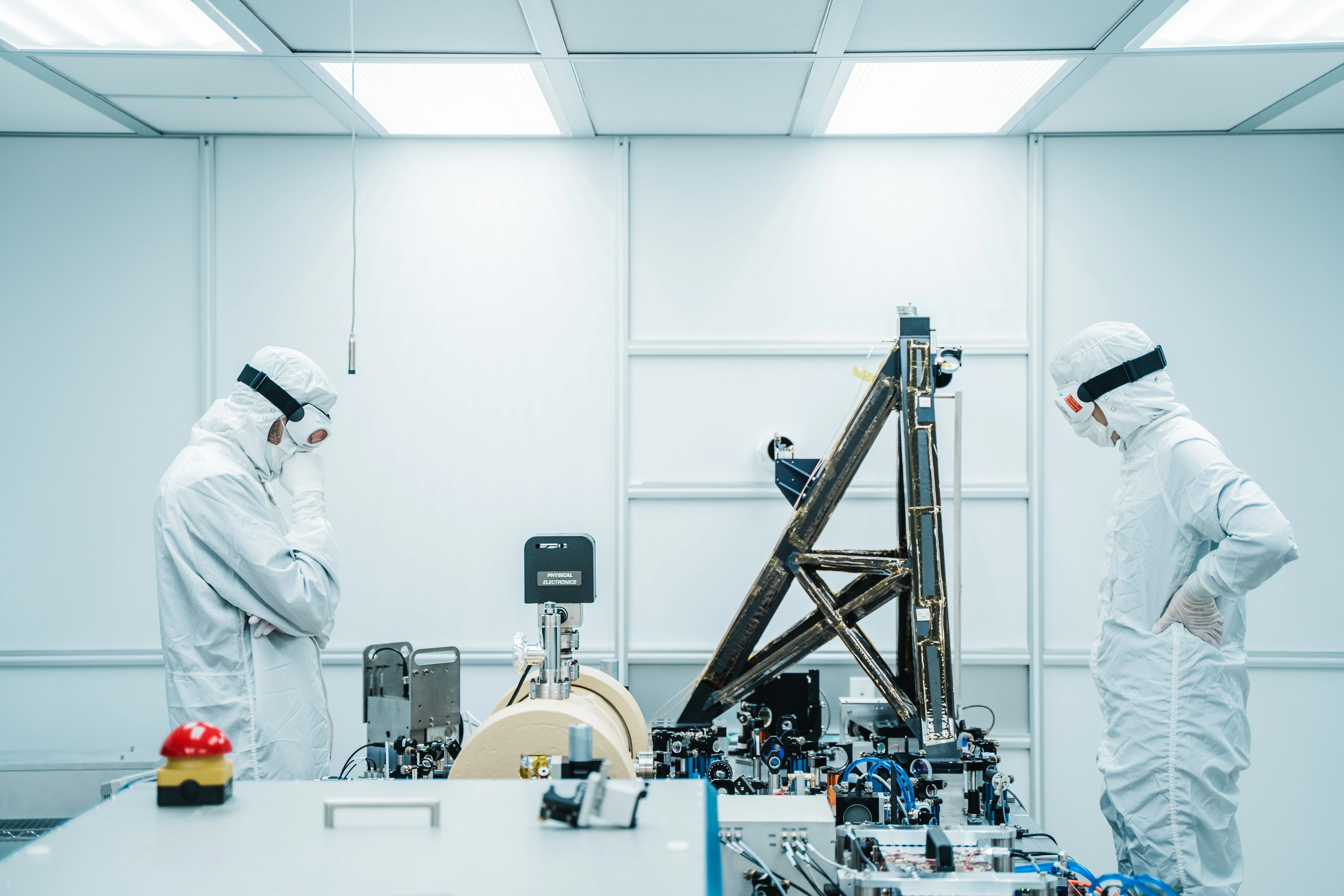
Before we see physics lessons, most of us have already seen a scientist – on the screen. With a white coat and tousled hair, with a maniacal look over a bubble with a dangerous liquid or as a brilliant introvert who saves humanity at the last moment with a formula on a napkin. Cinema is the first "textbook" on science for millions of people – but this textbook most often tells stories, not facts.
And that's what makes the question "how cinema shapes society's attitude towards science and scientists" so important. Because the answer is not only in whether the films are "accurate", but in what feeling they leave: trust, admiration, fear or cynical "they are doing something there, and we are paying the bill".
The "mad genius" stereotype: a fun, but dangerous image
One of the most enduring images is that of the "mad genius". Since classic films of the last century, the scientist has been shown as socially strange, obsessed with his experiment, willing to cross boundaries in the name of a "higher goal". The white hair, the dark basement, the sparks from the laboratory – all this has turned into a visual cipher: "there is a dangerous brain here".
The problem is not that this image is not interesting – on the contrary, it carries dramatic tension. The problem is that when for decades you see scientists mainly as people who "play with things they don't fully understand" and cause disasters, at one point you start to associate science as a whole with risk. With "creating monsters", with "experiments on people", with "they messed something up again there".
For some of the audience, this remains just a movie. For others, however, it gradually turns into the basis of distrust: "scientists always hide something", "who knows what else they have invented". When a real scientific topic appears later – a vaccine, GMOs, artificial intelligence – these subconscious images from the films often speak louder than dry facts.
"The Savior of the World": science as a superpower
The other extreme is the scientist as the "savior of the world". In many modern blockbusters, it is the scientific team or the individual genius who finds the solution – the formula against the virus, the technology against the asteroid, the algorithm that stops the catastrophe. In the last act, they press the right button, save millions of people, and then modestly withdraw.
This image has its bright side. It shows that knowledge can be heroic, that a person with a brain, not a weapon, can be the center of the plot. For children and young people, such stories can be the spark that says: "I want to do this too". It is no coincidence that after some popular films there is a jump in interest in specific areas – astronautics, computer science, biotechnology.
But there is a catch here as well: science is presented as magic, not as a process. The genius solves the problem in an hour and a half, while in reality behind every discovery there are years of work of many people, failures, doubts, slow checks. If we expect the same pace and "miracles from afar" from real scientists, we will inevitably be disappointed.
How cinema affects trust in science
A number of studies show that cinema and series build the "background" of our expectations. When science and scientists are shown as competent, honest and humane, people more easily accept scientific messages and policies – from vaccines to climate measures. When, on the other hand, the plots constantly revolve around topics such as "a conspiracy of scientists", "secret experiments", "hidden truths", distrust grows.
The effect is especially strong with children and teenagers. For them, films and animations are often the first contact with the idea of "a scientist". If the image is always a man, always strange, always lonely – this sends a clear message who "has the right" to be in science and who does not. If scientists are diverse in gender, age, origin and character, the doors seem a little more open.
How the scientific work itself is shown is also important. When cinema takes time to show the process – discussions, debates, checks, collective efforts – the viewer intuitively understands that science is not a one-person solution, but a system. This is less "spectacular", but much closer to the truth.
Between popularization and sensation
Cinema can be a powerful ally of science. Well-made films and series can explain complex topics in a human way, arouse curiosity, show scientists as normal people with families, fears and humor. Such productions often become a "gateway" to real books, podcasts, educational videos.
But the same mechanisms can also work against trust. When, for the sake of dramaturgy, risks are exaggerated, "secret laboratories" are invented, it is suggested that "someone is controlling the truth", the viewer is left with the feeling that the scientific world is opaque and threatening. Over time, this also fuels conspiratorial thinking: "if it's like that in the movies, it's probably similar in life".
The line is thin: between the fantasy that inspires and the sensation that frightens and alienates. The responsibility also lies with the screenwriters and directors – what stories they decide to tell and what message they leave behind.
What we can do as viewers
As viewers, we cannot (and should not) require cinema to be a textbook on physics or biology. However, we can watch a little more critically:
- to ask ourselves the question "what is this film telling me about science – that it is useful, dangerous, inaccessible or human?";
- to seek and support stories in which scientists are not just caricatures, but multi-layered characters;
- to use films as an occasion for conversation – with children, friends, scientists – "is this really the case?".
Science will not become stronger if we put it on a pedestal, nor weaker if we turn it into a villain. It is a human occupation – with its successes, mistakes and corrections. Cinema has the power to show us exactly this: not only the "mad genius" and the "savior of the world", but the people in the middle. And it depends on us whether we will only stay with the mythology or use the stories from the screen as an invitation to be more interested in the real science behind them.




Comments (14)
Абе, верно е тва за филмите... Все пак, нау
Абе хора, к'во треперим тука?! 😂 Ясно е, че филмите влияят! От малки гледаме "Назад в бъдещето" и искаме да си правим машини на времето, а после се чудим защо математиката ни е трудна. 😅
Ех, наистина интересно как филмите оформят представите ни за наука. Аз пък си мисля, че зависи много и от това как са поднесени фактите в самия филм. Не винаги е черно-бяло - има и нюанси. Ако го правят прекалено драматично или с герои, които са "или гении, или злодеи", тогава разбира се, може да изкриви възприятията на хо
Абе, чакайте малко! Сериозно ли обсъждаме дали киното влияе на възприятията ни?! Дали формира мнението ни за наука? Мисля, че това е очевидно до болка, хора!
ало, ало! видях новината и реших да се включа в дискусията. напълно съм съгласен с това, че киното има огромно влияние върху начина, по който възприемаме науката - не е нужно да си професор, за да го видиш. има нещо в тези истории за гениалните учени и техните открития… създава някаква романтика около науката, която е супер важна, защото кара хората (особено децата) да се интересуват от нея.