
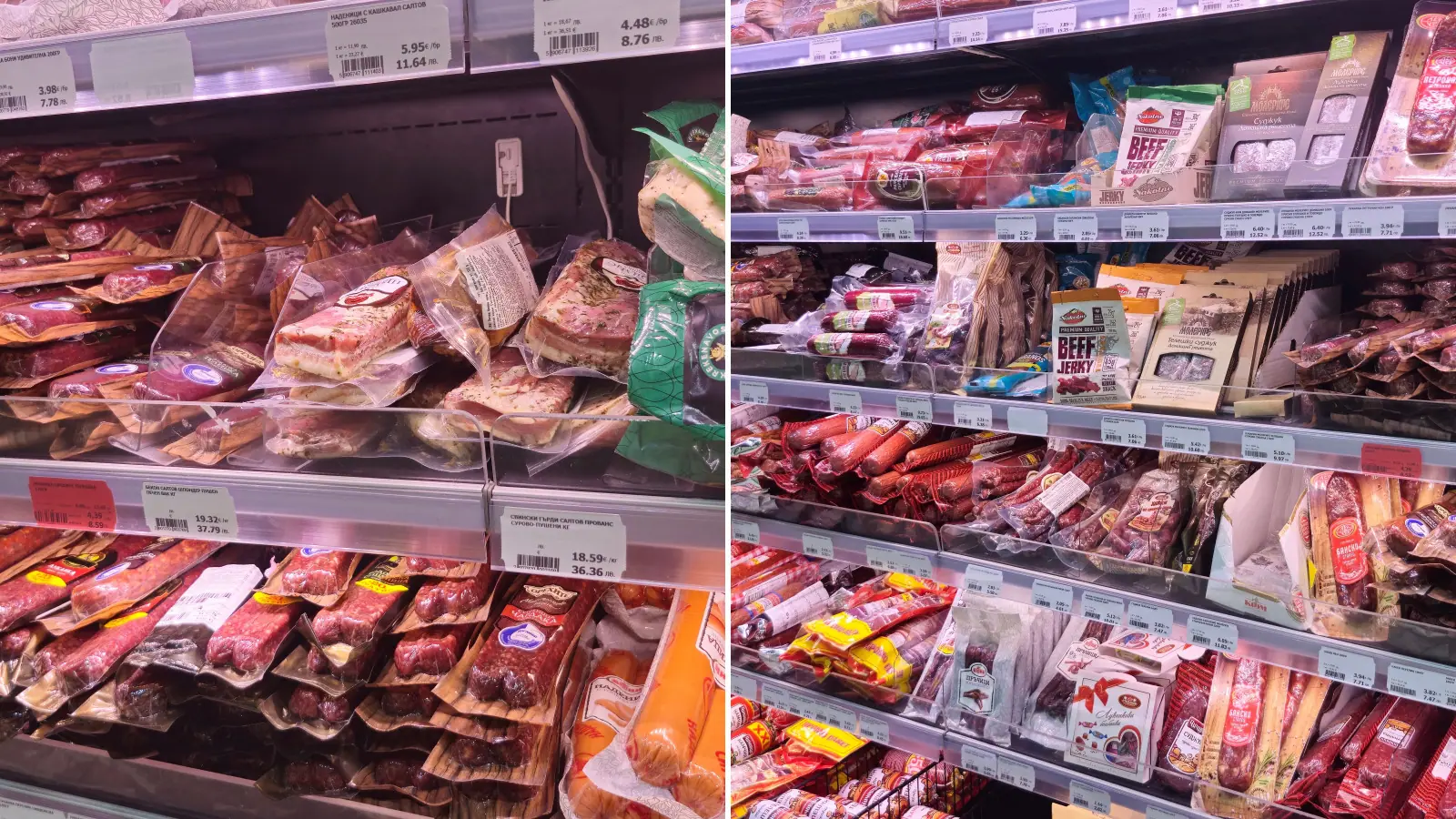
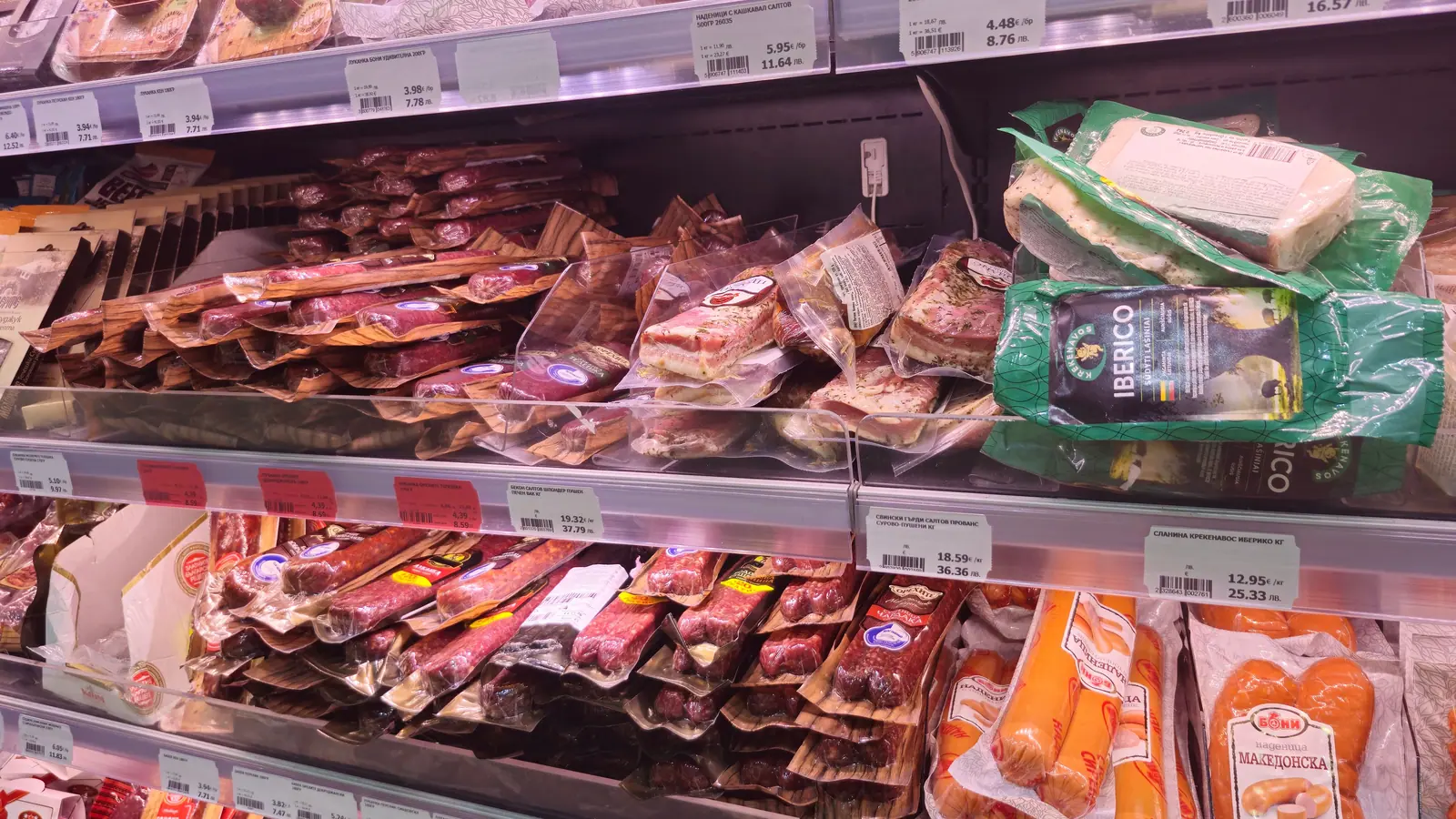
In 2025, 15.8% of people in Bulgaria, about one in six, could not afford a meal with meat, chicken, fish or a vegetarian equivalent every second day, Eurostat data on living conditions in Europe show. The figures were published on 7 October. The EU average is 8.5%. Only Romania, at 18.1%, is higher than Bulgaria.
This report follows our earlier story on the 7 October Eurostat data on people who cannot afford meat every second day.
Bulgaria is 7.3 percentage points above the EU average. The measure does not track whether people like meat. It shows whether a household has the money for such a meal if it wants one. It is part of Eurostat's assessment of material and social deprivation.
The share in Bulgaria has now fallen for 13 years in a row. It last rose in 2012, when 51.9% of people, just over half, could not afford meat every second day. It first dropped below 40% in 2014, to 39.5%, and stood at 27.6% in 2019. It first fell below 20% in 2023, to 19.9%, and was 18.7% in 2024.
Six other countries have a share above 10%: Hungary with 15.1%, Slovakia with 14.2%, Greece with 12.8%, Malta with 11.5%, France with 11.2% and Germany with 11.1%. Cyprus has the lowest share, at 1.2%.
Across the EU, more than 38.3m people cannot afford meat at least every second day, 100,000 more than in 2024. In Italy the share is 9.3%, down from 9.9% a year earlier. That is nearly 5.5m people.
Eurostat also measures how many people lack the money for regular leisure activities. The EU figure is 12.1%, and in Bulgaria it is 14.5%, the sixth highest share. Greece has the most, at 27.3%, followed by Romania with 23.3%, Lithuania with 17.9%, Latvia with 16.2% and Hungary with 15.8%. Croatia has the fewest, at 3.9%.
About 2% of people in the EU cannot afford internet at home for personal use. The share ranges from 0.1% in Finland to 6.2% in Romania. In Bulgaria it is 5.9%, the second highest in the EU, down from 7% in 2024.
The data were compiled by Eurostat's social statistics unit. Its acting director, Jarko Pasanen, says the analysis shows the social and financial gaps between countries and how hard it is for some groups to afford basic things.
Pasanen says it has become more important in recent years to track the living conditions of the most vulnerable. He says the figures are especially useful for monitoring inequality and fast-changing social and economic conditions, above all during the energy market crisis and the period of rising consumer prices.
Eurostat says Bulgaria is among the cheapest countries in the EU for consumer goods and services, but also has some of the lowest incomes.
Data from the National Statistical Institute show that nearly 56% of household spending in Bulgaria goes on food, housing, transport and communications. Food alone takes nearly 30% of the average household budget. So higher prices for meat, dairy, bread and vegetables hit family budgets directly.
The European Central Bank has warned of a new wave of food and drink price rises because of the war in Iran and the jump in energy prices. The rises have not yet come. The bank expects them in the coming months, and prices may go above its current forecasts.



Comments (0)
Все още няма коментари.